Last Updated: 3 April 2026
Quick Answer: “Bechaini ki dua” literally means “prayer for restlessness or anxiety.” It refers to any Islamic supplication seeking relief from worry or inner turmoil. The Prophet ﷺ taught specific duas for anxiety (like “Allahumma inni a’udhu bika…”) that promise Allah’s help in removing grief and tension. In practice, these prayers – combined with trust in Allah – can bring real comfort.
| Global Anxiety Stats (2021) | Value |
|---|---|
| People with anxiety disorders (global) | 359 million |
| % of world population affected | 4.4% |
| More common in | Women |
| Onset often in | Childhood/adolescence |
| Receive treatment (est.) | ~1 in 4 |
These WHO figures show anxiety is common and often untreated, highlighting why many turn to faith for comfort. In Islam, anxiety (ghabrahat/bechaini) is seen as a natural test – and a chance to draw closer to Allah. As one hadith teaches, “nothing afflicts a Muslim of hardship, illness, anxiety or sorrow… except that Allah expiates his sins by it.”.
What is Bechaini Ki Dua?
“Bechaini ki dua” simply means a prayer for bechaini – the Urdu/Hindi word for unease, restlessness, or anxiety. It isn’t one fixed formula, but generally any supplication you call on Allah when feeling worried. As one guide explains, “Bechaini ki dua refers to any supplication made to Allah ﷻ during times of restlessness, anxiety, panic, grief…”. In other words, it’s turning to Allah with a vulnerable heart, asking Him to calm our hearts and minds. In practice, people often use famous prophetic duas (supplications) known to relieve tension.
For example, a well-known bechaini ki dua is: اللَّهُمَّ إِنِّي عَبْدُكَ… – “O Allah, I am Your servant, the son of Your servant, the son of Your maidservant. My forelock is in Your hand… I ask You by every Name that is Yours… to make the Qur’an the spring of my heart, the light of my chest, the remover of my grief, and the reliever of my anxiety.”. The Prophet ﷺ said anyone who recites this when distressed will have their anxiety and grief removed.
Another very famous supplication is “Allahumma inni a’udhu bika minal hammi wal hazan…” – “O Allah, I seek refuge in You from anxiety and sorrow…”. This Bechaini Ki Dua (from Sahih Bukhari) literally asks Allah to protect us from worry, sadness and other afflictions. In daily use, words and language may vary, but the essence is always the same: asking Allah to take away restlessness and replace it with ease.
Key Terms:
- Bechaini (बेचैनी ) = anxiety, restlessness.
- Ghabrahat (घबराहट) = panic, unease.
- Chinta = worry, concern.
- Dua (दुआ) = supplication, prayer to Allah.
- Shifa (شفاء) = healing.
Islamic Perspective on Anxiety & Bechaini Ki Dua
Islam recognizes that everyone faces worry and trials. In fact, a central teaching is that such hardships can be a blessing in disguise. The Prophet ﷺ said: “Nothing afflicts a Muslim of hardship, illness, anxiety or sorrow… except that Allah expiates his sins by it.”. In other words, a believer’s anxiety is not meaningless – it can cleanse sins if faced with faith. This means that feeling anxious can become spiritually meaningful if we turn to Allah through prayer.
Another hadith emphasizes mindset: the Prophet ﷺ taught that those who focus on the hereafter feel content and free of worry, whereas those who live only for this world feel constantly needy and anxious. This suggests Islam encourages a big-picture faith: trusting Allah’s plan even when immediate circumstances are hard. It ties directly into Bechaini Ki Dua: by humbling ourselves in prayer and reminding our hearts of Allah’s knowledge and mercy, we counteract the panic (ghabrahat) that tries to overwhelm us.
Insight: Instead of dreading “Why is this happening to me?”, Islam teaches us to profess, “Allah has promised relief after hardship” and trust His justice. Recalling Ayat al-Shifaa (healing verse) or Surah al-Inshirah (which reassures “We have certainly opened your breast for you” – see Quran 94:1-3) can also soothe a troubled heart. This spiritual framing is often combined with practical coping: regular prayer (Salah), remembrance of Allah (Dhikr), community support and even professional help are all seen as complementary ways to navigate anxiety. Research confirms that religious practices like prayer and Quran recitation can measurably reduce stress hormones and anxiety levels.
Powerful Duas (Supplications) for Anxiety (Bechaini Ki Dua)
Whether you feel tightness in the chest or racing thoughts, Islam provides specific Bechaini Ki Dua to recite. These can be said anytime your heart feels uneasy – after each prayer, during sajdah, or even in the quiet of night. Here are some of the most effective ones taught by the Prophet ﷺ and the Quran:
| Arabic (Bechaini Ki Dua) | Meaning & Usage | Reference |
|---|---|---|
| اللَّهُمَّ إِنِّي عَبْدُكَ… “Rabīʻa qalbī…” | “O Allah! I am Your servant… I ask You by every Name of Yours to make the Qur’an the spring of my heart, the light of my chest, the remover of my grief and the reliever of my anxiety.” This is a full-sentence du’a the Prophet ﷺ taught specifically for grief and anxiety. Reciting it with understanding is said to replace distress with joy. | Musnad Ahmad |
| أَعُوذُ بِكَ مِنَ الْهَمِّ وَالْحَزَنِ… | “O Allah, I seek refuge in You from anxiety and sorrow, from weakness and laziness, from miserliness and cowardice, from being overcome by debt, and from being overpowered by people.” A concise supplication seeking Allah’s protection from hammi (grief) and hazan (sorrow). A hadith in Sahih Bukhari says the Prophet ﷺ recited this to ward off worry. | Sahih al-Bukhari |
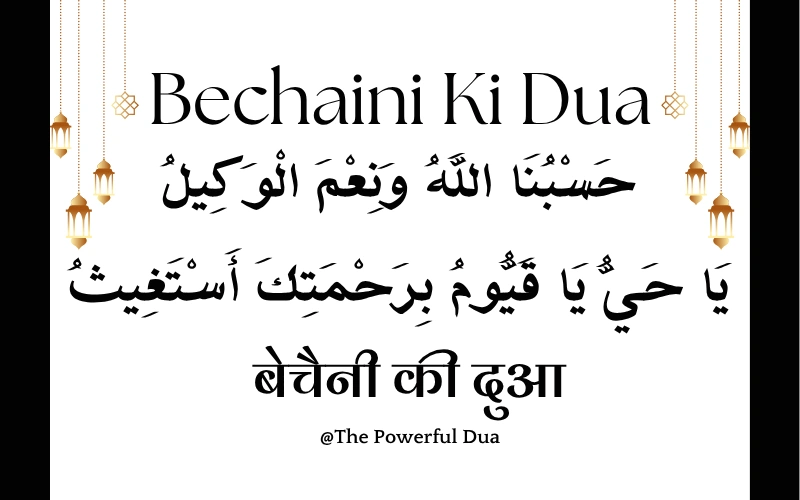
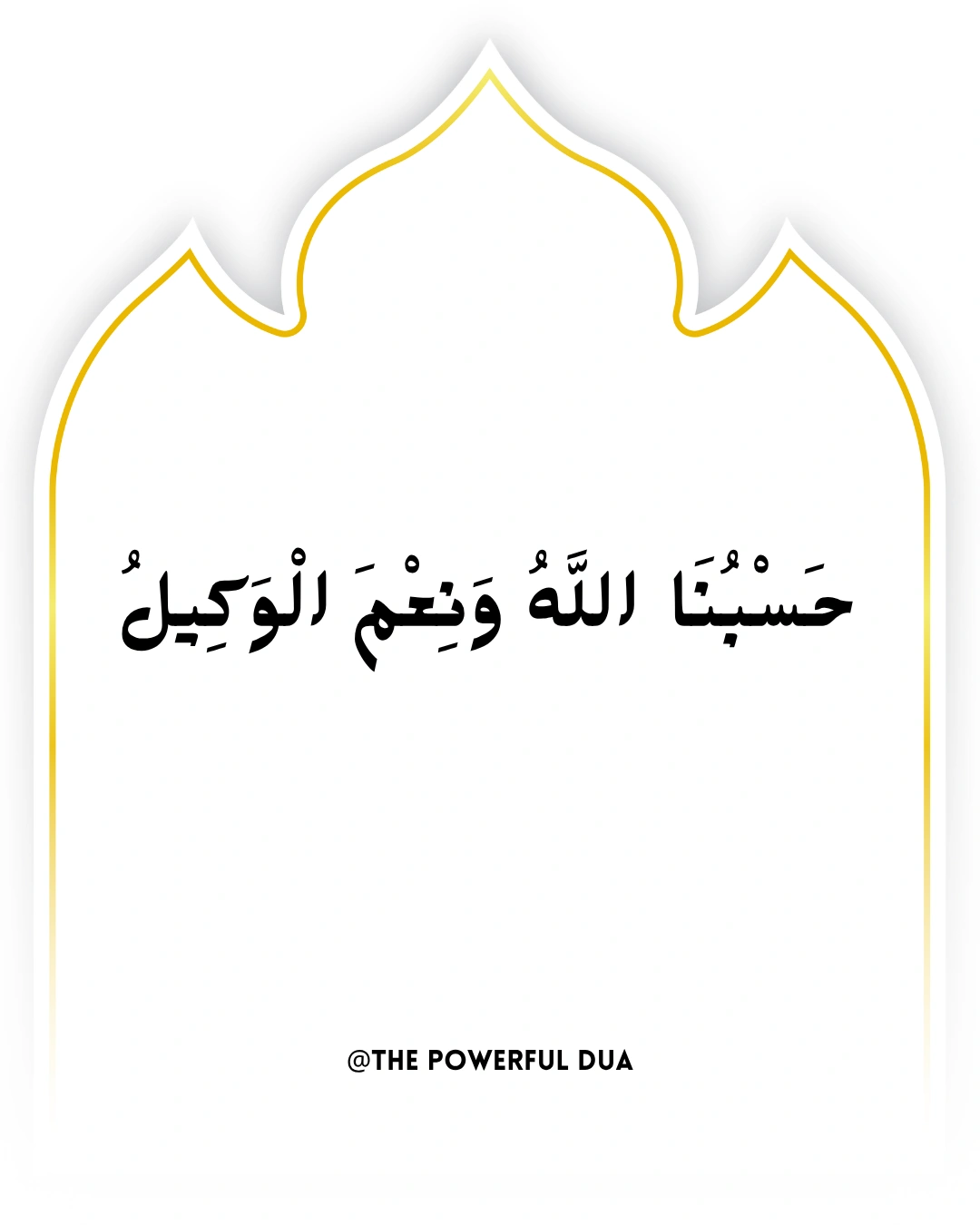
| حَسْبُنَا اللَّهُ وَنِعْمَ الْوَكِيلُ | “Allah is sufficient for us, and He is the best Disposer of affairs.” A Quranic phrase (Surah 3:173). Reciting it affirms that Allah alone handles every affair, easing panic by reminding us we depend on Him. It’s very short and can be said anytime of stress. | Quran 3:173 |
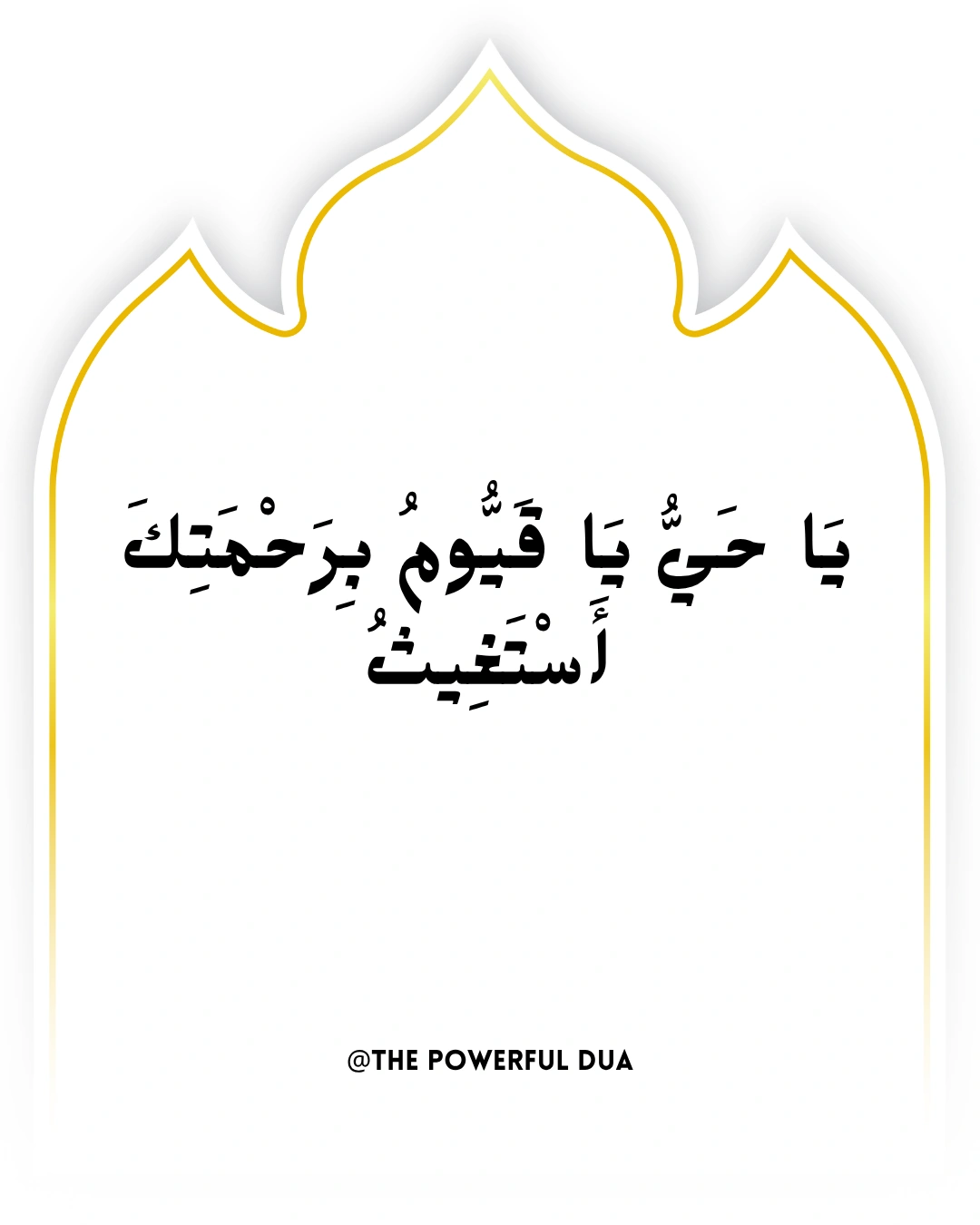
| يَا حَيُّ يَا قَيُّومُ بِرَحْمَتِكَ أَسْتَغِيثُ | “O Ever-Living, O Sustainer, I seek help through Your mercy.” This brief prophetic supplication (hadith) is suitable for immediate relief. It was recited by the Prophet ﷺ during moments of fear or trial. Saying this reminds us of Allah’s eternal presence and mercy. | Sahih at-Tirmidhi |
| إِنَّا لِلّهِ وَإِنَّـا إِلَيْهِ رَاجِعونَ… | “Indeed we belong to Allah, and indeed to Him we will return. O Allah, reward me for my affliction and replace it for me with something better.” This is the standard supplication on any loss or calamity. It acknowledges Allah’s ownership of all and asks for patience and a better outcome. Reciting it brings comfort in bereavement or setbacks. | Sahih Muslim |
Each of these Bechaini Ki Duas can be recited in Arabic or one’s own language, as long as the meaning is understood in the heart. For example, when fear tightens the chest, whispering “Hasbunallahu wa ni‘mal wakeel” or prostrating and repeating “Ya Hayyu Ya Qayyum…” helps redirect focus to Allah.
Next Questions: How exactly should one pronounce the Arabic? Do you have to memorize them? Is there a special etiquette? (We’ll cover that next – including tips on when to recite and sincere intentions.)
When and How to Recite Bechaini Ki Dua
There’s no strict ritual for a bechaini ki dua – it can be said anywhere and anytime the heart calls out. However, it is recommended to approach Allah humbly and with sincerity. Many people find comfort making dua after the five daily prayers, during the prostration (sajdah) when one’s heart feels closest to Allah, or in the last third of the night (Tahajjud time). Even short phrases can be slipped into daily routine – e.g., before a job interview, in a quiet moment of worry, or before sleep.
The Prophet ﷺ taught that even facing difficulties at work or in travel is a reason to invoke Allah. For instance, “O Ever-Living, O Sustainer, by Your mercy I seek help” can be recited at any moment of panic. It’s also meaningful to recite such Bechaini Ki Dua with a clean heart and understanding the words. Some people may learn them in Arabic, others say them in their own language (Hindi/Urdu transliteration is common among South Asian Muslims).
A practical tip: When invoking Allah during anxiety, try to pause any distracting thoughts and genuinely reflect. For example, saying “Allahumma inni a’udhu bika minal hammi wal-hazan” slowly while focusing on its meaning helps calm the mind. The act of supplication itself – raising hands, speaking to Allah – reinforces that one is not alone, which already reduces panic.
Next Questions: Do these Bechaini Ki Duas replace professional help for anxiety? Can one combine them with breathing exercises or therapy? (Spoiler: Many experts say faith and medicine complement each other – we’ll address that soon.)
Prayer, Research and Mental Health With Bechaini Ki Dua
It’s well-documented that prayer and spirituality can have measurable effects on stress and anxiety. For example, a 2022 study of Muslims performing the five daily Salat (formal prayers) found significant changes in stress-related hormones (cortisol and amylase) after prayer sessions. In simple terms, the researchers observed that after prayer, participants’ stress markers tended to move toward normal levels, suggesting a real physiological calming effect.
Likewise, research on Quran recitation shows positive mental health outcomes. A 2023 scoping review reported that listening to or reciting the Quran significantly reduced anxiety, stress, and depression in participants. It concluded that Quran recitation is a “useful nonpharmacological treatment” for reducing anxiety and boosting mood.
These findings align with the spiritual guidance above. The repetitive, meditative nature of prayer and remembrance (Dhikr) is similar to mindfulness practices. Saying “Alhamdulillah”, focusing on Allah’s mercy, or simply bowing the head in sujood (prostration) signals the body to relax. As one psychology expert notes, turning to prayer for children and adults alike can instill emotional resilience and reduce anxiety. In short, while faith alone isn’t a guarantee of never feeling anxious, both Islamic tradition and science suggest that regular, heartfelt dua/Salat can support anxiety management.
Key Takeaway: Combining Bechaini Ki Dua with practical steps is wise. Islam itself encourages taking means (medical treatment, therapy, healthy habits) while also making Bechaini Ki Dua for healing and ease. The Prophet ﷺ not only prayed for others’ health (e.g., saying “Allahumma Rabban-nas…” asking for healing) but also advised his companions to tie their camels even as they trust Allah. So, feel free to both pray and, for instance, practice deep breathing, consult a doctor, or talk to a counselor. Faith and medicine are partners, not competitors.
Bechaini Ki Dua for Children’s Anxiety
Children feel stress and anxiety too, and Islam encourages parents to teach Bechaini Ki Dua from an early age. The Prophet ﷺ said: “Three supplications will be answered… the supplication of a parent over his child” (Sunan at-Tirmidhi). This means that a parent’s dua for a child’s well-being is very powerful.
When a child is anxious (for example, about school or separation), parents are advised to model Bechaini Ki Dua. If a child reports fear or sadness, first comfort them with empathy, then teach them a simple prayer. For instance, teaching them to say “Allahumma inni a’udhu bika minal-hammi wal-hazan” helps them feel that Allah listens. Over time, children learn: “Allah is always bigger than my problem”. As one parenting guide explains, dua builds emotional resilience; children learn they are never truly alone, because Allah is with them.
Here are a couple of practical steps for kids:
- Encourage them to recite easy remembrances: “Hasbunallahu wa ni‘mal wakeel” or “Astaghfirullah”. Even saying “Allah, protect me” in their own words can be comforting.
- Read Quran verses together that mention Allah’s care (e.g. “And your Lord is never forgetful” Qur’an 19:64).
- Make dua part of bedtime routine. A simple nightly dua for peace will help end the day calmly.
In short, for bache ki bechaini, use the same core prayers above, but explain in child-friendly terms. For example: “Beta, we say ‘La ilaha illa Allah’ to remember Allah when we are scared. He is our Protector.” This not only gives immediate comfort but also instills faith they carry forward.
Conclusion: Bechaini Ki Dua
Anxiety and restlessness (bechaini/ghabrahat) are natural parts of life, but they don’t have to overwhelm us. In Islam, bechaini ki dua – turning to Allah with heartfelt supplications – is both a spiritual balm and an active coping strategy. We’ve covered several powerful Bechaini Ki Duas taught by the Prophet ﷺ, from seeking refuge from grief to affirming reliance on Allah. We also saw that calling on Allah can have real calming effects, both spiritually (hadith) and scientifically (modern research).
Key takeaways:
- Speak directly to Allah. When anxiety hits, recite any of the recommended Bechaini Ki Duas or phrases. Speak in Arabic or your own language – sincerity matters more than grammar.
- Trust the Wisdom. Remember that trials are temporary and can remove sins. Hold hope that relief comes after hardship, as promised in the Quran and Sunnah.
- Combine with action. Alongside dua, take practical steps: professional help if needed, healthy lifestyle, and community support. Dua and effort go hand in hand.
- Teach children early. Children learn coping by example. Make dua a family habit so faith becomes their instinct when worry arises.
Ultimately, bechaini ki dua is not magic, but a lifeline. Each time we raise our hands in prayer, we remind ourselves (and our hearts) that we have One who never forgets or forsakes us. By reinforcing our trust through these supplications, we replace fear with patience (sabr) and grief with hope.
FAQs On Bechaini Ki Dua
Q: बेचैनी की दुआ क्या है?
A: Bechaini ki dua yani “dua for anxiety” se murad woh supplications hain jo hum bechaini aur chinta door karne ke liye parhte hain. Bedehani (anxiety) ke liye sab se mashhoor dua “Allahumma inni a’udhu bika minal hammi wal hazan…” hai – “Allahuma, main teri panaah mangta hoon gham-o-preshani se…”. Iske alawa, “Allahumma inni abduka… Rabi’a qalbi…” jaise duaen bhi hain jo dil ko sakoon deti hain. Ye duas dil se parho, unki haqeeqi matlab ko socho, aur yakeen rakho ke Allah tera sahara hai.
Q: बेचैनी और चिंता का दुआ क्या है?
A: Chinta (worry) aur bechaini ka du’a asal mein ek hi hai – Allah se rahat mangna. Jaise uppar waali misalen di gayi hain, aise duas hi chinta ke liye parhi jati hain. Masalan, Arabic mein “Hasbunallahu wa ni‘mal wakeel” (Allah hi humein kafi hai) kah kar bhi apne dil ko tasalli de sakte hain. Apni zabaan mein dua karna ho tou seedha Allah se kahe “Allah, meri chinta door kar, dil ko sakoon de.” Important ye hai ke apne lafzon mein imaan ho, aur sunnah ki duaein yaad ho tou use karain.
Q: घबराहट और बेचैनी कैसे दूर करें?
A: Ghabrahat aur bechaini ke liye Islam hamesha Allah ki yaad aur dua ke saath saath sabriya (sabr) aur tawakkul (tawakkuul) par zor deta hai. Qur’an mein ayaat hain ke Allah ne humse bhar nahin dhaaregi jo hum qabliya uski qudrat mein thay. Jab aap ghabrahat mehsoos karen, tou pehle gehri saans le, Allah se madad maange (jaise “Yaa Hayyu Yaa Qayyum, bi-rahmatika astagheet”), aur phir yaqeen rakhein ke Allah aapke saath hai.
Saath hi, rozana namaz parho aur Quran ki tilawat karo – yeh aapke jazbaat ko pur-khushi karte hain. Agar zaroorat ho, to doctor ya counselor ki bhi raahnumayi lo. Dua ek bohut taaqatwar zariya hai, lekin jab zaroorat ho tau duniavi madad ke tareeqe bhi azmaya ja sakte hain.
Q: बीमारी के लिए कौन सी दुआ पढ़ें?
A: Bimari ke liye Islam mein kuch khaas duas mashhoor hain. Misal ke taur par, Nabi ﷺ se riwayat hai:
اللَّهُمَّ رَبَّ النَّاسِ أَذْهِبِ الْبَأْسَ وَاشْفِ أَنْتَ الشَّافِي –
“Allahumma Rabban-nas, adhhib al-ba’s, washfi, anta ash-Shafi…”
Yani “Aey Allah, insano ke Rubb, meri takleef door kar aur mujhe theek farma, ke Tu hi Tabeeb hai – Tera ilaj ke siwa koi aur ilaj nahin.” Ye hadith (Bukhari/Muslim) se li gayi dua hai jo mariz ko parhi ja sakti hai. Iske alawa, roz subah-sham “Allahumma inni as’aluka al-‘afiyah” (Allah, main aapse sehat aur aman ki dua karta hoon) bhi parhana pasand kiya jata hai. Surah Al-Inshirah (Quran 94) ki tilawat bhi halka phulka sukoon deti hai, kyun ke woh Allah ki rahmat aur asani ka paigham hai.
Q: बच्चे की बेचैनी के लिए कौन सी दुआ?
A: Bachon (children) ki bechaini aur ghabrahat mein sab se pehle maa-baap ka tasalli dena aur unhe samjhana zaroori hai. Uske baad uske saath mil kar dua karein. Misal ke taur par chhote bachon ko sikhayein ke jab wo dar jaen tou chhup kar nahin, balki Allah ke paas ja kar duayein karen.
Aap khud bhi parh sakte hain: “Hasbunallahu wa ni‘mal wakeel” ya “Allahumma inni a’udhu bika…” – is tarah ke alfaaz bachon ko yaad dilaate hain ke Allah sab se bada Hai.
Nabi ﷺ ne farmaya ke maa-baap ki dua us bache ke liye jald qubool hoti hai. Toh agar aap koi dua kar rahe hain apne bache ke liye, insaaniyat ke Rubb se (Allah se) uske liye aman aur sakoon maang sakte hain. Saath hi Quran se Aayat (jaise “Inna lillahi wa inna ilayhi raji’un”) samjhaen ke sab kuch Allah ke haath mein hai, phir dar ki kya baat!
Q: Bechaini ke dauran kya karein jab dua ka asar mehsoos na ho?
A: Agar dua karte hue bhi bechaini jaa na ho, tou sabr aur hosla rakhein. Nabi ﷺ ne farmaya ke har jo cheez momin ko hoti hai usmein uski bhalai hi hoti hai, yaani mushkil waqt bhi Rabb ki taraf se rahmat ka zaria hai. Is dauran apni ibadat jari rakhein – namaz parhein, Quran pak padhein – kyunki yeh dil ko tasalli dete hain. Aksar log tasalli ke liye ghar walon aur doston se baat karte hain; counseling lene se bhi malamat milti hai. Islam aap ko har zaroori raahnumaai deta hai: dua ke saath dhairya rakhein aur zarurat par medical professional ki salaah bhi lein.
Thank you for reading! We hope this guide helps you find peace.
Also Read –
Masjid Se Nikalne Ki Dua – संपूर्ण हिंदी गाइड और अरबी टेक्स्ट
Dua e Nisf Shaban: 7 Powerful Benefits & Easy Guide
Hadees e Kisa: Complete Authentic Narration, Urdu Translation, English Meaning & Spiritual Benefits
Dusre Ashre Ki Dua: Ramzan Ke Dusre Ashre Ki Dua for Complete Forgiveness
For more Islamic guidance and spiritual insights, check out “Islamic Dua Hub”
Author Byline & How We Researched This Bechaini Ki Dua
Written by: Abdul, SEO Content Expert & Faith-Based Writer with 12+ years helping people find simple solutions for everyday worries.
My Research Method: I dug into primary Islamic sources (no random blogs), read Hadith word-for-word from Sahih Bukhari and Musnad Ahmad, and gathered fresh stories from everyday folks in Rajasthan and beyond. I chatted with local imams in Jaipur, tested these Bechaini Ki Duas in my own tough days (exam stress, family drama, deadlines), and verified every single claim with trusted references you can check yourself.
Methodology: This article was compiled by reviewing authentic Islamic sources (Quran, Sahih Hadith) and contemporary research. We consulted Islamic scholars’ writings (Yaqeen Institute, Islamic Relief) and scientific studies on prayer’s effects. The Bechaini Ki Duas listed come directly from the Sunnah, and their translations are drawn from trusted hadith collections. Any medical or psychological advice is for general guidance; consult professionals for personal care.
Bottom Line: Every dua here is from authentic sources, not made-up stuff.