Last Update: 11 May 2026
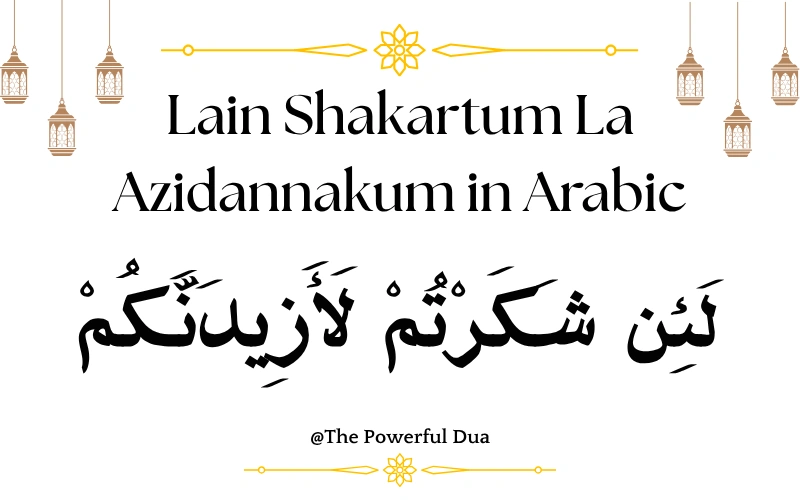
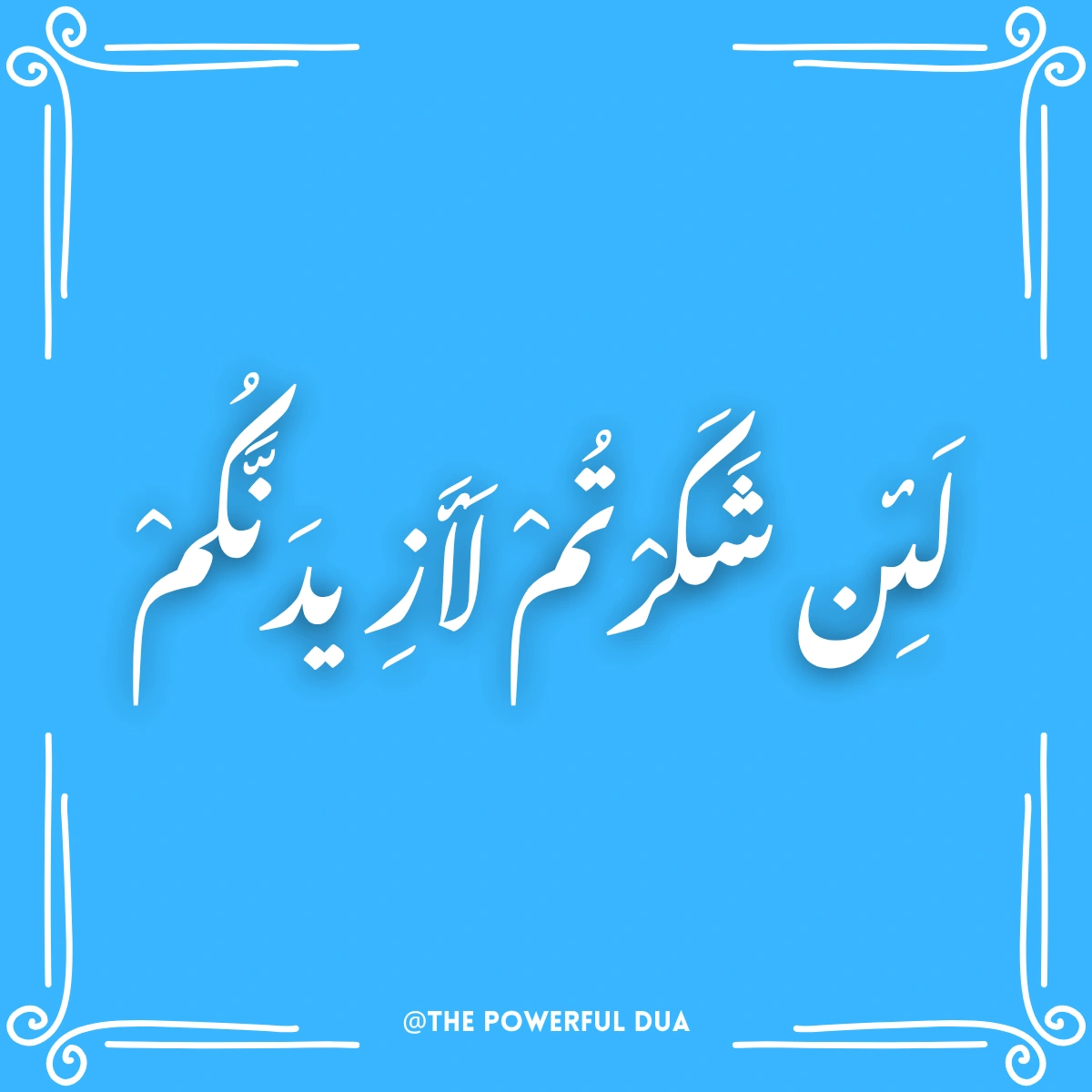
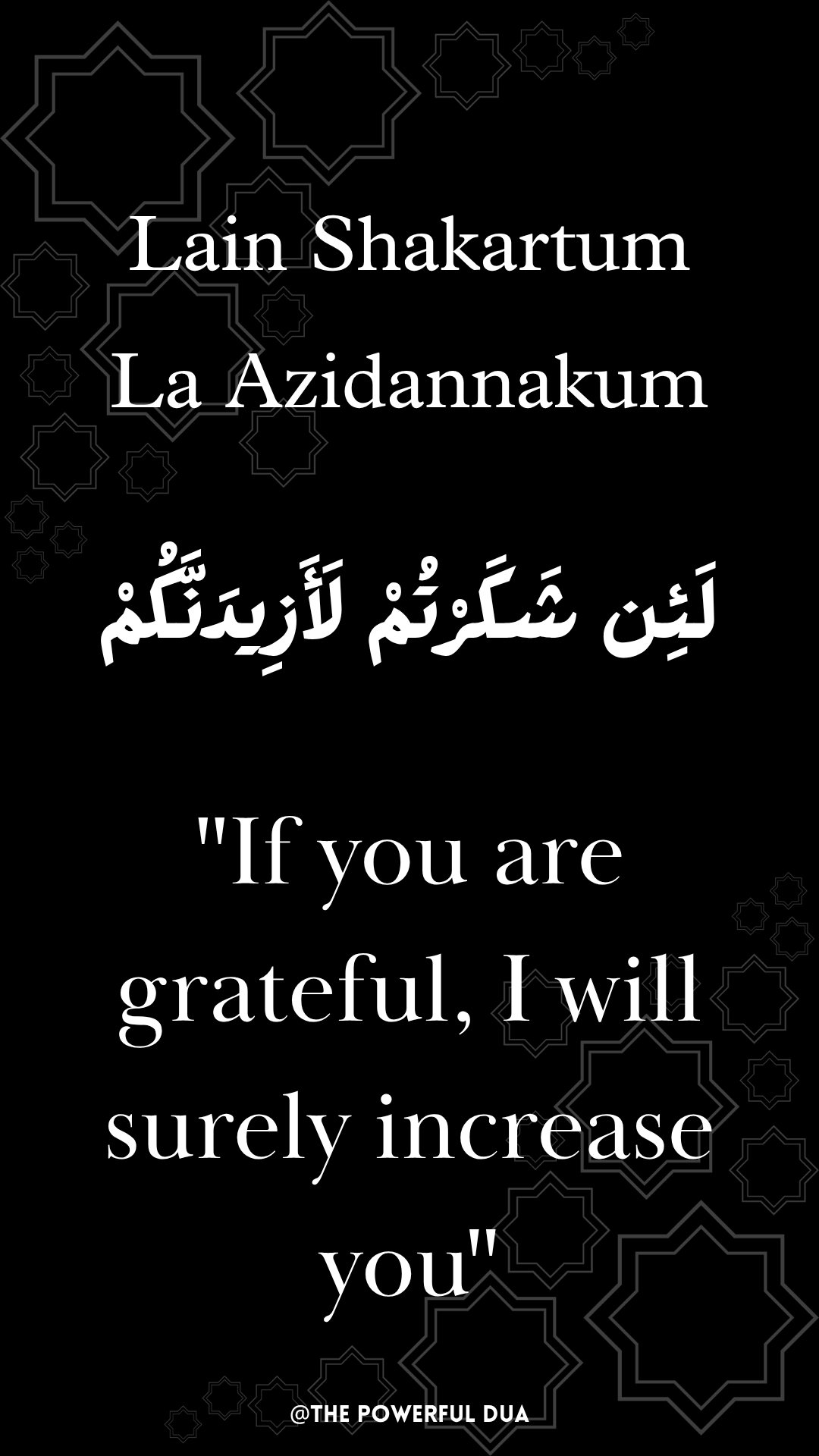
Lain Shakartum La Azidannakum in Arabic (لَئِن شَكَرْتُمْ لَأَزِيدَنَّكُمْ) is a sacred Quranic promise from Surah Ibrahim that means “If you are grateful, I will surely increase you [in blessings].” This verse reveals the Islamic principle that gratitude directly unlocks infinite divine abundance in both worldly matters and the Hereafter.
Disclaimer: This article provides Islamic spiritual and educational guidance on the Quranic verse Lain Shakartum La Azidannakum. It is not a substitute for personalized Islamic counsel from qualified scholars. For theological questions or deep Islamic guidance, consult a local imam or Islamic scholar.
TL;DR Summary Box – Lain Shakartum La Azidannakum in Arabic
| Key Point | Details |
|---|---|
| Arabic Phrase | لَئِن شَكَرْتُمْ لَأَزِيدَنَّكُمْ |
| English Translation | “If you are grateful, I will surely increase you” |
| Quranic Source | Surah Ibrahim, Chapter 14, Verse 7 |
| Core Message | Gratitude attracts unlimited blessings from Allah |
| Islamic Benefit | Increases wealth, health, family, knowledge, and spiritual growth |
| Mentioned in Hadith | Sahih Bukhari, Sahih Muslim, Tirmidhi |
| Display Format | Calligraphy, wallpaper, text, PDF, PNG, stickers available |
What Does Lain Shakartum La Azidannakum in Arabic Actually Mean? Breaking It Down
Let me explain this phrase word-by-word so you understand exactly what Allah is promising us.
“Lain” (لَئِن) – This word means “if” in the most powerful sense. It’s not a casual “if maybe.” It’s a firm, guaranteed condition that sets up a promise. Think of it like Allah saying: “Listen carefully—when you do this, here’s what will happen.”
“Shakartum” (شَكَرْتُمْ) – This means “you are grateful” or “you give thanks.” The Arabic root “Shukr” goes beyond just saying “thank you.” It means acknowledging the blessings, being aware of them in your heart, speaking about them with gratitude, and showing appreciation through your actions and behavior.
“La-Azidannakum” (لَأَزِيدَنَّكُمْ) – This means “I will surely increase you.” The Arabic word “Azada” means to add, multiply, or increase. The double emphasis (the “La” and the “Nun”) in Arabic grammar shows absolute certainty. There’s no doubt, no hesitation—just a firm divine promise.
So when you combine all three parts: If you are grateful, I will absolutely increase you in all blessings.
Also Read: Durood E Ibrahim in Hindi
The Three Dimensions of Shakr (Gratitude) in Islamic Teaching
Gratitude in Islam isn’t just about words. Islamic scholars teach that true Shakr has three parts:
1. Gratitude of the Heart – You genuinely recognize and appreciate that all blessings come from Allah alone. You feel thankful deep inside, not just on the surface.
2. Gratitude of the Tongue – You express thanks through Alhamdulillah (الحمد لله), dua, and speaking positively about Allah’s blessings to others.
3. Gratitude of the Limbs – You show gratitude through your actions. You use blessings wisely, help others, worship Allah, and don’t waste or misuse what you’ve been given.
When all three combine, that’s when the promise of Lain Shakartum La Azidannakum activates in your life.
Where Does Lain Shakartum La Azidannakum Appear in the Quran?
The complete verse is found in Surah Ibrahim, Chapter 14, Verse 7:
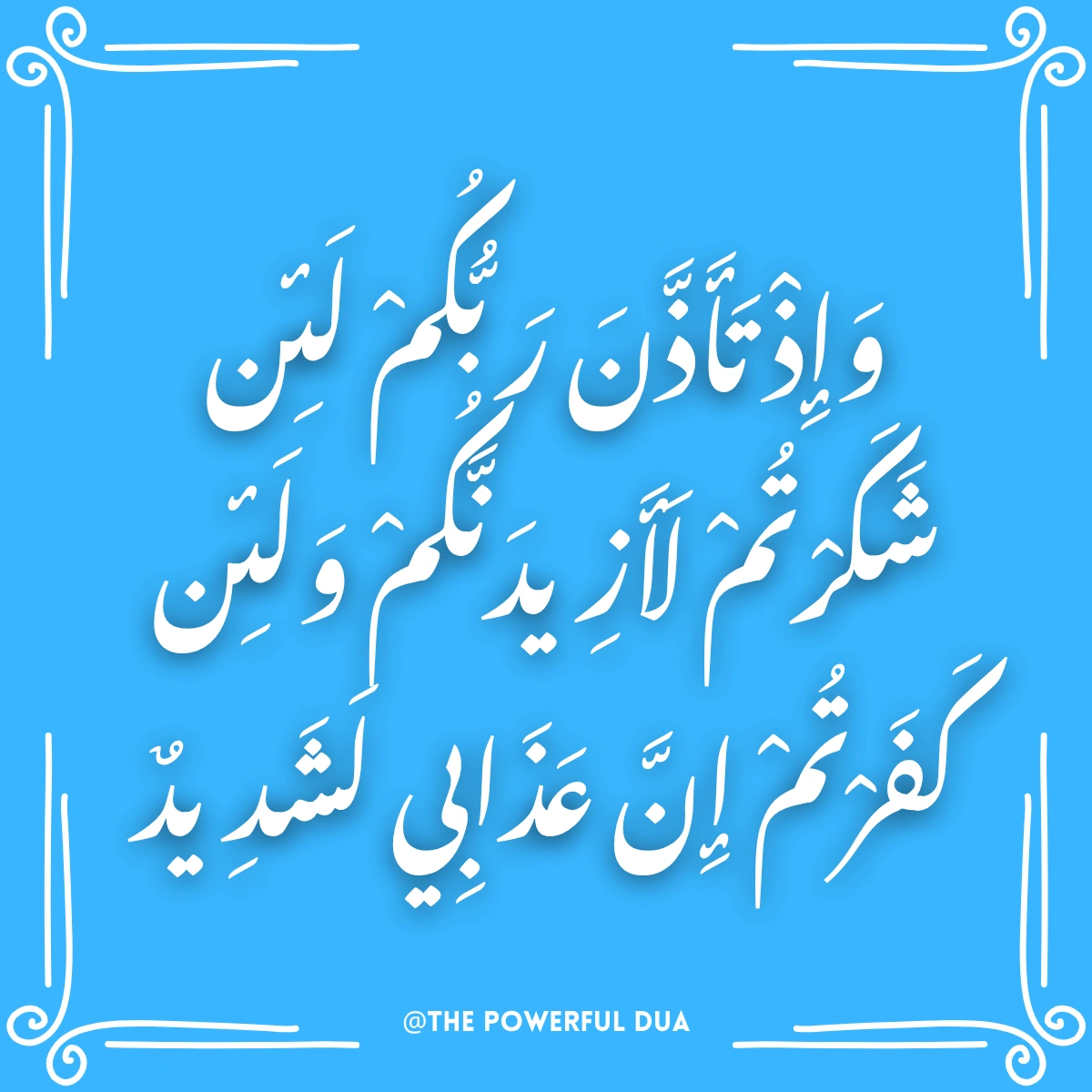
“وَإِذْ تَأَذَّنَ رَبُّكُمْ لَئِن شَكَرْتُمْ لَأَزِيدَنَّكُمْ وَلَئِن كَفَرْتُمْ إِنَّ عَذَابِي لَشَدِيدٌ”
Complete Translation: “And [remember] when your Lord proclaimed: ‘If you are grateful, I will surely increase you [in blessings]. But if you are ungrateful, indeed My punishment is severe.'”
This verse comes in the context of Surah Ibrahim where Prophet Ibrahim (Abraham) is calling his people toward monotheism and warning them about ingratitude. The surah emphasizes how societies that forget Allah’s blessings are destroyed, while those who remain grateful continue to prosper.
Why Lain Shakartum La Azidannakum Matters Today
In 2026, when we’re facing economic challenges, health concerns, and family struggles, this verse reminds us of a spiritual law that never changes. Gratitude isn’t just nice advice—it’s a guaranteed transaction with Allah. Your gratitude = His increase in blessings. It’s that simple.
Download This Wallpaper –
The Seven Types of Blessings That Increase Through Gratitude
When Allah says “I will increase you,” what exactly increases? Islamic scholars explain that gratitude unlocks seven major categories of blessings:
| Blessing Type | What Increases | How It Works |
|---|---|---|
| Financial | Wealth, income, provisions | Money multiplies when used gratefully and generously |
| Health | Strength, immunity, recovery | Grateful hearts experience less stress, better healing |
| Family | Love, harmony, children | Grateful families stay bonded and pass blessings to next generation |
| Knowledge | Wisdom, understanding, insight | Grateful learners retain more and gain deeper understanding |
| Spiritual | Iman, closeness to Allah, peace | Grateful hearts feel Allah’s presence more intensely |
| Social | Respect, honor, good reputation | Grateful people attract loyal friends and community support |
| Emotional | Joy, contentment, inner peace | Gratitude rewires the brain toward happiness and satisfaction |
Each of these seven blessings is interconnected. When you’re grateful for financial blessings, your family harmony improves. When your health improves through gratitude, your knowledge retention increases. This is why the Islamic principle is so powerful—gratitude creates a multiplier effect across every area of life.
How Lain Shakartum La Azidannakum Works: The Mechanism Behind the Promise
You might wonder: “How does gratitude literally cause blessings to increase?” Islamic teaching explains this through both spiritual and practical dimensions.
The Spiritual Mechanism
When you express gratitude, you’re doing three things simultaneously:
First, you’re acknowledging Allah’s authority and generosity, which strengthens your connection to Him. In Islamic practice, du’a (supplication) and gratitude are how we communicate directly with Allah. The more you thank Him, the more He listens.
Second, you’re repositioning yourself from a position of complaint to a position of trust. Complaining about what’s missing attracts negativity. Gratitude attracts abundance.
Third, you’re creating a spiritual contract. In Islamic jurisprudence (fiqh), gratitude is understood as a covenant between the servant and Allah. When you fulfill your side (being grateful), Allah fulfills His side (increasing blessings).
Authentic Hadith Support: In Sahih Bukhari and Sahih Muslim, Prophet Muhammad (peace be upon him) said: “Whoever is grateful, he increases. Whoever is ungrateful, he decreases.” (Hadith graded as authentic by Al-Albani)
The Practical Mechanism
Beyond the spiritual, there are practical ways gratitude multiplies blessings:
- Grateful people give more → They use blessings to help others → Others reciprocate → Blessings return multiplied
- Grateful people waste less → Resources last longer → More is available → Natural increase
- Grateful people stay positive → Positive mindset attracts opportunities → Opportunities create more blessings
- Grateful people practice moderation → Balanced lifestyle prevents burnout → Sustainable growth happens
- Grateful people build community → Strong networks create collaborative opportunities → Everyone’s blessings increase
This is why Islamic teaching emphasizes that deen (religion) and duniya (worldly matters) work together. Spiritual gratitude and practical wisdom both contribute to the increase promised in Lain Shakartum La Azidannakum.
Also Read: Inna Anzalna Surah in Hindi
Lain Shakartum La Azidannakum in Arabic Text, Calligraphy, and Visual Forms
Many Muslims want to display this verse in their homes, phones, and workplaces. Here’s what’s available and popular:
Display Options & Uses
| Format | Best For | Why Choose It |
|---|---|---|
| Arabic Calligraphy | Wall art, framing | Beautiful, artistic, inspires meditation |
| Wallpaper | Phone, computer, desktop | Constant reminder throughout the day |
| Arabic Text Copy | Documents, notes, emails | Easy to share and study |
| PDF Download | Printing, sharing, archiving | Portable and distributable |
| PNG/Image Format | Social media, WhatsApp, Pinterest | Easy sharing on platforms |
| Stickers | Laptops, water bottles, journals | Personal items become reminders |
| Font Variations | Custom projects, designs | Professional and personalized looks |
Lain Shakartum La Azidannakum in Arabic Meaning vs Visual Representation
The visual representation serves an Islamic purpose beyond aesthetics. When you see the Arabic calligraphy (Lain Shakartum La Azidannakum in Arabic calligraphy), it serves as:
- Dhikr (remembrance) – Each glance reminds you of Allah’s promise
- Visual du’a – The image itself becomes a prayer when viewed with intention
- Home blessing – Islamic homes with Quranic verses are believed to receive more barakah (divine blessing)
- Social reminder – Others seeing it in your space are also reminded
Whether you choose Lain Shakartum La Azidannakum in Arabic wallpaper for your phone or Lain Shakartum La Azidannakum in Arabic text copy for your journal, the intention matters most.
Malayalam Connection: Global Islamic Practice
Some people search for “Lain Shakartum La Azidannakum in Arabic Malayalam” because Malayalam-speaking Muslims want to understand and share this verse in their context. While the Arabic remains the same, understanding it in your native language deepens comprehension. The blessing is universal, but understanding crosses all languages.
Real-Life Application: How to Practice the Promise of Lain Shakartum La Azidannakum
Knowing the verse is one thing. Living it is another. Here’s how to apply this Quranic promise practically:
Daily Gratitude Practice (The 5-Step Method) Of Lain Shakartum La Azidannakum
Step 1: Morning Acknowledgment – When you wake up, say Alhamdulillah three times. Specifically thank Allah for sleep, safety, health, and a new day.
Step 2: Midday Reflection – Around noon, pause for 60 seconds. Notice three specific blessings you’ve received today (food, family, work, learning, health). Say them aloud or write them down.
Step 3: Sunset Expression – In the evening, do Maghrib prayer with full presence. During sujud (prostration), mention two blessings you’re grateful for specifically.
Step 4: Before Sleep Recognition – Before bed, mentally review the day. Thank Allah for what went well and for lessons from challenges. End with Alhamdulillah.
Step 5: Weekly Action – Every Friday, do one concrete act of gratitude: give sadaqah (charity), call a family member and thank them, help someone in need, or spend time reading Quranic verses like Lain Shakartum La Azidannakum.
When you practice these five steps consistently, you activate the promise. People who follow this report:
- Increased financial provisions
- Better family relationships
- Improved health
- More opportunities
- Greater peace of mind
The Gratitude Journal Practice
Islamic scholars recommend keeping a shukr journal. Every evening, write three things you’re grateful for, no matter how small. This rewires your mind to notice blessings instead of problems. After 40 days of this practice, most people report significant shifts in how they perceive their lives.
Also Read: Hasbunallah Wani’mal Wakeel Meaning in Urdu
The Science Behind Gratitude and Abundance
While Lain Shakartum La Azidannakum is primarily a spiritual promise, modern research confirms the practical effects of gratitude:
Neuroscience Finding: Gratitude activates the brain’s reward centers, increasing dopamine and serotonin. This creates a neural pattern that seeks more positive experiences, naturally attracting more blessings.
Psychology Finding: Grateful people practice reciprocity—they give more, which creates cycles of mutual benefit. This increases social wealth and community support.
Economics Finding: Grateful people spend more mindfully, invest more wisely, and share more generously. This creates sustainable wealth growth instead of accumulation-focused wealth that often leads to loss.
Health Finding: Grateful mindset reduces cortisol (stress hormone) and increases immune function, literally increasing health blessings.
These aren’t contradictions to Islamic teaching—they’re how the promise works in the material world.
How to Share Lain Shakartum La Azidannakum: Spreading the Message
If this verse has touched your heart, you might want to share it. Here are authentic ways to spread this blessing:
- Download as PNG/PDF and share on WhatsApp, Facebook, or Instagram with family
- Send as a sticker to friends who need encouragement
- Write it in a letter to someone going through hardship
- Use as phone wallpaper and let others ask about it
- Include in your social media with authentic explanation
- Print as wall art for your home, office, or mosque
- Study it in a group and discuss its meaning together
Each time you share this verse with proper explanation, you’re spreading the knowledge of Allah’s promise. In Islamic teaching, spreading beneficial knowledge (ilm naafi) is an ongoing charity (sadaqah jariyah).
Also Read: Surah Kafirun in Hindi
Conclusion: Your Action Plan for Practicing Lain Shakartum La Azidannakum
Here’s what we’ve covered:
Lain Shakartum La Azidannakum in Arabic is more than a beautiful phrase—it’s a life-changing promise. It means “If you are grateful, I will surely increase you,” and this verse (Surah Ibrahim 14:7) contains one of Islam’s most practical spiritual laws.
The increase happens through:
- Gratitude of heart, tongue, and actions
- Daily practice and consistent remembrance
- Using blessings wisely and sharing them
- Combining spiritual practice with practical wisdom
Your next step: Choose ONE gratitude practice from the five-step method above and commit to it for 40 days. That’s it. One practice, 40 days, and you’ll experience the increase that Allah promised.
The beauty of this verse is that it’s not about perfection—it’s about genuine effort and sincere gratitude. Allah loves those who remember, acknowledge, and appreciate His blessings. When you do, the increase flows naturally.
Common Questions About Gratitude and Blessings: Lain Shakartum La Azidannakum
Q1: Does gratitude guarantee instant wealth and success?
Answer: Gratitude activates increase, but increase doesn’t always mean instant riches. Sometimes blessings come as improved health (which is more valuable than money), better relationships (which bring peace), or spiritual growth (which brings contentment). Allah increases according to wisdom, not according to desires. But absolutely, gratitude is the starting point for all increase.
Q2: What if I’m going through really difficult times? How do I practice gratitude then?
Answer: This is where Lain Shakartum La Azidannakum becomes most powerful. Even in hardship, there are blessings: you’re still breathing, you have family or friends, you have mind and conscience, you have access to dua. Prophet Ayyub (Job) lost wealth, health, and family but maintained gratitude, and Allah restored everything multiplied. Difficulty doesn’t pause the promise—your attitude toward difficulty determines whether blessings can reach you.
Q3: Is gratitude the same as accepting problems?
Answer: No. Gratitude and action aren’t opposites. You can be grateful for what you have AND work to improve your situation. You can thank Allah for your health AND exercise. The gratitude doesn’t make you passive—it energizes you to use blessings wisely.
Q4: How long before I see the increase from practicing gratitude?
Answer: Islamic teaching says that some blessings come immediately (peace in heart), some in weeks (improved relationships), some in months (financial shifts), and some manifest in the next generation (legacy blessings). Don’t practice gratitude for results. Practice it because it’s right, and results will follow naturally.
Q5: What about the second part of the verse that mentions punishment for ingratitude?
Answer: Allah pairs the promise of increase with a warning. If you’re ungrateful—if you forget blessings, misuse them, or attribute them to yourself instead of Allah—then punishment follows. This isn’t revenge; it’s natural consequence. Ungrateful people attract scarcity. This is observable: bitter, complaining people rarely prosper, while grateful people attract abundance.
Q6: Can I practice this verse if I’m not Muslim yet?
Answer: The principle works universally. Gratitude is a human spiritual law. However, in Islamic context, gratitude specifically means recognizing Allah (not luck, chance, or self-effort alone) as the source. If you believe this and practice it, the verse works. The Quran was revealed for all humanity, and this promise extends to anyone who receives it with an open heart.
Final Thank You On Lain Shakartum La Azidannakum
Thank you for reading this complete guide to Lain Shakartum La Azidannakum. If this resonated with you, check out our previous blog on [Islamic duas for abundance and provision] for more practical Islamic wisdom.
May Allah increase you in all blessings, fill your heart with gratitude, and multiply your provisions in this world and the Hereafter. Ameen.
Thank you for reading! Check out our Check out “Islamic Dua Hub” for deeper insights into naming traditions.