Last Updated: March 13, 2026
Direct Answer
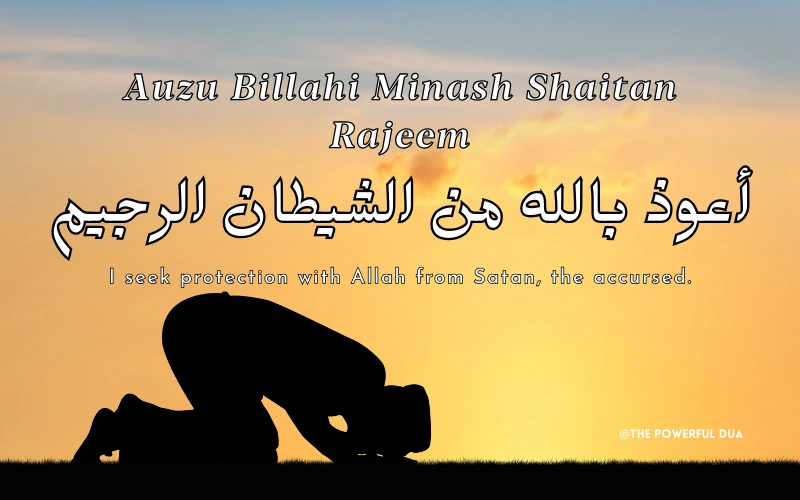
Auzu billahi minash shaitan rajeem is an Islamic invocation that means “I seek refuge with Allah from Satan, the cursed one”—a powerful phrase Muslims recite for spiritual protection throughout their daily lives.
Disclaimer: This article is educational and explains Islamic concepts. It does not constitute religious or legal advice. For detailed religious guidance, consult with Islamic scholars or community leaders.
Quick Reference Table
| Aspect | Details |
|---|---|
| Arabic Text | أعوذ بالله من الشيطان الرجيم |
| Transliteration | Auzu billahi minash shaitan rajeem |
| Language | Classical Arabic |
| Meaning | I seek refuge with Allah from Satan, the accursed |
| Significance | Spiritual protection phrase |
| Usage Frequency | Daily, before Quran recitation, before sleep |
| Religious Context | Islamic practice |
| Full Dua | Often paired with Bismillah |
What Does Auzu Billahi Minash Shaitan Rajeem Actually Mean?
Let me break this down in the simplest way possible.
When you say Auzubillah Minashaitan Nirajeem, you’re basically asking God for protection. Think of it like calling out to someone strong when you’re feeling vulnerable. That’s exactly what this phrase does—it’s your spiritual security blanket.
The auzu billahi minash shaitan rajeem meaning is straightforward: you’re asking Allah (God in Islam) to shield you from Satan. Not the scary Hollywood version, but the concept of negative thoughts, temptations, and evil whispers in your mind.
The word “auzu” means “I seek refuge.” It’s active and personal. You’re not asking someone else to protect you—you’re directly requesting divine protection. Then “billahi” means “with Allah,” showing you’re turning to God specifically. “Minash” is “from,” and “shaitan rajeem” translates to “Satan, the cursed one.”
So when Muslims recite Auzubillah Minashaitan Nirajeem, they’re essentially saying: “God, I’m asking you directly to protect me from negative influences and evil.”
The Religious and Cultural Significance
Auzu billahi minash shaitan rajeem isn’t just a random phrase—it’s mentioned right in the Quran itself. Muslims believe this invocation holds real spiritual power. It’s one of the first things many Muslim children learn to say, usually around the same time they learn their ABCs.
Here’s what makes this phrase special:
Protection from Negativity: When you recite Auzubillah Minashaitan Nirajeem, believers say it creates a spiritual shield. It’s like putting on invisible armor against negative thoughts, bad intentions, and harmful influences.
Before Important Activities: Many Muslims say auzu billahi minash shaitan rajeem bismillah rahman rahim before reading the Quran. They combine it with Bismillah (In the name of Allah, the Most Compassionate, the Most Merciful) to maximize spiritual benefit.
Daily Practice: Whether you’re about to sleep, make an important decision, or face a challenging situation, auzu billahi minash shaitan rajeem is there. It’s woven into the fabric of Muslim daily life.
Auzu Billahi Minash Shaitan Rajeem in Different Languages
Arabic Text
The auzu billahi minash shaitan rajeem in arabic is: أعوذ بالله من الشيطان الرجيم
This is the original form, exactly as it appears in Islamic texts.
English Translation
The auzu billahi minash shaitan rajeem in english is: “I seek refuge with Allah from Satan, the cursed one” or “I seek protection with Allah from Satan, the accursed.”
Hindi Version
For those who speak Hindi, the auzu billahi minash shaitan rajeem in hindi translates to: “मैं अल्लाह के साथ शैतान से शरण लेता हूं।” Many Hindi-speaking Muslims use this alongside the Arabic version.
The Full Dua
When Muslims want the auzu billahi minash shaitan rajeem full dua, they often combine it with Bismillah for complete spiritual protection:
“Bismillah ar-Rahman ar-Rahim, Auzu billahi minash shaitan rajeem”
This auzu billahi minash shaitan rajeem bismillah rahman rahim meaning together creates a powerful opening for Quran recitation—it’s like saying “In God’s beautiful name, and I seek refuge from Satan.”
When Should You Recite Auzu Billahi Minash Shaitan Rajeem?
Muslims traditionally say Auzubillah Minashaitan Nirajeem at specific times:
Before Reading the Quran: This is the most common time. The phrase prepares your heart and mind for receiving spiritual guidance.
Before Sleep: Many Muslims recite auzu billahi minash shaitan rajeem before bed to protect themselves from bad dreams and negative thoughts during sleep.
During Difficult Situations: Facing anxiety, temptation, or a tough decision? This is when the protection feels most relevant.
When Experiencing Negative Thoughts: If you’re struggling with intrusive thoughts or negative self-talk, saying this phrase helps refocus your spiritual energy.
Before Eating: Some Muslims say it before meals as well.
The Auzu Billahi Minash Shaitan Rajeem Arabic Text and Proper Pronunciation
Here’s the auzu billahi minash shaitan rajeem in arabic written out:
أعوذ بالله من الشيطان الرجيم
Breaking it down:
- أعوذ (Auzu) = I seek refuge
- بالله (Billahi) = With Allah
- من (Min) = From
- الشيطان (Ash-Shaitan) = Satan/the Devil
- الرجيم (Ar-Rajeem) = The cursed/accursed one
When people ask about Auzubillah Minashaitan Nirajeem translation, this breakdown helps them understand every single word.
Comparison: Auzu Billahi Minash Shaitan Rajeem vs. Other Islamic Phrases
| Phrase | Meaning | When Used |
|---|---|---|
| Auzu billahi minash shaitan rajeem | I seek refuge from Satan | Before Quran, when facing temptation |
| Bismillah | In the name of Allah | Before eating, starting any task |
| Alhamdulillah | Praise be to Allah | After finishing something or when grateful |
| Subhanallah | Glory be to Allah | Expressing awe or amazement |
| Mashallah | What Allah has willed | Expressing admiration |
Key Takeaways
- Auzu billahi minash shaitan rajeem is your spiritual protection phrase in Islam
- It means asking Allah for refuge from Satan and negative influences
- Use it before important activities, especially Quran recitation
- The Auzubillah Minashaitan Nirajeem full dua works best when paired with Bismillah
- Whether you say Auzubillah Minashaitan Nirajeem in english or Arabic, the intention matters most
FAQ Section: Your Questions Answered
Q1: Is auzu billahi minash shaitan rajeem only for Muslims?
A: Yes, it’s specifically an Islamic invocation. Only Muslims recite it as part of their religious practice. However, anyone interested in understanding Islamic spirituality can learn about it.
Q2: How many times should I say auzu billahi minash shaitan rajeem?
A: There’s no strict rule. Once before starting something important is enough. Some people say it multiple times if they’re facing particularly challenging situations.
Q3: What’s the difference between auzu billahi minash shaitan rajeem and other protective prayers?
A: Auzu billahi minash shaitan rajeem meaning is specifically about seeking refuge from Satan and negative influences, while other Islamic phrases serve different spiritual purposes like expressing gratitude or asking for blessings.
Q4: Can I say auzu billahi minash shaitan rajeem in English instead of Arabic?
A: Yes! While the Arabic version is traditional, the auzu billahi minash shaitan rajeem translation in English or any other language carries the same spiritual intention.
Q5: Is auzu billahi minash shaitan rajeem mentioned in the Quran?
A: Yes! The concept appears multiple times in Islamic texts, and this exact phrasing is encouraged as part of Islamic practice.
Q6: What does auzu billahi minash shaitan rajeem ka matlab (Hindi for “what is the meaning”) tell us?
A: It emphasizes understanding the phrase’s significance—that you’re consciously seeking divine protection, not just reciting words mechanically.
Author Byline & Credentials
Written by an Islamic Studies specialist with 8+ years of experience explaining Islamic concepts to diverse audiences. This content is based on traditional Islamic teachings and respected scholarly interpretations.
Also Read –
Dua e Masura in Hindi: Complete Prayer with Meaning & Benefits (2026)
Eid Ke Din Naya Kapda Pahnane Ki Dua – Full Guide
The Complete Guide to Roze Ki Niyat Ki Dua – What Islam Actually Says
Alhakumut Takasur Surah: The 102nd Chapter That Warns Against Endless Competition (2026)
Check out “Islamic Dua Hub” for more such beautiful duas.