Creatine is one of the most popular and scientifically supported compounds for improving strength, power, muscle growth, and athletic performance. While many people obtain creatine through supplements, fewer realize that creatine naturally occurs in several animal-based foods.
Understanding which foods contain creatine can help you make informed dietary choices, whether you’re an athlete, fitness enthusiast, or simply interested in learning more about nutrition.
In this guide, we’ll explore the best foods high in creatine, explain how creatine works in the body, QUOR and discuss whether dietary sources alone can provide enough creatine to support optimal performance.
What Is Creatine?
Creatine is a naturally occurring compound made from three amino acids:
-
Arginine
-
Glycine
-
Methionine
The human body produces creatine primarily in the:
-
Liver
-
Kidneys
-
Pancreas
After production, creatine is transported to muscle tissue, where approximately 95% of the body’s creatine is stored.
Inside muscles, creatine plays a crucial role in energy production by helping regenerate adenosine triphosphate (ATP), the body’s primary energy source during short bursts of high-intensity activity.
Because of this function, creatine has become widely recognized for supporting:
-
Strength
-
Power
-
Exercise performance
-
Muscle growth
-
Athletic training
Why Is Creatine Important?
Creatine helps muscles produce energy more efficiently during activities such as:
-
Weightlifting
-
Sprinting
-
Jumping
-
High-intensity interval training (HIIT)
-
Competitive sports
Higher muscle creatine stores may help support:
-
Improved workout performance
-
Greater training capacity
-
Enhanced power output
-
Increased muscle-building potential
This is why many athletes prioritize creatine intake through both diet and supplementation.
Which Foods Contain Creatine?
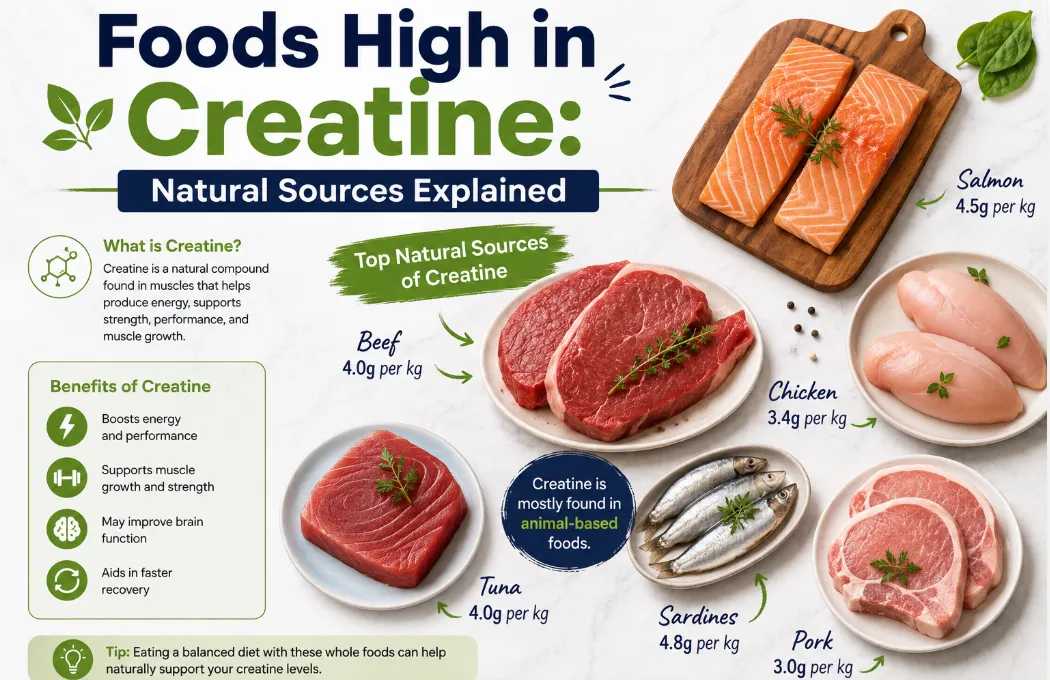
Creatine is found primarily in animal-based foods.
The richest sources include:
-
Red meat
-
Fish
-
Poultry (smaller amounts)
Plant-based foods generally contain little to no creatine.
Let’s examine the best natural creatine sources.
1. Herring
One of the Richest Sources of Creatine
Herring is often considered one of the most creatine-rich foods available.
Approximate Creatine Content
-
Up to 1 gram of creatine per 100 grams
In addition to creatine, herring provides:
-
Omega-3 fatty acids
-
Protein
-
Vitamin D
-
Selenium
For individuals seeking natural creatine intake, herring is one of the best options.
2. Beef
A Popular Source of Dietary Creatine
Beef is among the most common dietary sources of creatine.
Approximate Creatine Content
-
Approximately 0.4–1 gram per 100 grams
The exact amount varies based on:
-
Cut of meat
-
Preparation method
-
Water content
Beef also supplies:
-
High-quality protein
-
Iron
-
Zinc
-
B vitamins
Because of its nutritional profile, beef remains a staple food for many athletes.
3. Pork
Pork contains creatine levels comparable to many cuts of beef.
Approximate Creatine Content
-
Approximately 0.4–1 gram per 100 grams
Pork also provides:
-
Protein
-
B vitamins
-
Minerals
Lean pork cuts can be an excellent addition to a balanced nutrition plan.
4. Salmon
Salmon is another well-known creatine source.
Approximate Creatine Content
-
Roughly 0.4–1 gram per 100 grams
Additional nutritional benefits include:
-
Omega-3 fatty acids
-
Protein
-
Vitamin B12
-
Selenium
Salmon offers the added advantage of supporting overall nutritional intake beyond creatine alone.
5. Tuna
Tuna provides moderate amounts of dietary creatine.
Approximate Creatine Content
-
Approximately 0.4 grams per 100 grams
Tuna is also valued for:
-
High protein content
-
Convenience
-
Versatility in meal preparation
Many athletes include tuna regularly as part of their nutrition plans.
6. Cod
Cod contains lower creatine levels than herring or salmon but still contributes to overall intake.
Nutritional Benefits
Cod provides:
-
Lean protein
-
Vitamins
-
Minerals
It remains a healthy seafood option for active individuals.
7. Chicken
Chicken contains smaller amounts of creatine compared to red meat and fish.
Approximate Creatine Content
-
Lower than beef, pork, and many fish varieties
However, chicken remains valuable due to its:
-
High protein content
-
Lean nutritional profile
-
Widespread availability
Many athletes consume chicken as a foundational protein source.
8. Turkey
Turkey also contains modest amounts of creatine.
Benefits include:
-
Lean protein
-
Essential nutrients
-
Versatile meal options
Although not the richest creatine source, turkey contributes to overall dietary intake.
Creatine Content Comparison
|
Food |
Approximate Creatine Content (per 100g) |
|
Herring |
Up to 1g |
|
Beef |
0.4–1g |
|
Pork |
0.4–1g |
|
Salmon |
0.4–1g |
|
Tuna |
~0.4g |
|
Cod |
Lower amounts |
|
Chicken |
Lower amounts |
|
Turkey |
Lower amounts |
These values are approximate and may vary depending on sourcing and preparation.
Do Cooking Methods Affect Creatine?
Yes.
Cooking can reduce the creatine content of foods because some creatine may break down during preparation.
Factors influencing creatine retention include:
-
Cooking temperature
-
Cooking duration
-
Preparation method
However, cooked meat and fish remain valuable dietary sources of creatine.
Can You Get Enough Creatine From Food Alone?
Technically, yes.
However, reaching supplementation-level intake through food alone can be challenging.
Example
Many creatine supplements provide:
3–5 grams of creatine per day
To obtain similar amounts solely from food, an individual would often need to consume substantial quantities of creatine-rich meat or fish.
For this reason, many athletes and fitness enthusiasts choose creatine supplementation.
Vegetarians and Creatine Intake
Plant-based foods contain little to no creatine.
As a result, vegetarians and vegans often consume significantly less dietary creatine than individuals who regularly eat meat and fish.
Because of this difference, creatine supplementation is frequently discussed within vegetarian and vegan fitness communities.
Benefits of Natural Creatine Sources
Whole foods provide more than just creatine.
They also deliver:
Protein
Essential for muscle repair and growth.
Vitamins
Including:
-
B vitamins
-
Vitamin D (certain fish)
Minerals
Such as:
-
Iron
-
Zinc
-
Selenium
Healthy Fats
Especially in fatty fish varieties.
These nutrients contribute to overall health and performance.
Foods High in Creatine vs Creatine Supplements
Natural Food Sources
Advantages:
-
Additional nutrients
-
Whole-food nutrition
-
High-quality protein
Limitations:
-
Lower creatine concentration
-
Larger food quantities required
Creatine Supplements
Advantages:
-
Convenient
-
Consistent dosing
-
Easy to reach recommended intake
Limitations:
-
Do not provide the broader nutrient profile of whole foods
Many athletes combine both dietary creatine sources and supplementation.
Frequently Asked Questions
What Food Has the Most Creatine?
Herring is often considered one of the richest natural sources of creatine.
Is Beef High in Creatine?
Yes. Beef contains substantial amounts of naturally occurring creatine and remains one of the most popular dietary sources.
Do Eggs Contain Creatine?
Eggs contain very little creatine compared to meat and fish.
Can Vegetarians Get Creatine From Food?
Plant-based foods contain little to no creatine, making dietary intake lower among vegetarians and vegans.
Is Natural Creatine Better Than Supplements?
Both can contribute to creatine intake. Whole foods provide additional nutrients, while supplements offer convenience and higher creatine concentrations.
Final Thoughts
Creatine is naturally found in a variety of animal-based foods, particularly fish and red meat. Herring, beef, pork, salmon, and tuna rank among the best dietary sources of creatine and can contribute to overall creatine intake while also providing valuable protein, vitamins, minerals, and healthy fats.
Although it is possible to obtain creatine through food alone, many athletes find it difficult to consume the quantities necessary to match the levels commonly used in supplementation protocols. As a result, creatine supplements remain a popular option for individuals seeking to maximize muscle creatine stores and support performance goals.
Whether you choose to focus on creatine-rich foods, supplements, or a combination of both, understanding natural creatine sources can help you build a nutrition plan that supports strength, fitness, and long-term athletic success.