Last Update: 13 May 2026
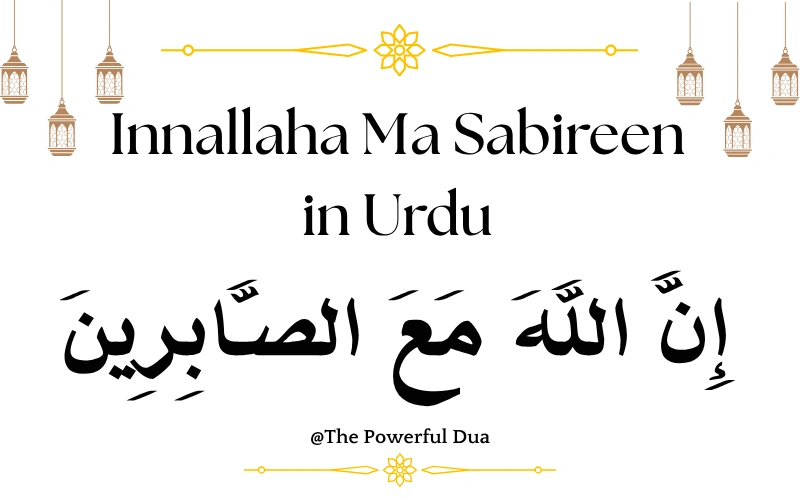
Innallaha Ma Sabireen (إِنَّ اللَّهَ مَعَ الصَّابِرِينَ) is an Arabic phrase from the Quran that translates to “Indeed, Allah is with the patient ones” in English and “بے شک اللہ صابروں کے ساتھ ہے” in Urdu.
Innallaha Ma Sabireen in Urdu appears in Surah Al-Baqarah (2:153) and is one of the most frequently cited Quranic reminders about patience during hardship, loss, and life’s challenges. Muslims recite and share this phrase as comfort, reassurance, and spiritual strength.
Script Versions & Formats Of Innallaha Ma Sabireen
| Format | Text | Use Case |
|---|---|---|
| Arabic (Original) | إِنَّ اللَّهَ مَعَ الصَّابِرِينَ | Quranic reference, calligraphy |
| Urdu Script | اِن اللہ مع الصابرین | Instagram bio, Urdu speakers |
| Urdu Translation | بے شک اللہ صابروں کے ساتھ ہے | Full meaning, wallpapers |
| Transliteration | Innallaha Ma Sabireen | Pronunciation, beginners |
| English Translation | Indeed, Allah is with the patient ones | Non-Arabic readers |
Related Islamic Patience Phrases Of Innallaha Ma Sabireen
| Phrase | Arabic | Urdu Meaning | When Used |
|---|---|---|---|
| Innallaha Ma Sabireen | إن الله مع الصابرين | اللہ صابروں کے ساتھ ہے | During hardship, loss, trials |
| Alhamdulillah | الحمد لله | تمام تعریف اللہ کے لیے | Gratitude, acceptance |
| Tawakkul | التوكل | اللہ پر بھروسہ | Trust in divine will |
| Sabr wa Shukr | صبر و شکر | صبر اور شکر | Patience + gratitude combined |
Innallaha Ma Sabireen in Urdu Text (Copy-Paste)
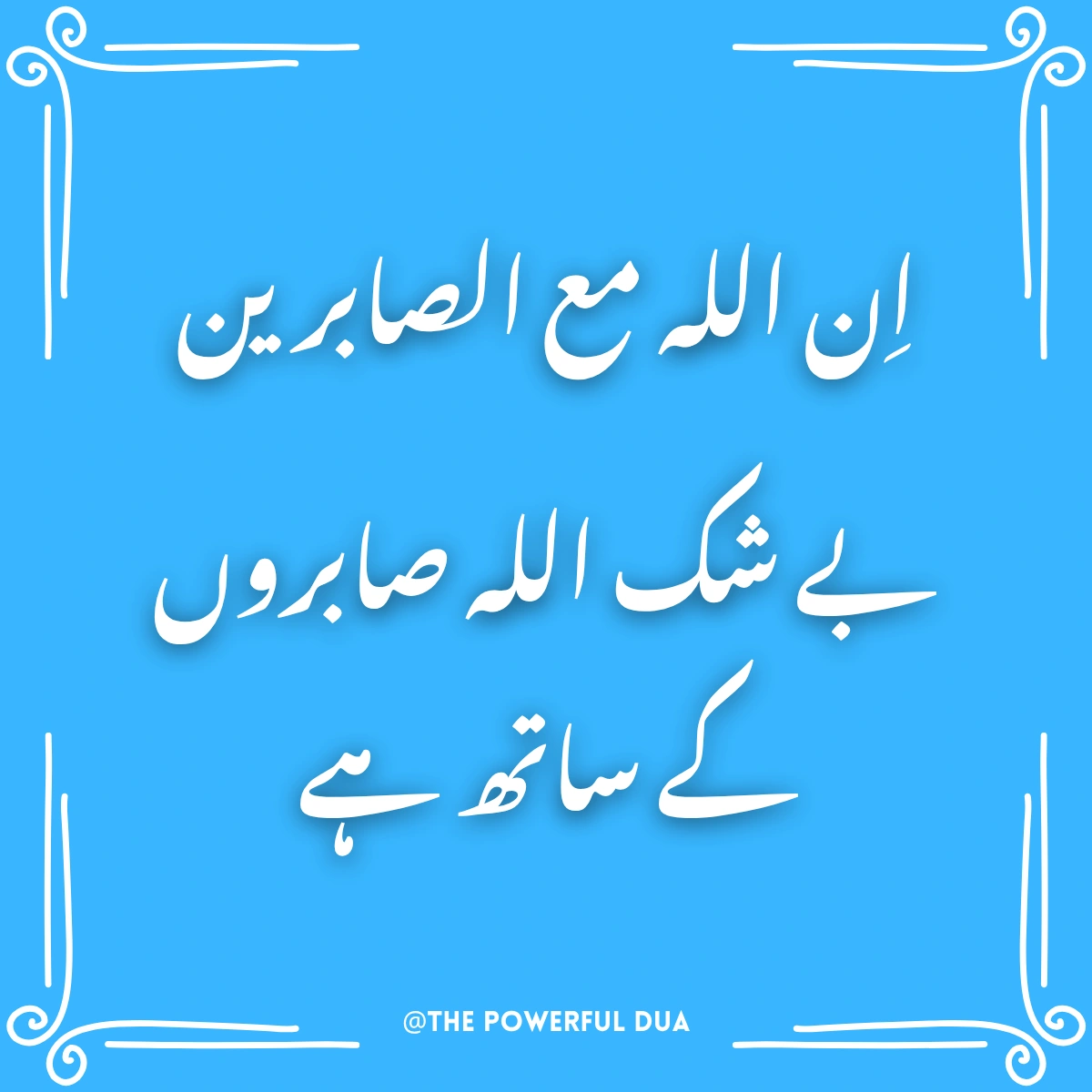
Here’s the exact Urdu rendering:
اِن اللہ مع الصابرین
Or in fuller Urdu prose:
بے شک اللہ صابروں کے ساتھ ہے
For those learning Arabic pronunciation in Urdu script:
Innal-laha ma’a as-sabereen
Complete Meaning in Urdu
The phrase conveys:
- “Beshak” (بے شک) — Certainly, undoubtedly, indeed
- “Allah” (اللہ) — God, the Divine
- “Ma’a” (معے) — With, alongside, accompanying
- “As-Sabereen” (الصابرین) — The patient ones, those who endure with patience (sabr)
Full Urdu meaning: “بے شک اللہ ان لوگوں کے ساتھ ہے جو صبر کرتے ہیں” — “Certainly, Allah is with those people who practice patience.”
The word sabr (صبر) in Islamic teaching means more than just passive endurance—it means active patience, perseverance, and dignified resilience during hardship while maintaining faith.
Where Does It Appear in Islamic Texts?
Surah Al-Baqarah (2:153):
The full verse reads: “O you who have believed, seek help through patience and prayer. Indeed, Allah is with the patient.”
This verse appears in the context of Islamic teachings about managing grief, facing adversity, and maintaining spiritual connection during trials. The chapter itself deals with foundational Islamic guidance on faith, charity, and endurance.
Related verses that reinforce this message:
- Surah At-Taubah (9:25) — “Allah has already given you victory in many regions”
- Surah Al-Ankabut (29:59) — “And those who strive for Us—We will surely guide them to Our ways”
Why Muslims Use This Phrase
People recite and share Innallaha Ma Sabireen for several reasons:
During personal loss or grief — When someone loses a loved one, faces illness, or experiences hardship, this phrase reminds them that Allah’s support exists for those who remain patient.
As daily spiritual reinforcement — It serves as a mantra during challenging work situations, family conflicts, or long-term struggles.
On social media and as reminders — Many Muslims set this as their Instagram bio, phone wallpaper, or status update as a public declaration of faith and patience.
In Islamic counseling and support — Religious teachers and counselors often cite this verse when offering spiritual guidance to struggling individuals.
For building resilience — The phrase encapsulates Islamic philosophy about accepting divine will while maintaining hope and dignity.
Innallaha Ma Sabireen in Urdu for Instagram Bio
Ready-to-copy Instagram bio formats:
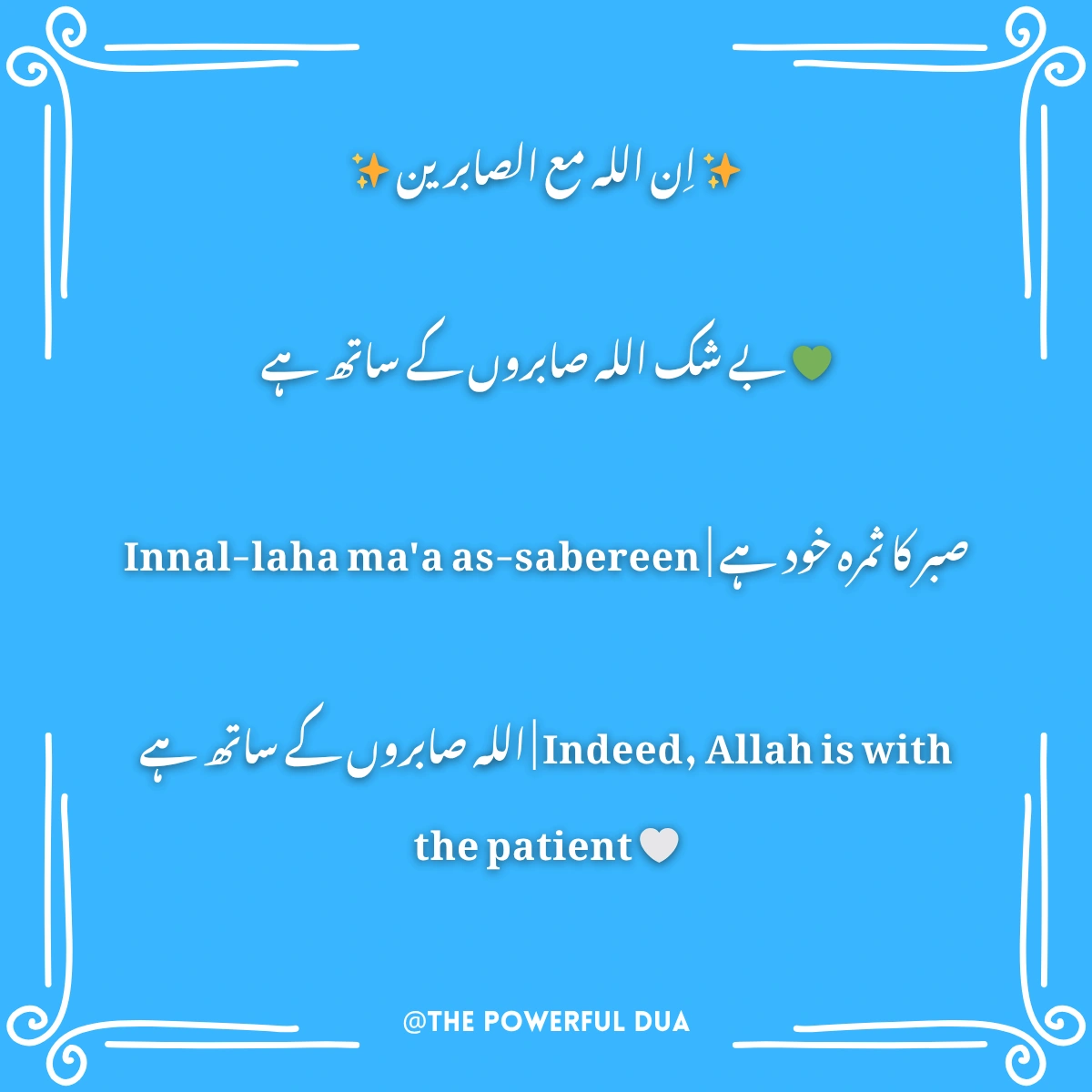
✨ اِن اللہ مع الصابرین ✨
بے شک اللہ صابروں کے ساتھ ہے 💚
Innal-laha ma’a as-sabereen | صبر کا ثمرہ خود ہے
اللہ صابروں کے ساتھ ہے | Indeed, Allah is with the patient 🤍
Innallaha Ma Sabireen Wallpaper Text Versions
For phone or desktop backgrounds:
Simple Urdu version: بے شک اللہ صابروں کے ساتھ ہے
Arabic + Urdu bilingual: إِنَّ اللَّهَ مَعَ الصَّابِرِينَ اِن اللہ مع الصابرین
With English translation: Innallaha Ma Sabireen Indeed, Allah is with the patient ones بے شک اللہ صابروں کے ساتھ ہے
Meaning in Hindi (For Hindi Speakers)
Many Urdu speakers also understand Hindi. The meaning in Hindi:
“निस्संदेह अल्लाह धैर्य रखने वालों के साथ है”
Or more naturally: “अल्लाह हमेशा सब्र करने वालों के साथ रहता है”
The concept of sabr translates closest to “saburi” (सबुरी) or “sahanshilta” (सहनशीलता) in Hindi — patience combined with dignity and faith.
Arabic Calligraphy & Writing Styles
The phrase is commonly written in several Islamic calligraphy styles:
Naskh (standard, most readable): إِنَّ اللَّهَ مَعَ الصَّابِرِينَ
Thuluth (formal, decorative): Typically used in mosque inscriptions and formal Islamic art
Diwani (Ottoman, ornamental): Often seen in framed Islamic home décor
Many designers create wallpapers, Instagram graphics, and wall art using these calligraphic versions for aesthetic and spiritual purposes.
How to Use This Phrase Spiritually
During hardship: Recite it slowly, reflecting on its meaning. Many Muslims memorize the full Surah Al-Baqarah verse and recite it during prayer (du’a).
As a daily reminder: Set it as your phone lock screen or write it in your journal to reinforce patience during routine challenges.
When comforting others: Share this phrase with someone grieving or facing difficulty as both a spiritual reminder and emotional support.
In Islamic study: Learn the full verse and the surrounding context in Surah Al-Baqarah to deepen your understanding of Islamic teachings on patience.
As a statement of faith: Posting it on social media serves as both a personal reminder and a way of sharing Islamic wisdom with your community.
Related Islamic Phrases on Patience
Understanding Innallaha Ma Sabireen is enriched by knowing related concepts:
Alhamdulillah (الحمد لله) — “Praise be to Allah” — Used alongside sabr to accept divine will gratefully
Tawakkul (التوكل) — Trust in Allah — The spiritual complement to patience
Sabr wa Shukr (صبر و شکر) — Patience and gratitude — Often paired together in Islamic teaching
Dua for Sabr — “Allahumma inni as’aluka as-sabr” (اللهم اني اسالك الصبر) — “O Allah, I ask you for patience”
Frequently Asked Questions On Innallaha Ma Sabireen In Urdu
Q: What’s the exact Arabic spelling of Innallaha Ma Sabireen?
A: إِنَّ اللَّهَ مَعَ الصَّابِرِينَ — with the exact diacritical marks (tashkeel) shown. Simplified: إن الله مع الصابرين
Q: Can I use this phrase as a tattoo or permanent body art?
A: Many Muslims do, though Islamic scholars have varied opinions on tattoos generally. If you choose to, ensure it’s placed respectfully (not on the foot or lower body parts, per traditional guidance).
Q: How do I pronounce Innallaha Ma Sabireen correctly?
A: In-nal-LA-hu ma-ah as-SA-bi-reen — with emphasis on the capitalized syllables. The “h” in “Allah” is a soft, guttural sound.
Q: Is this phrase only for Muslims?
A: While rooted in Islamic scripture, the message of patience during hardship resonates universally. Many non-Muslims find comfort in its meaning.
Q: What’s the difference between Arabic and Urdu versions?
A: The Arabic version is the original Quranic text. The Urdu version is a translation/adaptation that conveys the same meaning in Urdu script, making it accessible to Urdu speakers.
Q: Can I share this on social media?
A: Yes. Many Muslims share it as Islamic content, inspirational posts, or during Ramadan and other Islamic occasions. It’s commonly used in Muslim communities online.
Why Innallaha Ma Sabireen In Urdu Phrase Matters
In Islamic tradition, patience isn’t passive resignation—it’s active, dignified perseverance anchored in faith. Innallaha Ma Sabireen encapsulates this philosophy in one powerful statement: that those who practice patience aren’t alone; they have divine support.
Whether you’re facing personal hardship, seeking daily spiritual strength, or simply drawn to Islamic wisdom, this phrase serves as both a practical reminder and a theological anchor. Its presence across Islamic texts, Islamic art, social media, and everyday Muslim practice speaks to its timeless relevance.
The phrase’s simplicity belies its depth. It answers one of life’s most fundamental questions: When everything feels difficult, am I supported? The Islamic answer, carried in these six Arabic words, is a resounding yes.
Thank you for reading! Check out our Check out “Islamic Dua Hub” for deeper insights into Islamic traditions.