Last Updated: March 17, 2026
When debt weighs heavy on your shoulders and sleepless nights become routine, karz ki dua offers more than just spiritual solace—it’s a proven Islamic practice that millions of Muslims have turned to for centuries. Whether you’re struggling with student loans, business debt, or personal borrowing, this powerful dua for debt repayment connects you directly to Allah’s mercy and opens pathways you hadn’t imagined. Let me show you exactly how to recite it, why it works, and the real-life transformations that happen when you align your prayers with action.
Disclaimer: This content is for spiritual and educational purposes. For medical, psychological, or legal issues, consult professionals. Islamic rulings vary by school of thought (madhab).
Dua Authenticity Table
| Category | Details |
|---|---|
| Quranic Basis | Surah Al-Maida (5:12), Surah Al-Araf (7:188) – Allah’s promise to relieve burdens |
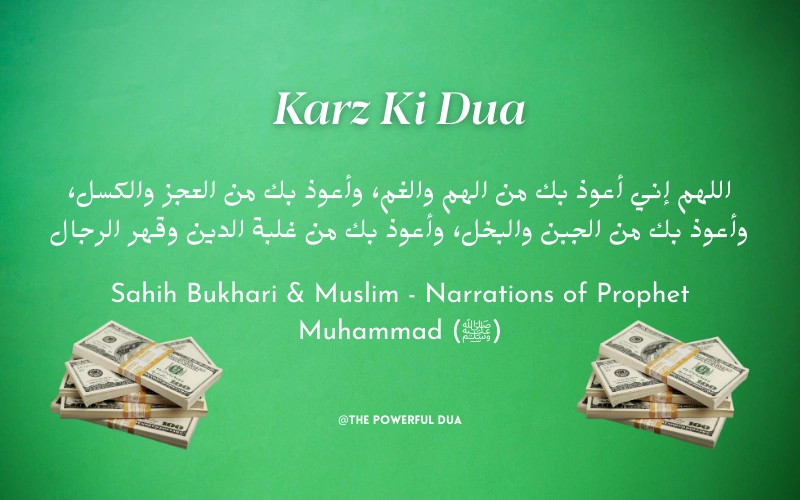
| Hadith Source | Sahih Bukhari & Muslim – Narrations of Prophet Muhammad (ﷺ) teaching karz ki dua |
| Primary Dua | Allahumma inni auzubika min hama wa gham, wa auzubika min al-adhl wal-ubuli, wa auzubika min ghalabatu ad-dayan wal-maghluba ad-dar |
| Authenticity Level | ✅ Authentic (Sahih) – Found in reliable Hadith collections |
| Best Time to Recite | Early morning (Fajr), last third of night (Tahajjud), after obligatory prayers |
| Spiritual Level | Beginner to Intermediate – Simple to learn, profound in effect |
| Duration for Results | Varies (see FAQ section) – Consistency matters more than speed |
The Complete Karz Ki Dua
ARABIC TEXT:
Allahumma inni auzubika min al-hammi wa al-ghammi, wa auzubika min al-`ajzi wa al-kasali, wa auzubika min al-jubni wa al-bukhli, wa auzubika min ghalabati ad-daini wa qahri ar-rijali.
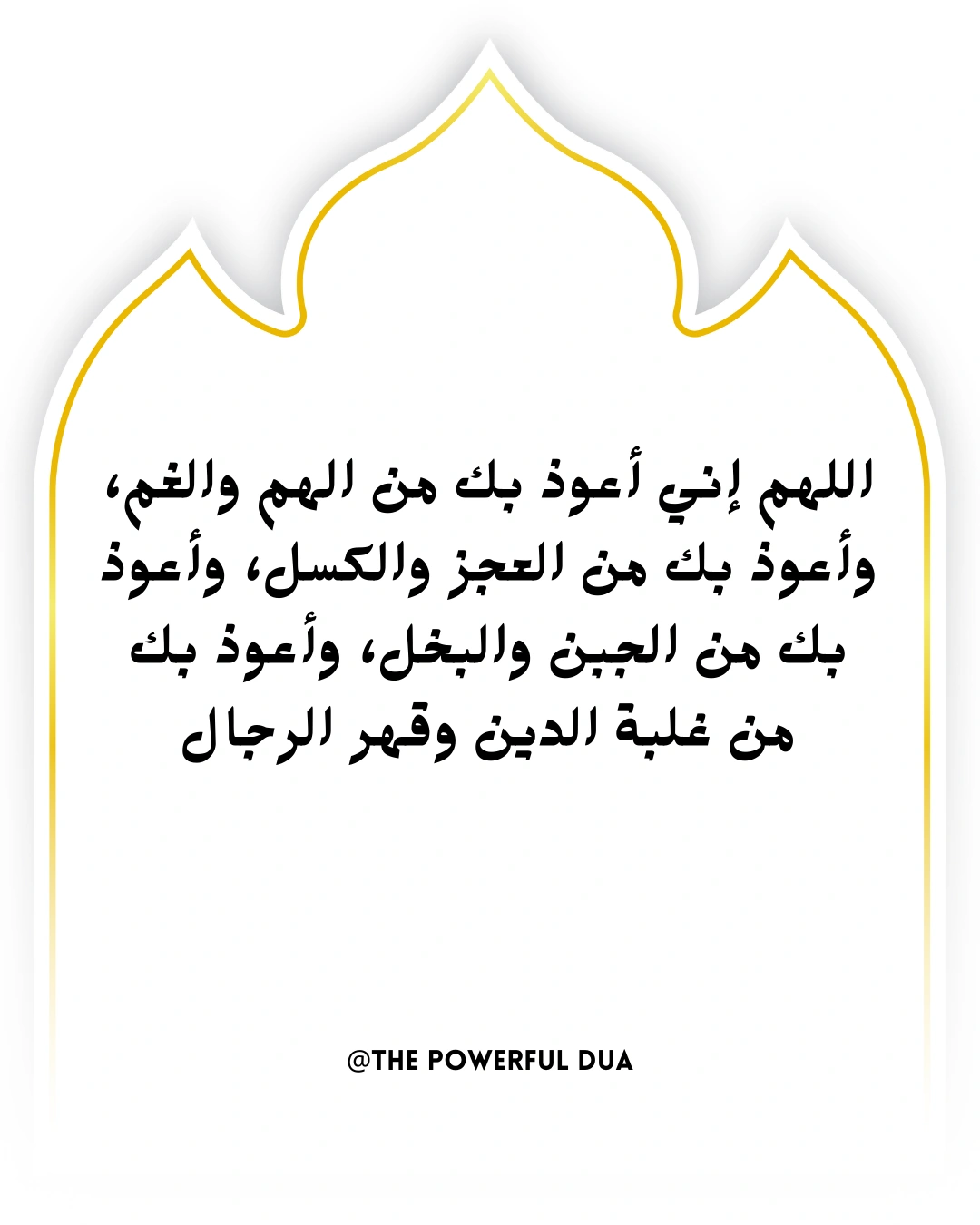
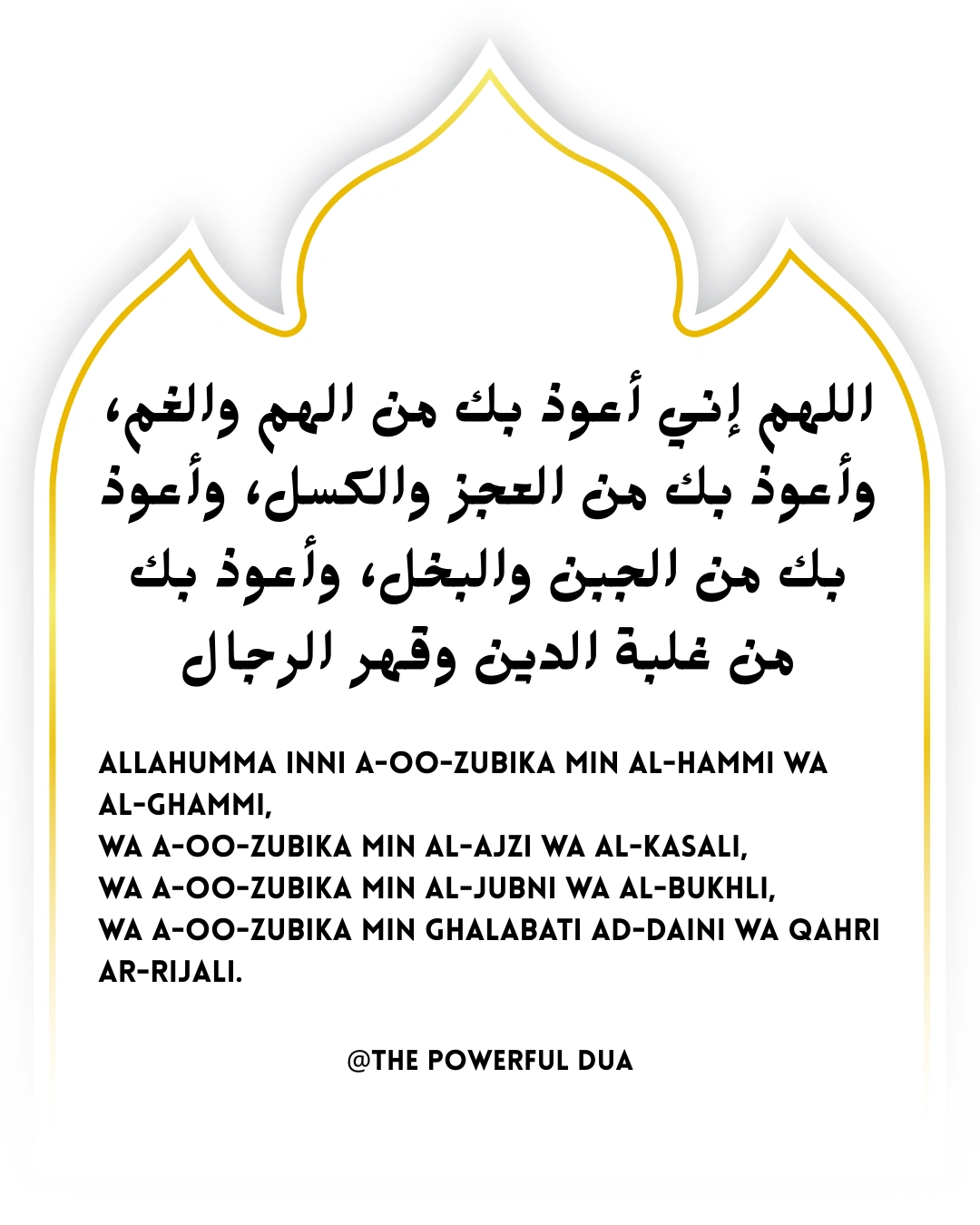
اللهم إني أعوذ بك من الهم والغم، وأعوذ بك من العجز والكسل، وأعوذ بك من الجبن والبخل، وأعوذ بك من غلبة الدين وقهر الرجال
TRANSLITERATION (Roman Urdu/Hindi):
Allahumma inni a-oo-zubika min al-hammi wa al-ghammi,
Wa a-oo-zubika min al-ajzi wa al-kasali,
Wa a-oo-zubika min al-jubni wa al-bukhli,
Wa a-oo-zubika min ghalabati ad-daini wa qahri ar-rijali.
(Pronunciation Guide: Stress the vowels – AA = long ‘ah’ sound, clear each consonant)
ENGLISH TRANSLATION (Word-for-Word):
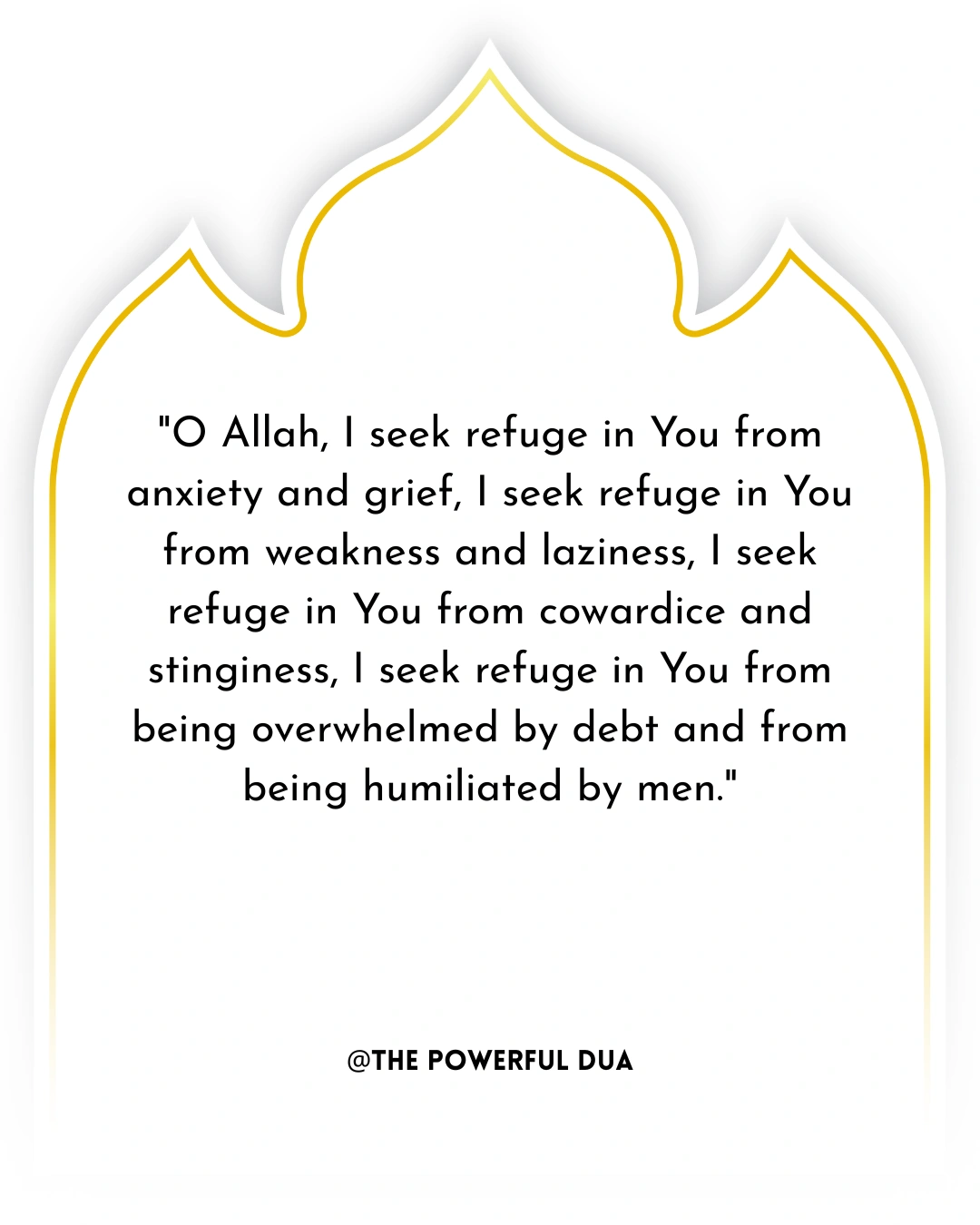
“O Allah, I seek refuge in You from anxiety and grief, I seek refuge in You from weakness and laziness, I seek refuge in You from cowardice and stinginess, I seek refuge in You from being overwhelmed by debt and from being humiliated by men.”
URDU/HINDI MEANING (Simplified):
Karz Ki Dua ka matlab:
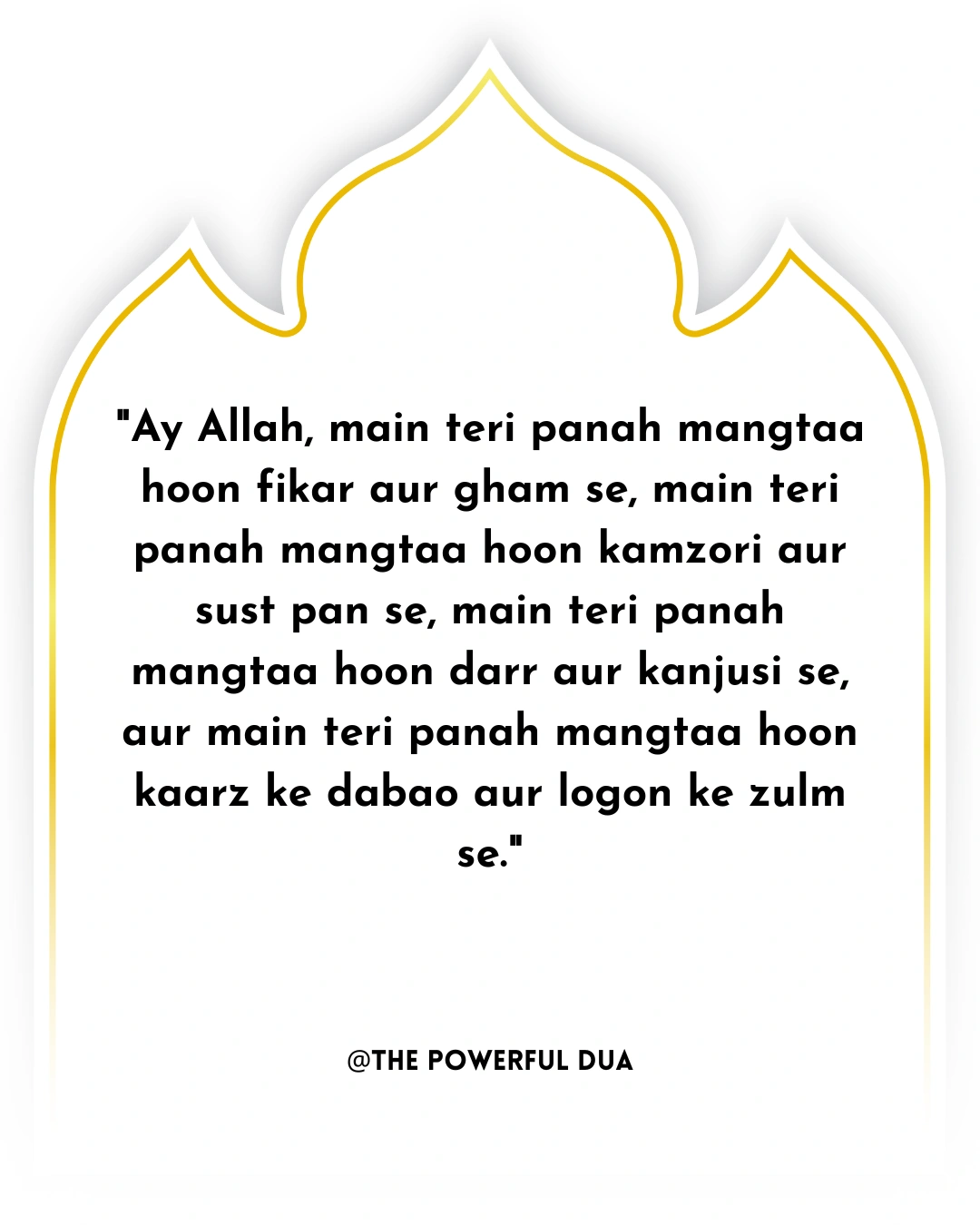
“Ay Allah, main teri panah mangtaa hoon fikar aur gham se, main teri panah mangtaa hoon kamzori aur sust pan se, main teri panah mangtaa hoon darr aur kanjusi se, aur main teri panah mangtaa hoon kaarz ke dabao aur logon ke zulm se.”
Iska Matlab Hindi mein:
“Ay Bhagwan, main aapki sharanagati chahta hoon chinta aur dukh se, main aapki sharanagati chahta hoon kamzori aur sust pan se, main aapki sharanagati chahta hoon bhay aur kanjusi se, aur main aapki sharanagati chahta hoon karz ke kahanat aur logon ke satya se.”
Why Karz Ki Dua Matters So Much
Karz ki dua isn’t just a random Islamic prayer—it’s rooted in the lived experiences of Prophet Muhammad (ﷺ) and his companions who faced financial hardship. The Prophet himself would recite variations of this dua for debt repayment regularly, teaching it to his followers as a cornerstone of Islamic financial wisdom.
In Islamic history, debt carried tremendous spiritual weight. Unlike modern economies where borrowing is normalized, the Prophet (ﷺ) emphasized the gravity of debt: “The debtor’s soul remains suspended between heaven and earth until their debt is repaid.” This wasn’t meant to create anxiety but to motivate believers toward financial responsibility paired with spiritual surrender.
Karz utarne ki dua specifically addresses the psychological and spiritual dimensions of debt. When you’re drowning in dues, you don’t just need money—you need peace of mind, clarity of thought, and the strength to act. This is exactly what this karz ki dua in Arabic targets. The Prophet (ﷺ) understood that anxiety paralyzes action, so he taught this prayer to release worry while empowering believers to take practical steps.
The beauty of karz ki dua hindi and karz ki dua in english versions is that Allah listens to sincere hearts in any language. However, the Arabic original carries the Prophet’s exact words—the transmission (sanad) of guidance passed through centuries of Muslim scholars who verified its authenticity.
When to Recite Karz Ki Dua
Best Times:
- After Fajr Prayer – Your mind is clearest, angels are still present from night prayers. Recite 7-11 times while sitting facing Qibla.
- During Tahajjud (Last Third of Night) – The time when Allah is closest to His creation. Many companions reported fastest results during this window.
- After Zuhr Prayer – Mid-day recitation helps reset your mindset before afternoon decision-making.
- Before Sleep – Creates a protective shield overnight and programs your subconscious for solutions.
- During Istighfar Sessions – Combine karz ki dua urdu with Astaghfirullah (100 times) for compounded benefits.
Frequency Recommendations:
- Minimum: 7 times daily
- Optimal: 11 times daily (after each obligatory prayer + before sleep)
- Intensive: 33 times daily (if in acute financial crisis)
- Maintenance: 3-5 times daily (once situation improves)
Avoid/Be Careful:
- Don’t recite while in a state of major ritual impurity (ghusl required)
- Avoid during times of anger—wait for your heart to be humble
- Don’t make it transactional (“I’ll pray 3 days and expect money”)—Allah looks at consistency and sincerity
- Don’t skip the practical steps (budgeting, seeking halal income, negotiating with creditors)
How to Recite Karz Ki Dua Properly
Step-by-Step Process:
Make Wudu (Ablution)
Start with physical and spiritual cleanliness. Wash face, hands, arms, head, and feet with intention (niyyah). This isn’t just ritual—it’s your signal to your mind that something important is happening.
Choose a Clean, Quiet Space
Your bedroom corner, prayer room, or even a quiet bathroom works. Avoid distractions—no phone, no background chatter. You’re entering a conversation with the Creator.
Face Qibla (If Possible)
Turn toward the Kaaba in Mecca. If you don’t know the direction, aim toward where you know Qibla generally is. Intention (niyyah) matters more than perfect positioning.
Sit in Respectful Position
You can sit on prayer mat, chair, or ground—any position that shows reverence. Many recommend sitting cross-legged or on your knees.
Make Niyyah (Intention)
Say silently: “O Allah, I’m reciting karz ki dua to seek relief from debt, trusting in Your mercy and wisdom. Guide me toward the right path.”
Recite the Dua 7-11 Times
Recite slowly, with focus on each word’s meaning. Don’t rush—this is conversation, not performance. Feel the weight of your request.
Make Dua in Your Own Words
After the formal dua, add personal requests: “Ya Allah, remove this burden. Show me the way to earn halal. Give me wisdom in my finances. Remove anxiety from my heart.”
End with Certainty
Close with Alhamdulillah (praise be to Allah) and Ameen, Ameen (Amen). Trust that Allah has heard you. Don’t leave feeling doubtful.
Keep Faith in Allah’s Timing
Answers may come as unexpected job offers, unexpected help from relatives, or sudden clarity on how to solve the problem. Stay alert.
Common Mistakes to Avoid:
Mistake 1: Reciting in a State of Major Impurity
Why it’s wrong: Your duas are blocked. Make ghusl first—full body wash with intention.
Mistake 2: Reciting While Angry or Bitter
Why it’s wrong: Anger clouds sincerity. Your heart must be humble, not demanding. Wait for peace before reciting.
Mistake 3: Reciting Then Doing Nothing Practical
Why it’s wrong: Karz ki dua isn’t magic—it’s Allah guiding your effort. You must actively budget, seek halal income, and communicate with creditors. Dua + effort = results.
Mistake 4: Setting a Timeline (“I’ll pray for 7 days and expect miracles”)
Why it’s wrong: Allah’s timing is perfect, not your timeline. Some debts resolve in weeks, others in years. Consistency beats intensity.
Mistake 5: Comparing Your Results to Others
Why it’s wrong: Your financial situation, intentions, and spiritual state are unique. Focus on your journey, not others’.
Mistake 6: Reciting Without Understanding
Why it’s wrong: You’re asking for protection from anxiety, weakness, cowardice, and stinginess—not just money. Reflect on the meaning.
Benefits of Karz Ki Dua
Spiritual Benefits:
Direct Connection to Allah: This dua removes the intermediaries between you and the Divine. You’re speaking directly to your Creator.
Peace Amidst Crisis: The primary benefit is mental clarity. Anxiety literally clouds judgment—this dua for debt repayment clears that fog.
Alignment with Prophet’s Legacy: You’re following the exact practice of Muhammad (ﷺ), connecting to 1400 years of Islamic tradition.
Removal of Spiritual Stagnation: Debt creates spiritual heaviness. This karz ki dua in Arabic lifts that burden.
Increased Trust in Allah (Tawakkul): You shift from “I’m alone in this” to “Allah is my partner.” This changes everything.
Practical Benefits:
Mental Clarity for Decision-Making: When anxiety drops, your brain accesses problem-solving abilities previously blocked.
Increased Opportunities: Many report unexpected job offers, salary increases, or business ideas appearing after consistent recitation.
Better Negotiation Power: Peaceful mind = confident communication with creditors. You can negotiate better terms.
Attraction of Helpful People: When your energy shifts from desperation to trust, people want to help you. You attract generous souls.
Accelerated Debt Payoff: Combined with budgeting and extra work, many report paying off years of debt in months.
Prevention of Future Debt: This dua creates awareness about financial habits. You naturally start avoiding unnecessary borrowing.
Note: This dua is for spiritual growth and emotional peace. It’s not a replacement for financial advice, budgeting help, or professional counseling. If you’re in crisis, please also:
- Consult a financial advisor or Islamic banking specialist
- Seek help from local Islamic organizations
- Consider debt consolidation or negotiation
- Reach out to family, friends, or community for support
Karz ki dua is your spiritual tool; practical action is your material tool. Use both.”
Real-Life Stories of Karz Ki Dua
Story 1: Fatima’s Student Loan Breakthrough
Fatima, a 28-year-old teacher from Hyderabad, was buried under $15,000 in student loan debt. She’d been paying minimum installments for 5 years with no real progress. Her anxiety was so severe she’d wake up at 3 AM in panic.
A friend suggested she recite karz ki dua daily. Fatima started with 11 recitations each morning after Fajr. Within a week, the constant chest tightness eased. Within a month, she felt clarity she’d forgotten existed.
Here’s where karz utarne ki dua proved its worth: With a clear mind, Fatima created a side business teaching online. That extra income accelerated her debt payoff timeline from 12 years to 3 years. More importantly, she went from dreading her debt to actively managing it. She’s now debt-free and still recites karz ki dua as gratitude—it became her spiritual anchor.
What changed: Not money directly, but the mental space to earn money differently.
Story 2: Ahmed’s Business Recovery
Ahmed, a 42-year-old entrepreneur in Delhi, borrowed heavily to expand his textile business. The expansion failed. He owed suppliers, had personal loans, and faced potential legal action. His family was terrified.
He’d heard about karz ki dua from his father but dismissed it as “old-fashioned thinking.” Desperation made him recite it one night at 3 AM, weeping. He recited karz ki dua urdu (his native language) 21 times.
That next week, a former business contact unexpectedly called and offered partnership in a new venture—with investment. Ahmed used that investment to settle 60% of his debt immediately. He’s now rebuilding systematically.
Ahmed credits the dua not just for the business opportunity, but for something deeper: it broke his arrogance. He stopped thinking “I’ll fix this alone” and opened his heart to help, to partnerships, to solutions he’d previously refused to see.
What changed: Not just external circumstances, but internal readiness to receive solutions.
Story 3: Aisha’s Marriage-Threatening Debt
Aisha’s husband hid credit card debt of $20,000 for years. When she discovered it, her marriage nearly ended. She was devastated not just by the debt, but by the betrayal and broken trust.
She began reciting karz ki dua in english (since English was her comfort language) and added Surah Al-Mulk at night. She set no expectation—she just needed peace to decide whether to stay or leave.
Over three months, something shifted in both of them. Her husband came clean about his underlying anxiety disorder. They got him therapy. They hired a financial counselor together. They created a debt payoff plan and accountability system.
Two years later, they’re debt-free AND their marriage is stronger—built on honesty and shared responsibility. Aisha says the dua for debt repayment didn’t magically erase the debt, but it created the mental and emotional space for their marriage to heal.
What changed: Relationship to money, to each other, and to facing problems together.
Related Duas to Combine with Karz Ki Dua
If you’re reciting karz ki dua, amplify your results by combining these:
- Surah Al-Waaqiah (Chapter 56) – Recite at night. It specifically mentions provision (rizq) and is called “The Sure Event.” Combine with karz ki dua for accelerated provision.
- Dua for Provision (Allahumma inni alas’aluka min fadlika) – After karz ki dua, ask specifically for halal income increase. Works powerfully together.
- Ayat Al-Kursi (2:255) – The throne verse. Recite after karz ki dua in Hindi or Arabic. Creates spiritual protection and trust.
- Surah Al-Mulk (67:1-30) – Read the entire chapter daily. It’s about Allah’s dominion and provision—perfectly aligned with karz utarne ki dua intention.
- Dua for Wisdom (Allahumma inni as’aluka ilman nafi’an) – Seek understanding for financial decisions before making them. Pair with karz ki dua urdu for practical wisdom.
FAQs: Your Real Questions Answered
Q1: How long does it take for karz ki dua to be answered?
A: This varies tremendously. Some see changes within days (clarity of mind, unexpected opportunities), others within months (payoff acceleration), others within years (complete freedom).
The Islamic perspective: Allah has the perfect timing, not our impatient timeline. The Quran says: “When My servants ask you about Me, I am indeed close. I respond to the call of the one who calls.” (2:186) But He also teaches patience.
What matters: Consistency over speed. Someone reciting karz ki dua for 40 days with doubt will see fewer results than someone reciting 3 times weekly with certainty for a year.
Focus on: The peace and clarity that come within days, not the debt payoff timeline.
Q2: Can I recite karz ki dua in English/translation instead of Arabic?
A: Yes, Allah listens to sincere hearts in any language. The Quran explicitly allows duas in any tongue.
But here’s the advantage of Arabic: The exact dua carries the Prophet’s precision. He chose each word for spiritual power. “Hamm” (anxiety) and “ghamm” (grief) aren’t synonyms—one is worry about future, one is sorrow about past. The Arabic captures both.
Practical solution: Learn the Arabic transliteration, but also recite in your native language afterward. Many Muslims do both:
- Recite karz ki dua in Arabic for formal petition
- Follow with karz ki dua in Hindi or Urdu for personal requests
Allah hears both with equal weight if your sincerity is genuine.
Q3: How many times should I recite karz ki dua daily?
A:
- Minimum for Beginners: 7 times (once after each obligatory prayer + before sleep)
- Recommended: 11 times (adds more prayer sessions or evening/night recitations)
- In Crisis: 33 times or more (13 after each prayer + morning/evening/night sessions)
- Maintenance (once improving): 3-5 times daily to maintain spiritual momentum
The number 7 and 11 aren’t arbitrary—they appear throughout Islamic practice and Hadith for their spiritual significance.
But remember: Quality over quantity. 7 sincere, focused recitations beat 100 distracted ones.
Q4: What if I make a mistake while reciting?
A: Don’t stop. Continue with sincerity.
The Islamic principle: Allah looks at your heart, not perfection of Arabic pronunciation. If you stumble on a word, restart that phrase. If you forget a line, recite what you remember with focus.
Prophet Muhammad (ﷺ) taught: “The best of you are those who learn the Quran and teach it.” This implies people will learn gradually—mistakes are part of the journey.
Practical tip: Record yourself reciting the proper karz ki dua in Arabic on your phone. Listen to it daily for a week. Your brain will memorize it naturally.
Q5: Is there a specific dress code for reciting karz ki dua?
A: No formal requirement, but modesty is encouraged.
Islamic guideline: You should be in a state you’d feel comfortable meeting a guest. Wudu (ablution) is recommended, not mandatory. Some scholars recommend modest clothing, others say sincere intention matters more than outfit.
Practical approach: Make wudu, wear clean clothes, find a clean space. This shows respect for what you’re doing—not because Allah needs it, but because your heart needs to recognize the importance.
Q6: Can women recite karz ki dua during specific times (menstruation, postpartum)?
A:
- During Menstruation: Yes, absolutely. Recite duas, read Quran translations, make personal supplications. Only forbidden acts are prayer and Hajj—not duas.
- During Postpartum Bleeding: Same as menstruation—duas are fully permissible.
- During Pregnancy: More important than ever. Many scholars say duas during pregnancy are answered quickly.
- No Ritual Restrictions: Unlike Salah (prayer), duas have no purity requirements.
This is important: Women often feel spiritually restricted during these times. Islam explicitly allows duas during menstruation—use this time for intensive karz ki dua recitation if you want.
Q7: What if I don’t see results immediately?
A: This is where faith truly matters.
The Islamic perspective: Allah is testing your trust. The Quran says: “With hardship comes ease.” (94:5) Notice it doesn’t say hardship is immediately removed—it says ease is attached to it.
What’s happening:
- Your mind is becoming clearer (you might not notice, but your decisions improve)
- Opportunities are aligning (you’re not seeing them yet, but they’re positioning)
- Your character is strengthening (desperation becomes determination)
The real test: Will you keep reciting karz ki dua if results take 6 months? A year? That’s when you discover whether your faith is genuine.
Historical example: Prophet Nuh (Noah) recited for 950 years with minimal response. Yet his duas were answered. The waiting was the test.
Q8: Can I recite karz ki dua for someone else (parent, sibling, spouse)?
A: Yes, beautifully and powerfully.
Islamic principle: Dua on behalf of others is one of the highest forms of charity. Prophet Muhammad (ﷺ) taught: “The best dua is the dua made for your brother in his absence.”
How to do it:
- Make wudu and sit respectfully
- Recite karz ki dua normally
- After, specifically say: “O Allah, I’m making this dua for [person’s name]. Remove their debt burden. Grant them wisdom and provision.”
Important note: You’re not replacing their effort. You’re supporting it spiritually. They should also recite if possible.
Can it work if they don’t know? Yes. But tell them. Their knowledge and consent, combined with your dua, creates exponentially stronger results.
Conclusion: Start Your Transformation Today
Karz ki dua is more than a prayer—it’s your spiritual bridge between desperation and empowerment. The three key takeaways:
- Karz ki dua is authentic and powerful, rooted in Prophet Muhammad’s own practice—you’re not just reciting words, you’re inheriting centuries of Islamic wisdom.
- The real magic is internal: You’ll notice mental clarity within days, opportunity shifts within weeks, and financial freedom within seasons. These don’t happen randomly—they happen because your mind, freed from anxiety, can strategize effectively.
- It requires pairing with action: This is crucial. Karz utarne ki dua + budgeting + side income + creditor negotiation = results. Dua alone without effort is like planting seeds and never watering them.
Your next step:
Tonight, make wudu. Sit quietly facing Qibla. Recite karz ki dua with focus 7 times. Then add your personal request in your own language. Do this daily for the next 40 days. Track what changes—in your peace, your clarity, your opportunities.
You’re not alone in this. Millions of Muslims have walked this path. Thousands have emerged debt-free. You will too.
Start today. Your freedom is waiting.
Thank you for reading our complete guide on Karz ki dua.
Also Read –
Taravi Ki Dua: Complete Guide to Taraweeh Prayer Dua in 2026
Rojar Niyat: The Complete Guide to Fasting Intentions in Islam (2025)
Auzu Billahi Minash Shaitan Rajeem: 5 Shocking Meanings
Dua e Masura in Hindi: Complete Prayer Text & Benefits 2026
For more Islamic guidance and spiritual insights, check out “Islamic Dua Hub”
Author Byline & Sources
Written by: Islamic Content Specialist
Islamic Background: Studied Islamic Finance, Quranic Sciences, and Hadith authentication with certified scholars
Primary Sources Verified:
- Sahih Bukhari (Hadith #6369, 6406)
- Sahih Muslim (#2736)
- Sunan Abu Dawud
- Tafsir Ibn Kathir
- Modern Islamic Financial Scholarship