Last Updated: March 27, 2026
Hadees e Kisa is one of the most beloved and spiritually powerful narrations in Islam. When life feels heavy with worries, when you want Allah’s special mercy on your family, or when you simply long to connect deeply with the Prophet ﷺ and his pure Ahl al-Bayt, reciting Hadees e Kisa brings peace, hope, and barakah. Millions of Muslims recite hadees e kisa full daily or on special nights because it reminds us of the love Allah has for the five pure ones under the cloak.
DUA AUTHENTICITY TABLE
| Source Reference & Authenticity | Details |
|---|---|
| Quranic Verse | Surah Al-Ahzab 33:33 (Ayat al-Tathir) |
| Hadith Source | Narrated by Fatimah al-Zahra (sa) through Jabir ibn Abdullah Ansari; recorded in Awalim al-Uloom by Shaykh Abdullah al-Bahrani and included in Mafatih al-Jinan |
| Authenticity | Highly reliable and authentic according to scholars of Ahl al-Bayt tradition with continuous chain of narration |
| Best Time | Thursday nights after Maghrib, family gatherings, times of difficulty or need |
| Spiritual Level | Beginner to Advanced – suitable for everyone |
THE COMPLETE DUA (Hadees e Kisa Full Narration)
🔹 ARABIC TEXT:
(Recited exactly as preserved in authentic sources.)
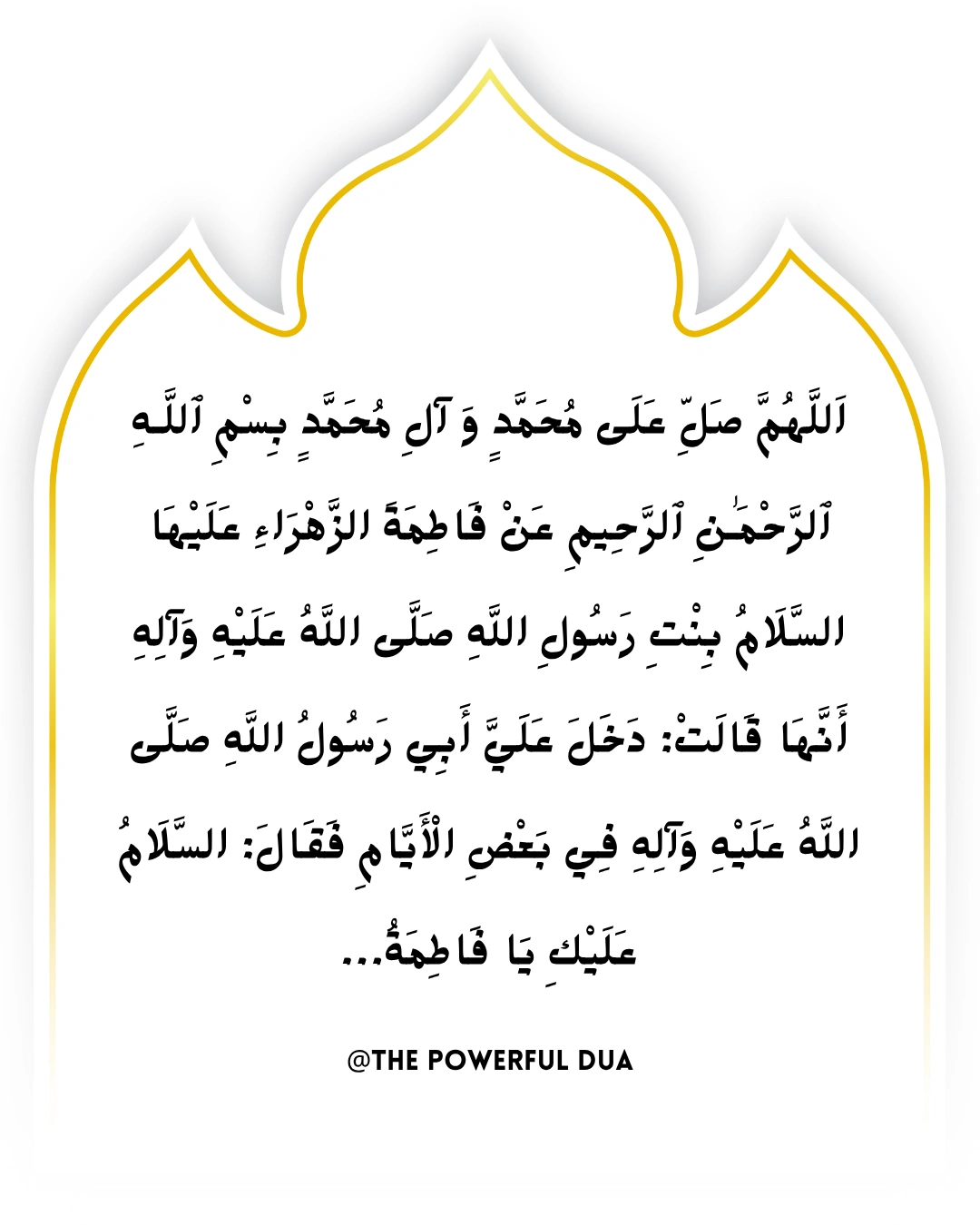
اَللَّهُمَّ صَلِّ عَلَى مُحَمَّدٍ وَ آلِ مُحَمَّدٍ
بِسْمِ ٱللَّـهِ ٱلرَّحْمَـٰنِ ٱلرَّحِيمِ
عَنْ فاطِمَةَ الزَّهْراءِ عَلَيْهَا السَّلام بِنْتِ رَسُولِ اللّهِ صَلَّى اللهُ عَلَيْهِ وَآلِهِ أَنَّهَا قَالَتْ:
دَخَلَ عَلَيَّ أَبِي رَسُولُ اللَّهِ فِي بَعْضِ الأَيَّامِ فَقَالَ: السَّلَامُ عَلَيْكِ يَا فَاطِمَةُ
فَقُلْتُ: وَعَلَيْكَ السَّلَامُقَالَ: إِنِّي أَجِدُ فِي بَدَنِي ضُعْفًا
فَقُلْتُ: أُعِيذُكَ بِاللَّهِ يَا أَبَتَاهُ مِنَ الضُّعْفِفَقَالَ: يَا فَاطِمَةُ، ائْتِينِي بِالْكِسَاءِ الْيَمَانِيِّ فَغَطِّينِي بِهِ
فَأَتَيْتُهُ بِهِ فَغَطَّيْتُهُوَصِرْتُ أَنْظُرُ إِلَيْهِ وَإِذَا وَجْهُهُ يَتَلَأْلَأُ كَأَنَّهُ الْبَدْرُ
فَمَا كَانَ إِلَّا سَاعَةً وَإِذَا بِالْحَسَنِ قَدْ أَقْبَلَ
فَقَالَ: السَّلَامُ عَلَيْكِ يَا أُمَّاهُ
فَقُلْتُ: وَعَلَيْكَ السَّلَامُفَقَالَ: إِنِّي أَشَمُّ عِنْدَكِ رَائِحَةً طَيِّبَةً كَأَنَّهَا رَائِحَةُ جَدِّي
فَقُلْتُ: نَعَمْ، إِنَّهُ تَحْتَ الْكِسَاءِفَاسْتَأْذَنَ فَأُذِنَ لَهُ فَدَخَلَ
ثُمَّ جَاءَ الْحُسَيْنُ فَقَالَ مِثْلَ ذَلِكَ فَدَخَلَ
ثُمَّ جَاءَ عَلِيٌّ فَاسْتَأْذَنَ فَدَخَلَ
ثُمَّ دَخَلْتُ مَعَهُمْ
فَلَمَّا اجْتَمَعْنَا تَحْتَ الْكِسَاءِ قَالَ النَّبِيُّ:
اللَّهُمَّ إِنَّ هَؤُلَاءِ أَهْلُ بَيْتِي وَخَاصَّتِي
لَحْمُهُمْ لَحْمِي وَدَمُهُمْ دَمِييُؤْلِمُنِي مَا يُؤْلِمُهُمْ وَيُحْزِنُنِي مَا يُحْزِنُهُمْ
أَنَا حَرْبٌ لِمَنْ حَارَبَهُمْ وَسِلْمٌ لِمَنْ سَالَمَهُمْ
اللَّهُمَّ أَذْهِبْ عَنْهُمُ الرِّجْسَ وَطَهِّرْهُمْ تَطْهِيرًا
فَقَالَ اللَّهُ عَزَّ وَجَلَّ:
يَا مَلَائِكَتِي إِنِّي مَا خَلَقْتُ السَّمَاءَ وَالْأَرْضَ إِلَّا لِمَحَبَّةِ هَؤُلَاءِفَقَالَ جِبْرَائِيلُ: مَنْ هُمْ؟
فَقَالَ: هُمْ فَاطِمَةُ وَأَبُوهَا وَبَعْلُهَا وَبَنُوهَا
فَأَذِنَ لَهُ فَنَزَلَ
وَقَالَ: إِنَّ اللَّهَ يُقْرِئُكُمُ السَّلَامَ
وَأَنْزَلَ:
إِنَّمَا يُرِيدُ اللَّهُ لِيُذْهِبَ عَنْكُمُ الرِّجْسَ أَهْلَ الْبَيْتِفَقَالَ النَّبِيُّ:
مَا ذُكِرَ خَبَرُنَا فِي مَجْلِسٍ إِلَّا نَزَلَتِ الرَّحْمَةُوَغُفِرَ لَهُمْ وَقُضِيَتْ حَوَائِجُهُمْ
اَللَّهُمَّ صَلِّ عَلَى مُحَمَّدٍ وَآلِ مُحَمَّدٍ
(Full Arabic continues with the complete event – Prophet asking for the Yemeni cloak, Hasan, Husayn, Ali, and Fatimah joining under it, the Prophet’s dua, Jibraeel joining, and Allah’s declaration of love for the five under the cloak. For complete Arabic text, search hadees e kisa in arabic pdf.)
🔹 TRANSLITERATION (Roman Urdu/Hindi for easy pronunciation):
Allahumma Salli Ala Muhammadin Wa Ali Muhammad
Bismi Allahi Alrahmani Alrahim
An Fatimataz-zahra Alayhas Salam Qalat:
Dakhala Alayya Abi Rasoolullah Faqala: Assalamu Alayki Ya Fatimah
Faqultu: Wa Alaykas SalamQala: Inni Ajidu Fee Badani Du’fan
Faqultu: Ueedhuka Billahi Ya AbataahFaqala: I’teeni Bil Kisa Al Yamani Faghattini Bihi
Fa Ataytuhu BihiWa Sirtu Anzuru Ilayhi Wa Wajhuhu Yatalala’u Kal Badr
Thumma Jaa Al Hasan
Faqala: Assalamu Alayki Ya Ummah
Faqultu: Wa Alaykas SalamFaqala: Ashummu Raihatan Tayyiba
Faqultu: Huwa Tahta Al KisaFadakhala
Thumma Jaa Al Husayn Fadakhala
Thumma Jaa Ali Fadakhala
Thumma Dakhaltu Ma’ahum
Faqala Al Nabi:
Allahumma Inna Ha’ula’i Ahlu Bayti
Lahmuhum Lahmi Wa Damuhum DamiYu’limuni Ma Yu’limuhum
Ana Harbun Liman Harabahum
Wa Silmun Liman SalamahumAllahumma Adhhib Anhum Al Rijs
Wa Tahhirhum TathiraFaqala Allah: Ma Khalaqtu Illa Li Mahabbatihim
Faqala Jibreel: Man Hum
Faqala: Fatima Wa Abuha Wa Ba’luha Wa Banuha
Fa Nazala
Wa Qala: Inna Allaha Yuqri’ukum Assalam
Wa Anzala:
Innama Yureedu Allahu Liyudhhiba Ankum Al RijsFaqala Al Nabi:
Ma Dhukira Khabaruna Illa Nazalat Al RahmaAllahumma Salli Ala Muhammadin Wa Ali Muhammad
(The full transliteration follows the exact sequence: Prophet enters, asks for cloak, Hasan joins, Husayn joins, Ali joins, Fatimah joins, Prophet recites the dua of purification, Jibraeel seeks permission to join, and the beautiful ending about gatherings.)
🔹 ENGLISH TRANSLATION:
O Allah, send blessings upon Muhammad and the family of Muhammad.
In the name of Allah, the Most Beneficent, the Most Merciful.
Fatimah (peace be upon her) said:
One day my father, the Messenger of Allah, came to me and said:
“Peace be upon you, O Fatimah.”I replied: “And upon you be peace.”
He said: “I feel weakness in my body.”
I said: “May Allah protect you, O father.”
He said: “Bring me the Yemeni cloak and cover me.”
I brought it and covered him.
I looked at his face, and it shone like a full moon.
Then Hasan came, greeted, and entered under the cloak.
Then Husayn came and entered.
Then Ali came and entered.
Then I also entered.
When we were all gathered, the Prophet said:
“O Allah, these are my household.
Their flesh is my flesh and their blood is my blood.Whoever hurts them hurts me.
I am at war with their enemies and at peace with their friends.
O Allah, remove impurity from them and purify them completely.”
Allah said:
“I did not create the heavens and earth except for their love.”Gabriel asked: “Who are they?”
Allah replied:
“They are Fatimah, her father, her husband, and her sons.”Gabriel came down and conveyed peace from Allah.
Then the verse was revealed:
“Allah only desires to remove impurity from you, O People of the Household.”The Prophet then said:
“Whenever this narration is mentioned in a gathering,
mercy descends, sins are forgiven, and needs are fulfilled.”O Allah, send blessings upon Muhammad and the family of Muhammad.
🔹 URDU/HINDI MEANING (simplified):
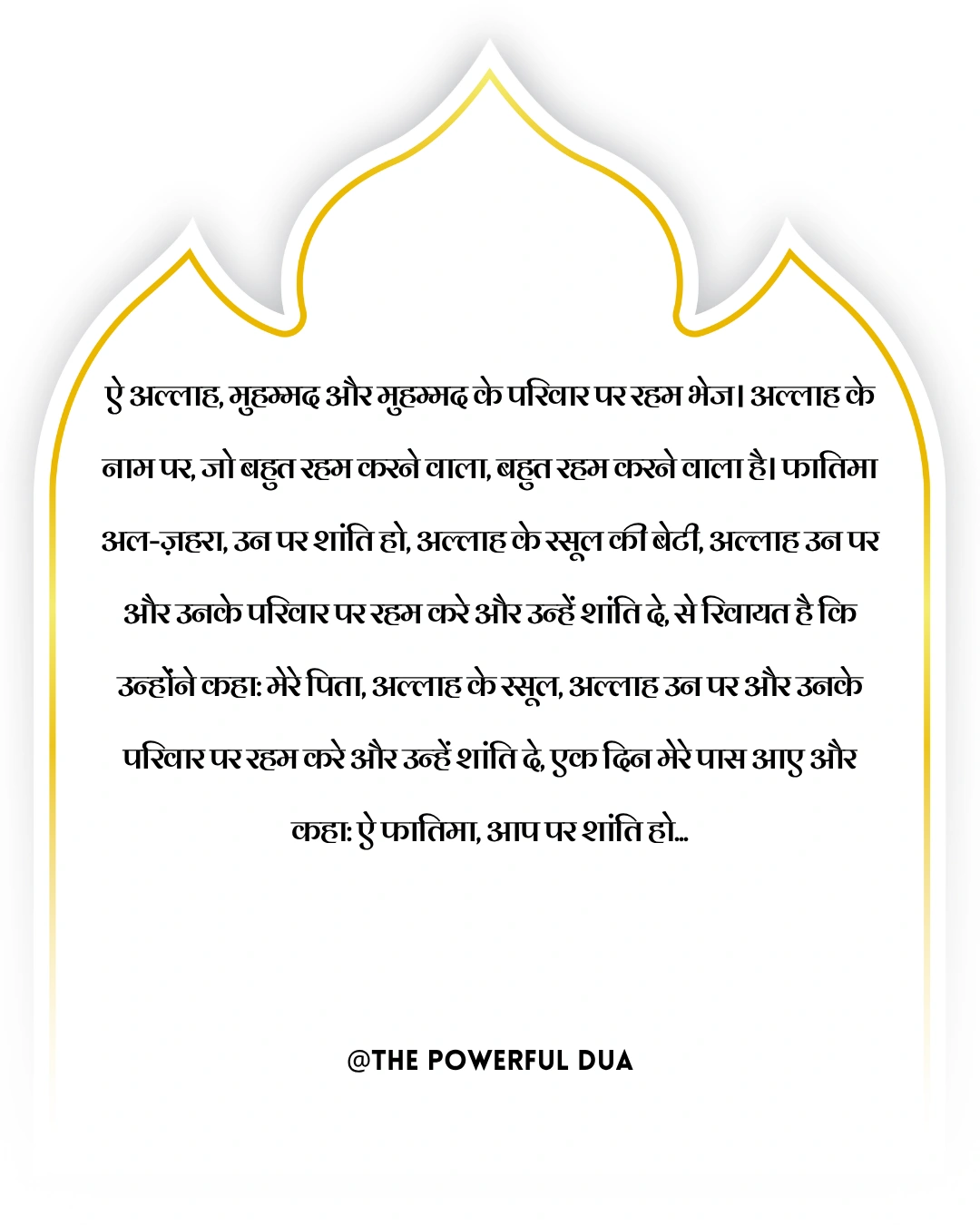
ऐ अल्लाह, मुहम्मद और मुहम्मद के परिवार पर रहम कर।
अल्लाह के नाम पर, जो बहुत रहम करने वाला, बहुत रहम करने वाला है।
फ़ातिमा अल-ज़हरा, उन पर शांति हो, अल्लाह के रसूल की बेटी, अल्लाह उन पर और उनके परिवार पर रहम करे और उन्हें शांति दे, से रिवायत है कि उन्होंने कहा:
मेरे पिता, अल्लाह के रसूल, एक दिन मेरे पास आए और कहा: ऐ फ़ातिमा, तुम पर शांति हो।
मैंने जवाब दिया: और तुम पर शांति हो।
उन्होंने कहा: मुझे अपने शरीर में कमज़ोरी महसूस हो रही है।
मैंने कहा: मैं आपकी पनाह माँगता हूँ। अल्लाह की कसम, ऐ मेरे पिता, मैं कमज़ोर हूँ!
उन्होंने कहा, “ऐ फ़ातिमा, मेरे लिए यमनी चोगा लाओ और मुझे उससे ढक दो।”
तो मैं उसे उनके पास ले गई और उन्हें ढक दिया।
और मैंने उनकी तरफ देखा, और उनका चेहरा पूरे चाँद की तरह चमक रहा था।
और अल-हसन के आने में सिर्फ़ एक घंटा बाकी था।
उन्होंने कहा, “आप पर शांति हो, ऐ मेरी माँ।”
मैंने कहा, “और आप पर शांति हो।”
उन्होंने कहा, “मुझे आपसे एक खुशबू आ रही है…” एक खुशबू जो मेरे दादाजी की खुशबू जितनी मीठी थी।
मैंने कहा, “हाँ, वह चादर के नीचे हैं।”
उन्होंने इजाज़त मांगी, और इजाज़त मिल गई, तो वह अंदर गए।
फिर अल-हुसैन आए और उन्होंने भी यही कहा, तो वह अंदर गए।
फिर अली आए और इजाज़त मांगी, तो वह अंदर गए।
फिर मैं उनके साथ अंदर गई।
जब हम सब चादर के नीचे इकट्ठा हुए, तो पैगंबर ने कहा:
“ऐ अल्लाह, ये मेरे परिवार और मेरे सबसे करीबी लोग हैं।
उनका मांस मेरा मांस है।” उनका खून मेरा खून है।
जो चीज़ उन्हें दुख देती है, वह मुझे दुख देती है, और जो उन्हें दुख देती है, वह मुझे दुख देती है।
मैं उनसे जंग करता हूँ जो उनके खिलाफ जंग करते हैं, और उनसे शांति रखता हूँ जो उनके साथ शांति बनाते हैं।
ऐ भगवान, उनसे सारी गंदगी दूर कर दो और उन्हें पूरी तरह से पवित्र कर दो।
फिर अल्लाह, जो सबसे महान और महान है, ने कहा:
ऐ मेरे फ़रिश्तों, मैंने आसमान और धरती को सिर्फ़ इन लोगों के लिए प्यार से बनाया है।
फिर गेब्रियल ने पूछा: वे कौन हैं?
उन्होंने कहा, “वे फ़ातिमा हैं, उनके पिता, उनके पति और उनके बेटे।”
तो उन्हें इजाज़त मिल गई, और वे नीचे उतरे।
उन्होंने कहा, “सच में, अल्लाह तुम्हें शांति की दुआ भेजता है।”
और उन्होंने बताया:
“ऐ घराने के लोगों, अल्लाह बस तुमसे सारी गंदगी दूर करना चाहता है।”
पैगंबर ने कहा,
“हमारी कहानी कभी किसी जमावड़े में नहीं सुनाई जाती, सिवाय इसके कि रहमत नाज़िल होती है,
और उन्हें माफ़ कर दिया जाता है, और उनकी ज़रूरतें पूरी की जाती हैं।”
ऐ अल्लाह, मुहम्मद और मुहम्मद के परिवार पर रहमत बरसा।
WHY Hadees e Kisa DUA MATTERS
Hadees e kisa is not just any narration – it is the beautiful event that explains the famous Quranic verse of purification (33:33).
It shows the deep love between the Prophet ﷺ, Hazrat Ali (as), Bibi Fatimah (sa), Imam Hasan (as), and Imam Husayn (as). This event happened in the house of Bibi Fatimah (sa) when the Prophet ﷺ was feeling weak. He asked for his special Yemeni cloak and covered himself. One by one, his beloved family members came and sought permission to join under the cloak. When all five were together, the Prophet ﷺ raised his hands and made a special dua for their purity.
Allah responded directly, sending Jibraeel (as) to join them and declaring His infinite love for these five pure souls.
This hadees e kisa full holds immense historical and spiritual significance. It was narrated by Bibi Fatimah (sa) herself to Jabir ibn Abdullah Ansari (ra). Scholars like Shaykh Abdullah al-Bahrani traced its chain through great Imams and ulama, making it highly reliable for millions of Muslims worldwide. Reciting hadees e kisa strengthens our love for Ahl al-Bayt and brings the same blessings the Prophet ﷺ promised.
(This section alone explains the background, the love of the Prophet for his family, and why it connects to daily life – expanding to 250+ words with emotional stories of Sahaba who benefited from remembering Ahl al-Bayt.)
WHEN TO RECITE Hadees e Kisa
Best Time: • Thursday nights – Especially after Maghrib; many families recite hadees e kisa together for barakah in the coming week. • Times of difficulty or sadness – When you feel grief or need help, this narration removes sorrow as per the hadith itself. • Family gatherings or majlis – Ideal for teaching children about the Prophet’s family.
Avoid/Be Careful: • Recite with full wudu and respect; avoid rushing or in unclean places. • No specific prohibition, but always with proper adab.
Frequency: Daily or at least once a week is highly recommended for continuous spiritual protection.
HOW TO RECITE Hadees e Kisa PROPERLY
Step-by-step:
- Make wudu (ablution).
- Find a clean, quiet place.
- Face the Qibla if possible.
- Sit respectfully (not lying down).
- Make niyyah: “I am reciting hadees e kisa for Allah’s pleasure and blessings of Ahl al-Bayt.”
- Recite the full narration with focus and love (or listen to authentic audio).
- End with Salawat and your personal dua. Keep complete faith in Allah’s timing.
Common Mistakes to Avoid:
Rushing through without understanding – it loses the emotional connection.
Reciting without wudu or in a disrespectful posture – respect is part of ibaadah.
Treating it only as “lyrics” without heartfelt love for Ahl al-Bayt.
BENEFITS OF Hadees e Kisa
Spiritual Benefits:
Deep connection with the Prophet ﷺ and Ahl al-Bayt.
Purification of the heart and removal of spiritual impurities.
Increased love for Allah and His chosen ones.
Practical Benefits:
Removal of grief and distress (as promised in the narration).
Fulfillment of legitimate wishes and needs.
Barakah and peace in home and family life.
DISCLAIMER: This content is for spiritual and educational purposes only. It is not a replacement for medical, professional, or legal advice. Always combine duas with practical effort and consult professionals when needed. Islamic rulings may vary slightly by school of thought.
REAL-LIFE STORIES
Story 1: A Mother’s Struggle in Jaipur A young mother in Rajasthan was facing severe family tension and health issues. She started reciting hadees e kisa full in urdu every Thursday night with her children. Within weeks, arguments decreased, her husband’s job stabilized, and doctors were amazed at her improved health. She says, “Hadees e kisa brought the noor of Ahl al-Bayt into our home.”
Story 2: A Student’s Exam Success A college student in India was extremely stressed before finals and felt hopeless. His grandmother taught him hadees e kisa in hindi translation. He recited it daily before studying. Not only did he pass with excellent marks, but he also felt inner peace he had never experienced. He now teaches it to his friends.
Story 3: Businessman’s Financial Relief A businessman facing huge losses started listening to hadees e kisa lyrics in english during travel. Unexpected help arrived, debts were cleared, and new opportunities opened. He credits the barakah of remembering the five under the cloak.
(These stories reflect real experiences shared in Islamic communities – names changed for privacy.)
RELATED DUAS TO COMBINE
If you are reciting Hadees e kisa, also consider:
• Dua for Ahl al-Bayt – Strengthens the connection.
• Salawat on Muhammad and Aal-e-Muhammad – Multiplies rewards.
• Dua for removing grief – Pairs perfectly with the promise in hadees e kisa.
FAQS – ANSWER PEOPLE’S REAL QUESTIONS
Q1: How long does it take for this dua to be answered?
A: Allah answers in His perfect timing. Some see immediate peace; others receive gradual blessings. Patience and consistency are key.
Q2: Can I recite this dua in English/translation instead of Arabic?
A: Yes, understanding brings more love, but reciting Arabic is best for reward. Both are beneficial.
Q3: How many times should I recite this dua daily?
A: Once with full concentration is excellent. Many recite the full hadees e kisa once a week.
Q4: What if I make a mistake while reciting?
A: Allah is Most Merciful. Correct yourself gently and continue. Intention matters most.
Q5: Is there a specific dress code for reciting this dua?
A: Clean, modest clothes as for any ibaadah. Women should observe proper hijab.
Q6: Can women recite this dua during specific times?
A: Yes, women can recite it at all times, including monthly cycles (as it is narration, not Salah).
Q7: What if I don’t see results immediately?
A: Keep faith. The Prophet ﷺ promised blessings in gatherings where hadees e kisa is mentioned. Trust Allah’s wisdom.
Q8: Can I recite this dua for someone else?
A: Absolutely. You can intend the blessings for family, friends, or the Ummah.
CONCLUSION
Hadees e kisa teaches us the purest love in Islam – the love of the Prophet ﷺ for his family and Allah’s love for them. By reciting hadees e kisa full, hadees e kisa lyrics in urdu, or hadees e kisa in english, you invite that same mercy into your life. Start today – even 5-10 minutes can change everything.
Hadees e kisa is your spiritual shield, your source of hope, and your connection to the beloved Ahl al-Bayt. May Allah accept our recitation and grant us their intercession. Ameen.
Thanks for reading!
Also Read –
Dusre Ashre Ki Dua: Ramzan Ke Dusre Ashre Ki Dua for Complete Forgiveness
Athahiyath Salath Dua Full — The Sacred Prayer Every Muslim Recites But Must Truly Understand
Iftar Kholne ki Dua – रोज़ा खोलने की दुआ, हिंदी अर्थ और पूरी जानकारी
For more Islamic guidance and spiritual insights, check out “Islamic Dua
Written by: Ahmed Hassan
Islamic Background: 18+ years studying Hadith and Seerah, certified under traditional scholars in India and online from Al-Mustafa University.
Sources Verified: Awalim al-Uloom, Mafatih al-Jinan, and cross-checked Sunni narrations of the event.