Introduction
Foam is often associated with simple products such as cushions, packaging inserts, and mattresses. In industrial environments, however, its potential goes much further. With the right processing techniques, foam can be transformed into highly accurate components designed for acoustic control, thermal insulation, protection, sealing, cushioning, and specialist engineering applications.
This is where Foam conversion becomes important. Rather than using a sheet, block, or roll of foam in its original form, manufacturers can cut, profile, laminate, mould, coat, or fabricate the material to match a particular requirement. The result can be a standard piece of foam transformed into a carefully engineered component.
A skilled Foam converter combines suitable materials with specialist machinery and practical manufacturing knowledge to create solutions that would not be possible with basic cutting alone. From vehicle interiors and marine equipment to construction and industrial machinery, converted foam can solve problems where standard products fall short.
What Is Foam Conversion?
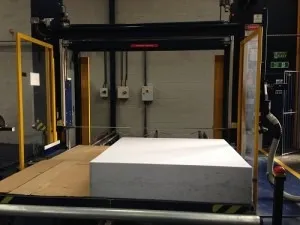
Foam conversion is the process of taking foam in its original form and modifying it into a specific shape, thickness, profile, or finished component. The starting material may arrive as a block, sheet, roll, or preformed piece, depending on the application.
The conversion process can be relatively straightforward, such as slicing a large sheet into thinner sections. It can also involve highly precise computer-controlled machining to create complex three-dimensional profiles.
The objective is not simply to change the appearance of the foam. Conversion allows manufacturers to control the material’s dimensions and physical characteristics so that it performs a particular function.
For example, a foam component might need to:
-
Absorb unwanted sound
-
Reduce vibration or noise transmission
-
Provide thermal insulation
-
Protect sensitive equipment
-
Fill an irregular space
-
Improve comfort in seating
-
Resist heat or fire
-
Provide cushioning around machinery
-
Fit precisely into an existing assembly
This flexibility makes converted foam useful across a surprisingly broad range of industries.
Why Standard Foam Often Needs to Be Modified
A standard foam sheet may have the correct material properties but still be unsuitable for a finished application. Its thickness, dimensions, shape, or surface may need to be changed before it can be installed.
Consider an engine compartment where available space is restricted. A flat sheet may provide suitable acoustic absorption, but it might not fit around pipes, brackets, curves, or other components. Profiling the foam can produce a shape that follows the available space while retaining the required acoustic performance.
Similarly, equipment manufacturers may need multiple foam components that fit together as part of a larger assembly. Accurate cutting and fabrication can improve consistency and reduce unnecessary material waste.
This is one of the major advantages of working with an experienced Foam converter. Instead of treating foam as a basic commodity, the material can be considered as part of a wider technical solution.
Technologies Used in Modern Foam Conversion
Different applications require different manufacturing techniques. A professional conversion facility may therefore use several types of equipment rather than relying on a single cutting method.
Band Saw and Slitting Equipment
Band saws can be used to cut foam blocks and sheets into required dimensions. Slitting equipment is particularly useful where accurate thicknesses or narrower sections are required.
Profiled slitting takes this process further by allowing foam to be shaped into repeatable profiles for specific applications.
CNC Profiling
CNC profiling provides a high level of accuracy and repeatability. Computer-controlled machinery can create detailed shapes based on technical drawings or digital specifications.
This is particularly valuable for bespoke acoustic components, where the foam may need to fit around complex structures.
Water Jet Cutting
Water jet technology can produce accurate cuts without relying on traditional mechanical blades. It can be useful when intricate shapes or specialist material combinations are required.
Die Cutting
Die cutting is well suited to repeat production of components with consistent shapes. Once the appropriate tooling is established, multiple parts can be produced efficiently.
Laminating and Fabrication
Foam does not always work alone. Laminating can combine several layers or bond foam to another material to create a component with enhanced characteristics.
Fabrication can then involve assembling different materials into a finished product designed around a customer’s specification.
Spray Booths and Surface Treatments
Certain applications require a protective or functional surface treatment. Spray-applied coatings and facing materials can help adapt foam for demanding environments.
Together, these processes enable a basic foam material to become a purpose-built technical component.
The Role of Foam in Acoustic and Thermal Control
One of the most valuable applications of converted foam is controlling sound and heat.
In machinery, vehicles, generators, engine rooms, and industrial equipment, excessive noise can create an uncomfortable or potentially unsuitable working environment. Properly selected and converted acoustic foam can help absorb sound energy and reduce reverberation within an enclosure or compartment.
The shape of the foam can also influence how effectively it occupies an available space. Profiling allows manufacturers to produce components that follow curves, fill cavities, or integrate with surrounding structures.
Thermal insulation presents another opportunity. Foam can be incorporated into areas where controlling heat transfer is important, including equipment compartments and marine or automotive applications.
In some cases, acoustic and thermal requirements exist together. A carefully designed foam component can therefore contribute to several performance objectives within the same installation.
Fire-Resistant Foam for Demanding Environments
Some environments require additional attention to fire performance. Specially treated foam materials can be developed for applications where resistance to combustion and heat is important.
For example, Class 0-type profiled foam can be used in demanding acoustic environments such as engine rooms, generator enclosures, heavy vehicles, and industrial settings. Depending on the specification, such materials may also be supplied with different facing options, barriers, or damping layers.
High-density acoustic profiles can provide sound absorption while remaining relatively easy to handle and install. Flexible foam can also be shaped to accommodate curved or complicated surfaces.
The precise material specification should always be selected according to the relevant application, environmental conditions, and required performance standards.
Applications Across Different Industries
The versatility of converted foam explains why it is used in so many sectors.
Automotive and Transport
Vehicles contain numerous spaces where noise, vibration, comfort, and thermal control matter. Converted foam can be used in areas such as headliners, cabin trim, engine compartments, armrests, seating, and interior insulation.
Commercial and specialist vehicles may have even more demanding requirements, particularly where acoustic treatment is needed around machinery.
Marine
Yachts, boats, and other marine equipment can benefit from lightweight insulation and acoustic materials. Engine rooms are a notable application because both heat and noise can become significant concerns.
Foam components can be profiled to fit around pipes, machinery, panels, and restricted spaces.
Construction
The construction sector can use converted foam for acoustic and insulation purposes. Bespoke profiles can be produced where standard dimensions are unsuitable for a particular installation.
Industrial Equipment
Factories and equipment manufacturers often need components designed around individual machines. Foam can be used to reduce noise, provide cushioning, protect components, or insulate specific areas.
Packaging
Custom foam inserts can protect delicate products during storage and transportation. Instead of relying on generic packaging, manufacturers can create cavities that closely match the shape of the item being protected.
Healthcare and Specialist Products
Converted foam is also used in applications involving cushions, supports, pads, and other products where controlled dimensions and material characteristics are important.
Benefits of Professional Foam Conversion
Choosing a specialist conversion service can provide several practical advantages.
Precision: Computer-controlled and specialist cutting equipment can produce repeatable components to defined specifications.
Customization: Foam can be shaped to accommodate unusual dimensions, curves, cavities, and technical requirements.
Better material utilization: Professional processing can help manufacturers use the appropriate quantity of material and reduce avoidable waste.
Performance optimization: Selecting the right foam and conversion method can improve acoustic, thermal, cushioning, or protective performance.
Consistency: Repeat production can provide uniform components across large orders.
Technical support: Experienced manufacturers can help determine suitable materials and processing methods rather than leaving customers to solve technical problems alone.
Choosing the Right Foam Converter
Not every foam supplier offers the same level of technical capability. When selecting a Foam converter, it is worth considering more than price alone.
Look for experience with the type of foam required, the ability to work from drawings or specifications, suitable cutting and profiling equipment, quality-control procedures, and experience within your particular industry.
Technical knowledge is especially valuable for complex projects. A supplier that understands how foam behaves in different environments can help identify a practical solution before production begins.
Quality systems are another consideration. Established manufacturers may operate formal quality-management systems to maintain consistency throughout production and delivery.
Conclusion
Foam conversion transforms foam from a basic material into a functional engineering component. Through cutting, profiling, laminating, die cutting, water jet processing, and fabrication, manufacturers can produce parts that meet precise requirements for shape, thickness, performance, and installation.
Its value becomes particularly clear in applications involving acoustic treatment, thermal insulation, fire performance, cushioning, packaging, and equipment protection. From a vehicle engine compartment to a yacht engine room or industrial enclosure, the right converted foam component can make a significant difference.
Ultimately, successful conversion depends on combining the right material with the right manufacturing process. An experienced Foam converter can assess the application, understand the technical challenge, and turn an initial concept into a practical finished component. That approach makes foam conversion much more than simple cutting—it becomes a method of creating tailored solutions for real-world engineering problems.