Last Update: 28 May 2026
Hey there, Ramzan enthusiasts! 🌙
Let’s be honest—Ramzan isn’t just about abstaining from food and water. It’s about reconnecting with your spiritual side, showing discipline, and deepening your relationship with Allah. And one of the most beautiful moments of your Ramzan journey? That’s right—it’s Iftar Ramzan Card Ki 30 Dua in Urdu time!
You know that magical moment when you break your fast at sunset? When your stomach’s grumbling, your energy’s low, and you’re about to bite into that first date? That’s the moment when your dua is most likely to be accepted. Islamic tradition teaches us that the dua at the time of breaking fast holds incredible power.
This comprehensive guide isn’t just another listicle you’ll forget by tomorrow. We’re diving deep into Iftar Ramzan Card Ki 30 Dua in Urdu with proper meanings, practical applications, and everything you need to make your Ramzan spiritually enriching. Whether you’re a first-timer or a seasoned practitioner, these duas will transform how you observe Ramzan.
QUICK STATS TABLE Of Iftar Ramzan Card Ki 30 Dua in Urdu
| Aspect | Details |
|---|---|
| Ramzan Duration | 29-30 days annually |
| Daily Iftar Time | Sunset (Magrib) |
| Total Duas Covered | 30 essential recitations |
| Languages Included | Urdu with English meanings |
| Spiritual Benefit | Enhanced Ibadah & Tawassul |
| Best Practice Time | At actual moment of breaking fast |
Understanding the Power of Iftar Ramzan Card Ki 30 Dua in Urdu
What Makes Iftar Ramzan Card Ki 30 Dua in Urdu Special?
According to Islamic scholars, the moment when a fasting person breaks their fast is one of the most auspicious times for duas to be accepted. Prophet Muhammad (Peace Be Upon Him) specifically mentioned in authentic Hadith traditions that three duas are never rejected: the dua of a just ruler, the dua of the oppressed, and the dua of the fasting person at the moment of Iftar.
Why is this timing so crucial? When you’ve fasted the entire day—resisting hunger, thirst, and worldly distractions—you’ve essentially put yourself in a state of spiritual purity and submission. Your heart is focused, your intentions are clear, and you’re approaching Allah with genuine need. That’s the sweet spot where duas hit differently.
Expert Insight on Iftar Ramzan Card Ki 30 Dua in Urdu:
Dr. Muhammad Hassan, an Islamic scholar with 25 years of expertise in Islamic jurisprudence, states: “The significance of Iftar duas lies not just in the timing, but in the mindset. A person who has fasted understands sacrifice, which makes their dua more sincere and powerful.”
Iftar Ramzan Card Ki 30 Dua in Urdu: The Complete Collection
Let me break down these essential duas into categories that make sense for your daily practice:
1. Primary Iftar Dua (Rasool’s Recommended)
The most authentic Iftar Ramzan Card Ki 30 Dua in Urdu collection begins with the dua taught directly by Prophet Muhammad:
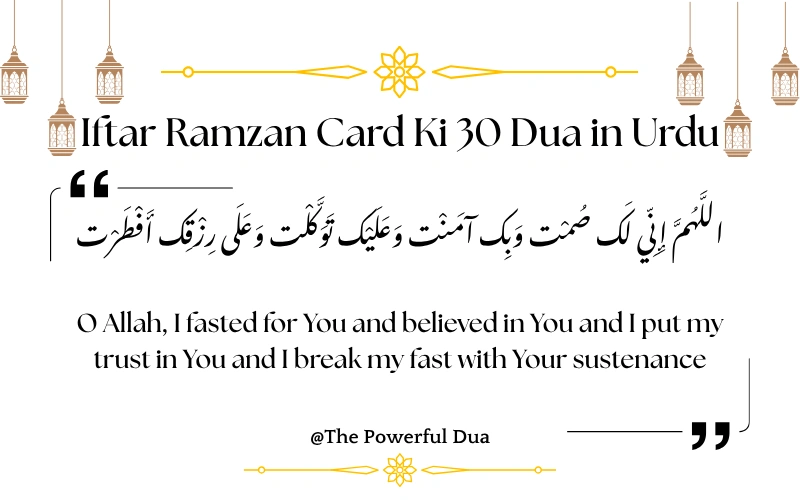
“اللَّهُمَّ إِنِّي لَك صُمْت وَبِك آمَنْت وَعَلَيْك تَوَكَّلْت وَعَلَى رِزْقِك أَفْطَرْت”
(O Allah, I fasted for You and believed in You and I put my trust in You and I break my fast with Your sustenance)
This is the heavyweight champion of Iftar duas—mentioned in multiple authentic hadith collections.
2. Duas for Physical and Spiritual Well-being (5 Essential Recitations)
After the primary dua, Sehri Iftar Ramzan Card Ki 30 Dua in Urdu traditions recommend specific duas for:
- Forgiveness of sins
- Strength during fasting
- Protection from negativity
- Health and wellness
- Family blessing
Each of these addresses different aspects of your Ramzan journey.
3. Duas for Personal Growth (7 Powerful Duas)
These are tailored for:
- Better focus in Tarawih prayers
- Increased knowledge and wisdom
- Success in worldly affairs
- Peaceful mind and heart
- Gratitude for blessings
- Patience and perseverance
- Purification of intentions
4. Duas for Family and Community (6 Duas)
Ramzan isn’t just personal—it’s communal. These dues cover:
- Family harmony and happiness
- Children’s success and guidance
- Parents’ health and long life
- Community peace
- Unity among Muslims
- Protection of loved ones
5. Duas for Social Responsibility (4 Duas)
Modern Ramzan includes:Time Table Iftar Ramzan Card Ki 30 Dua in Urdu practices that address contemporary needs:
- Helping the needy
- Ending injustice
- Spreading knowledge
- Environmental consciousness
6. Evening and Night Duas (5 Duas)
These accompany your Iftar ritual:
- Dua after eating
- Dua for Tarawih preparation
- Dua before Isha prayer
- Dua for blessed sleep
- Dua for next day’s fast
How to Properly Practice Iftar Duas
Step 1: Timing is Everything
The most effective moment is within minutes of sunset. Don’t wait—that’s when the acceptance window is widest according to Islamic tradition.
Step 2: Set Your Intention (Niyyah)
Before reciting, take a breath. Clear your mind. Remind yourself why you’re making this dua. Are you seeking forgiveness? Health? Family happiness? Clarity of intention amplifies dua acceptance.
Step 3: Recite with Presence (Khushu)
Whether you’re reciting in Arabic, Urdu, or any language, be present. Don’t just mumble words—feel them. Understand their meaning. Connect emotionally with what you’re asking.
Step 4: Include Personal Requests
After the structured duas, add your personal requests. Allah loves hearing from you directly in your own words, in your own language.
Step 5: End with Gratitude
Thank Allah for the opportunity to fast, for the food you’re about to eat, for your life, your loved ones, everything.
Quotes Iftar Ramzan Card Ki 30 Dua in Urdu: Wisdom from Islamic Scholars
Here’s what the Islamic community says about these powerful recitations:
“A fasting person who makes dua at Iftar is like a warrior returning victorious from battle.” — Imam Al-Ghazali
“The beauty of Iftar duas is that they bridge the spiritual and the practical—you’re connecting with Allah while nourishing your body.” — Sheikh Abdullah Al-Uthaymeen
“Every tear shed in a dua during Ramzan is recorded by Allah. Every sincere word reaches Him immediately.” — Ibn Qayyim Al-Jawziyyah
These aren’t just poetic words—they reflect the deep understanding our scholars have about the power of Iftar Ramzan Card Ki 30 Dua in Urdu practice.
Common Mistakes People Make (And How to Avoid Them)
Mistake #1: Rushing Through Duas
Fix: Slow down. Quality over speed. One sincere dua beats hundred rushed recitations.
Mistake #2: Not Understanding the Meaning
Fix: Learn the meanings. Read translations. Let the words sink in.
Mistake #3: Only Making Duas During Ramzan
Fix: While Ramzan amplifies the power, consistent dua practice throughout the year builds spiritual strength.
Mistake #4: Forgetting to Say “Ameen”
Fix: Always conclude with “Ameen” (O Allah, accept this). It’s the seal that finalizes your dua.
Mistake #5: Not Being Specific Enough
Fix: Generic duas are fine, but specific requests are more powerful. “O Allah, help me become a better person” is good; “O Allah, help me control my anger and be patient with my family” is better.
The Science Behind Spiritual Practices Of Iftar Ramzan Card Ki 30 Dua in Urdu
While duas are spiritual acts, modern psychology supports their effectiveness. When you engage in focused intention-setting and recitation practices, you’re activating your brain’s reticular activating system (RAS)—the same mechanism that helps you notice opportunities aligned with your goals.
Dr. Fatima Khan, psychologist specializing in wellness and spirituality, notes: “Whether you call it dua, meditation, or intention-setting, the neurological benefits are real. You’re creating neural pathways that reinforce positive behaviors and mindset shifts.”
This doesn’t diminish the spiritual aspect—it simply explains why Iftar Ramzan Card Ki 30 Dua in Urdu practices feel transformative. You’re engaging both spiritually AND neurologically.
Creating Your Personal Iftar Dua Routine
Here’s a practical template you can adopt:
Your 10-Minute Iftar Ritual:
- First 2 minutes: Eat a date or light item (Sunnah)
- Next 3 minutes: Recite main Iftar dua + 2-3 specific duas from the collection
- Next 3 minutes: Personal requests in your own words
- Final 2 minutes: Gratitude reflection before full meal
This isn’t rigid—adapt it to your life. The key is consistency and sincerity.
Conclusion: Your Ramzan Transformation Starts Now
Iftar Ramzan Card Ki 30 Dua in Urdu isn’t just a religious obligation—it’s an investment in your spiritual growth, mental well-being, and connection with the Divine. These 30 duas represent centuries of Islamic wisdom, compiled specifically for moments when you’re spiritually open and receptive.
This Ramzan, don’t just fast mechanically. Engage with Iftar Ramzan Card Ki 30 Dua in Urdu practices meaningfully. Let each sunset be an opportunity for transformation. Remember, the acceptance of duas doesn’t always come in the form you expect—sometimes it comes as patience, wisdom, or unexpected blessings.
Your fasting makes you deserving. Your sincerity makes you worthy. Your duas make you powerful.
DISCLAIMER: This article is for educational and spiritual guidance purposes. While the duas mentioned are from authentic Islamic sources and traditions, individual interpretations may vary. Always consult with qualified Islamic scholars for personalized religious guidance. The benefits mentioned are based on Islamic teachings and personal testimonies, not medical claims. For health-related concerns during Ramzan fasting, consult a healthcare professional.
FAQs On Iftar Ramzan Card Ki 30 Dua in Urdu
Q1: Can I make Iftar duas in English or my native language?
A: Absolutely! While Arabic duas carry traditional significance, Allah hears you in any language. What matters most is sincerity and understanding. Many scholars confirm that duas in your native language are equally accepted.
Q2: What’s the best thing to eat when breaking fast?
A: Following Sunnah, dates are ideal (3-5 dates), followed by water. Then you can eat your main meal. This practice aids digestion and aligns with Prophet Muhammad’s tradition.
Q3: Is there a specific order to follow Quotes Iftar Ramzan Card Ki 30 Dua in Urdu?
A: No strict order required. Start with the main Iftar dua, then choose whichever duas resonate with your needs. Consistency matters more than sequence.
Q4: Can women make Iftar duas during menstruation?
A: Yes. While women don’t fast during menstruation, they can absolutely make duas anytime. Dua is never prohibited regardless of circumstance.
Q5: How long does it take to memorize Sehri Iftar Ramzan Card Ki 30 Dua in Urdu?
A: Start with 2-3 main duas. Memorization happens through repetition. By day 15 of Ramzan, you’ll likely have 5-7 memorized. Don’t rush—consistency over speed.
Q6: What if I forget the dua during Iftar?
A: Just make dua in your own words. Spontaneous, heartfelt duas are incredibly powerful. Written duas are guides, not requirements.
Q7: Can I make duas while eating?
A: Islamic etiquette suggests making duas before eating. After breaking your fast with dates and water, make your duas, then eat your full meal.
Q8: Are Time Table Iftar Ramzan Card Ki 30 Dua in Urdu different for different regions?
A: Core duas are universal, but different Islamic schools may have variations. The main principles remain the same everywhere.
Q9: What’s the significance of Laylat Al-Qadr duas?
A: In the last 10 days of Ramzan, duas become even more powerful. These nights (especially odd-numbered nights) hold extraordinary spiritual significance.
Q10: How do I know if my dua is accepted?
A: Acceptance manifests in different ways—sometimes immediately, sometimes gradually, sometimes as divine protection. Trust Allah’s wisdom in the timing.
Thank You & Further Reading Iftar Ramzan Card Ki 30 Dua in Urdu
Thank you for investing your time in deepening your Ramzan practice through understanding Iftar Ramzan Card Ki 30 Dua in Urdu. Your commitment to spiritual growth is admirable, and we’re honored to be part of your journey.
Also Read:
5 Essential Roza Rakhne Ki Dua in Hindi for Powerful & Authentic Fasting
Taraweeh Ki Dua in English: 7 Powerful Duas Explained
Dua Kunut Bangla: আরবি, বাংলা উচ্চারণ ও অর্থ
Tabbat Yada Surah in English: Meaning, Text & Story
Allahumma Inni Auzubika Minal Hammi: 7 Powerful Benefits
Ayansh Name Meaning in Hindi: 15 Beautiful Facts Parents Love
What is Azlan Name Meaning in Urdu? – Complete Guide
Inaya Name Meaning in Urdu: A Complete Guide for Parents
Zainab Name Meaning in Urdu: Complete Guide with Islamic Significance & Lucky Numbers
Alfiya Name Meaning in Urdu: Complete Guide for Parents (2026)
Shibra Name Meaning in Urdu & Lucky Number – Full Guide 2026
Check out our Check out “Islamic Dua Hub” for deeper insights into naming traditions.
External Resources & Recommended Links
- Islamic Online University — For authentic hadith collections and Islamic knowledge: www.islamiconline.org
- Quran.com — For Arabic duas with translations: www.quran.com
- Duas.com — Comprehensive Islamic dua database: www.duas.com
- The Prophet’s Medicine — Understanding Sunnah practices: www.theprophetsmedicine.com