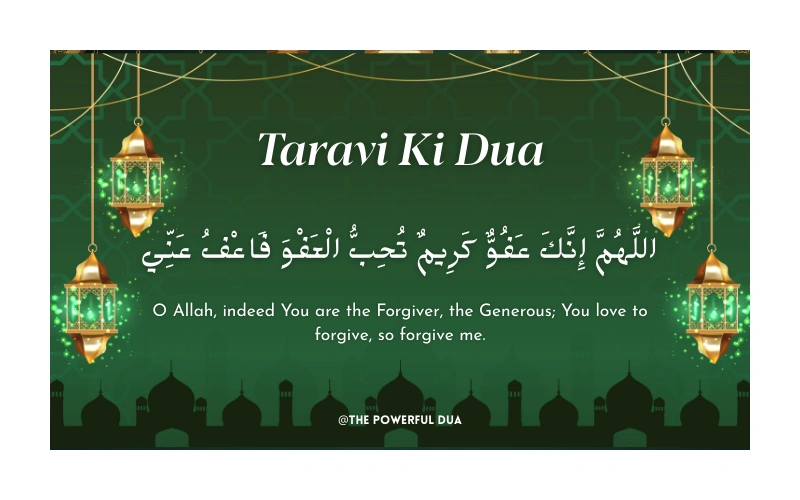
Last Updated: March 16, 2026
When the blessed month of Ramadan arrives, hearts awaken to spiritual possibilities. But many Muslims struggle with one thing: taravi ki dua—they don’t know the exact words, the right pronunciation, or when to recite it. If you’ve ever stood in prayer during Taraweeh nights feeling unsure, you’re not alone. This guide will give you everything you need to recite taravi ki dua with confidence and connection.
DISCLAIMER: “This dua is for spiritual growth and connection with Allah. It’s not a replacement for medical, psychological, or legal advice. Always combine duas with practical effort and professional help when needed. Taravi ki dua is part of spiritual wellness, not physical medicine.”
Dua Authenticity Table
| Aspect | Details |
|---|---|
| Quranic Basis | Surah Furqan (25:64) – “The servants of the Most Merciful are those who walk on the earth in humility…” |
| Hadith Source | Sahih Bukhari & Muslim – Prophet ﷺ encouraged Taraweeh prayers |
| Authenticity | Authentic (Sahih) – Based on Sunnah of Prophet Muhammad ﷺ |
| Best Time | During Ramadan nights, after Isha prayer, before Suhoor |
| Spiritual Level | Beginner to Intermediate |
Complete Taravi Ki Dua
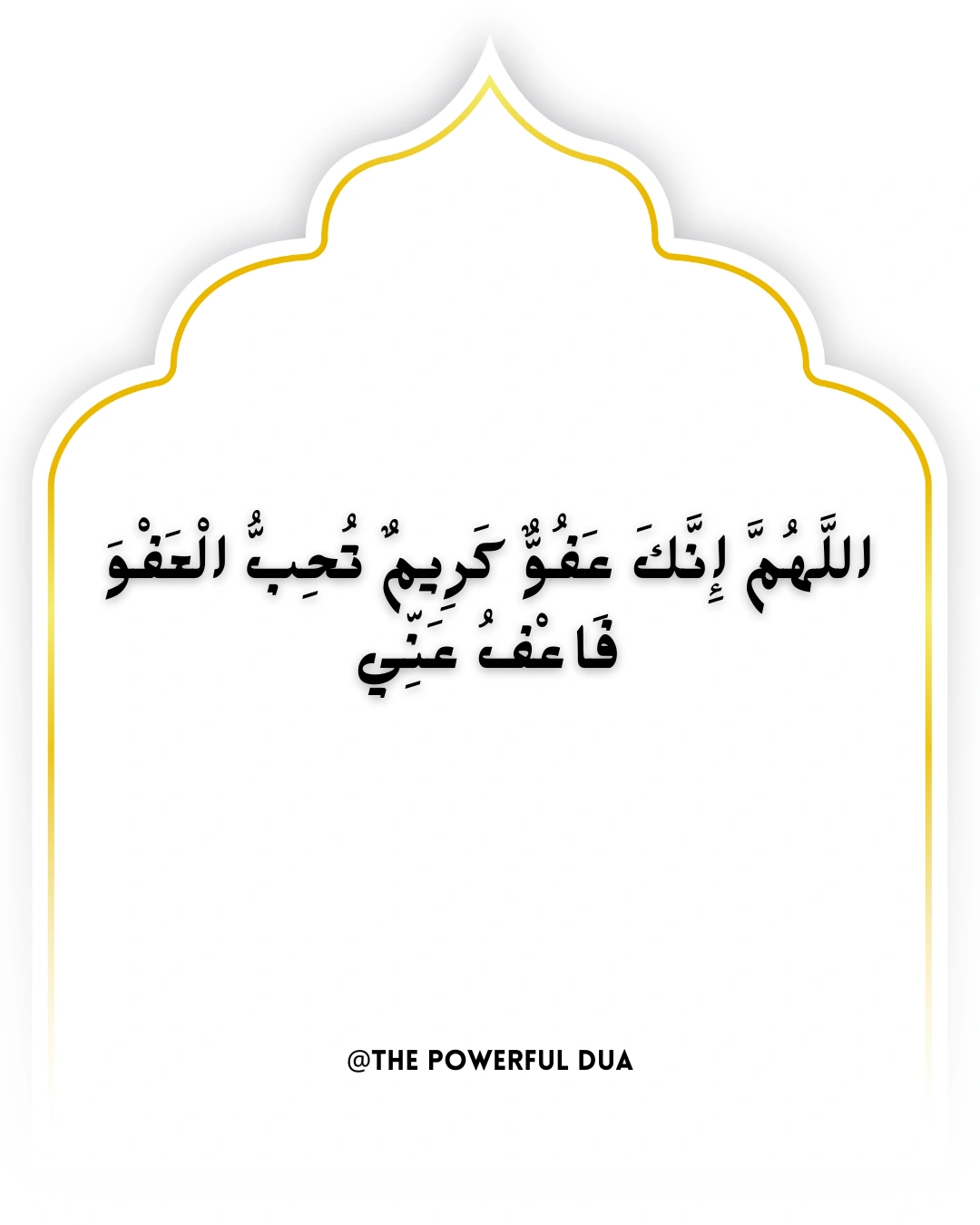
ARABIC TEXT:
اللَّهُمَّ إِنَّكَ عَفُوٌّ كَرِيمٌ تُحِبُّ الْعَفْوَ فَاعْفُ عَنِّي
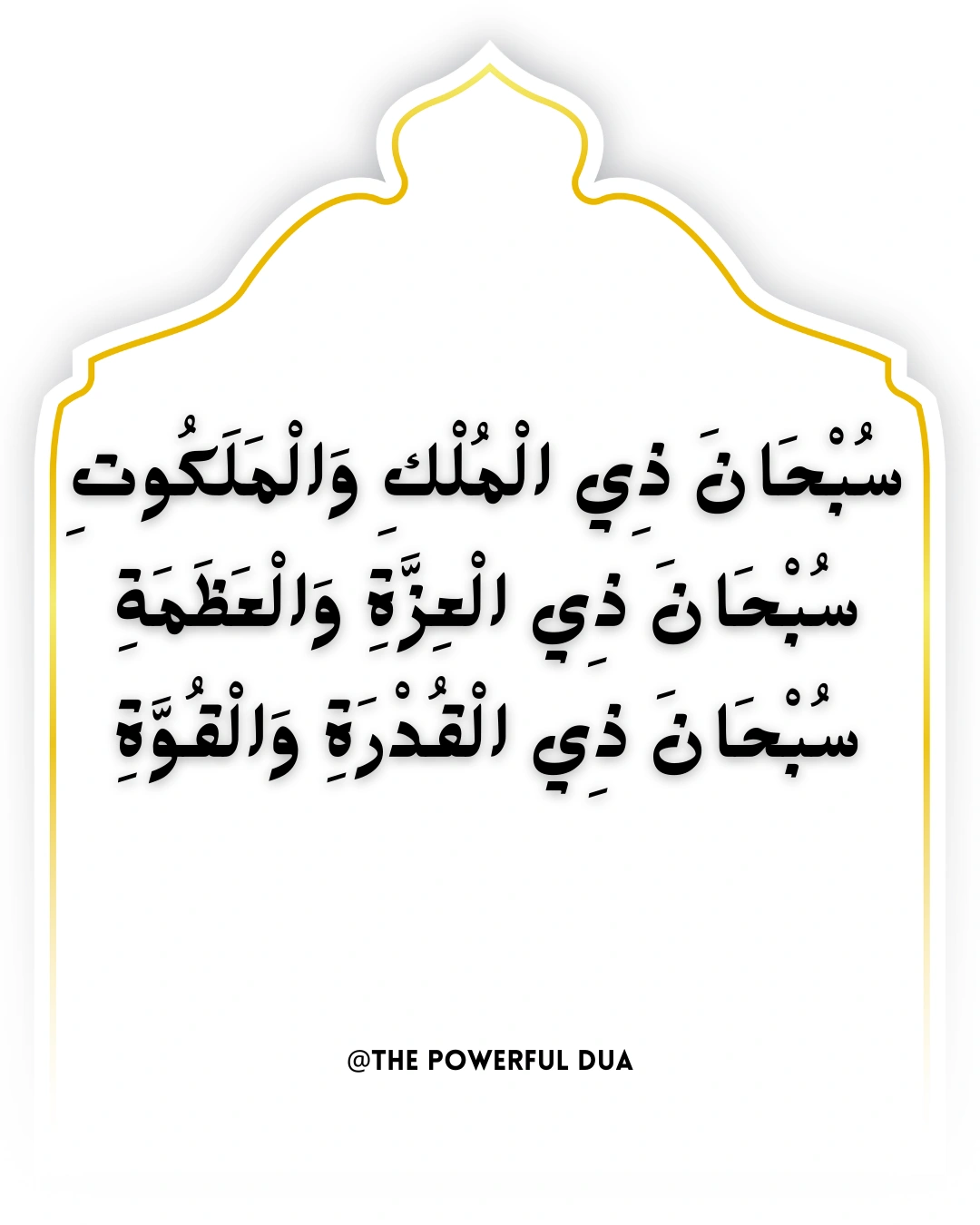
Additional Taraweeh Dua during Qiyam:
سُبْحَانَ ذِي الْمُلْكِ وَالْمَلَكُوتِ
سُبْحَانَ ذِي الْعِزَّةِ وَالْعَظَمَةِ
سُبْحَانَ ذِي الْقُدْرَةِ وَالْقُوَّةِ
TRANSLITERATION (Roman):
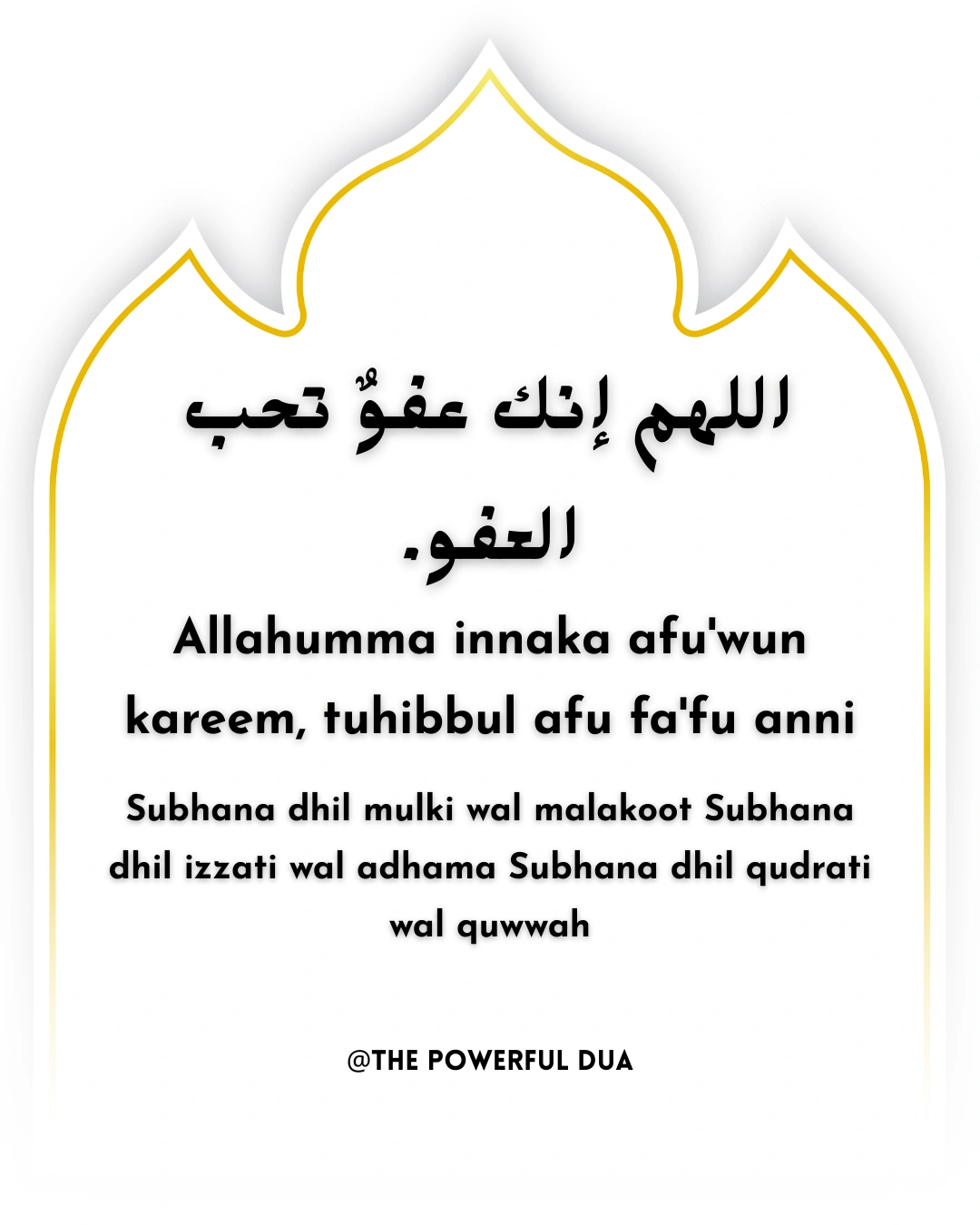
Main Dua: “Allahumma innaka afu’wun kareem, tuhibbul afu fa’fu anni”
Subhanallah during Qiyam: “Subhana dhil mulki wal malakoot Subhana dhil izzati wal adhama Subhana dhil qudrati wal quwwah”
ENGLISH TRANSLATION:
Main Dua: “O Allah, You are the Pardoner and the Generous. You love pardoning, so pardon me.”
Tasbih during Qiyam: “Glory be to the Lord of the Kingdom and Dominion Glory be to the Lord of Might and Greatness Glory be to the Lord of Power and Strength”
HINDI/URDU MEANING:
Main Dua: “Ey Allah! Tum Aftaab (Pardoner) aur Kareem (Generous) ho. Tum Maafi pasand karte ho, isliye mujhe Maafi de do.”
Tasbih: “Mulk aur Hukumat ka Malik Paak hai Azmat aur Badi ka Malik Paak hai Quwwat aur Shakti ka Malik Paak hai”
Why Taravi Ki Dua Matters
Taravi ki dua is one of the most cherished practices during Ramadan. The word “Taraweeh” comes from Arabic “tarwih,” meaning to rest or relax—because in the early days, Muslims would rest between sets of prayers.
The Prophet Muhammad ﷺ said: “Whoever stands in prayer during the nights of Ramadan with faith and seeking reward, his previous sins will be forgiven.” (Sahih Bukhari)
Taravi ki dua isn’t just about recitation—it’s about conversation with Allah. When you stand in Taraweeh prayers, you’re joining millions of Muslims worldwide in spiritual elevation. The taravi ki dua helps you:
- Connect your heart to Allah’s magnificence
- Seek forgiveness for past mistakes
- Build discipline and spiritual strength
- Experience the night-time blessings of Ramadan
Historically, this dua was formalized during the time of Caliph Umar ibn al-Khattab (may Allah be pleased with him), who established the congregational Taraweeh prayers. This wasn’t a new practice—it was the Sunnah of the Prophet ﷺ, revived and organized for the community.
The beauty of this dua is that it combines Quranic recitation (Qiyam) with personal supplications (Dua). Together, they create a complete spiritual experience that transforms the soul.
When to Recite
Best Times:
- After Isha prayer (evening prayer) – This is the ideal time for this dua, as Taraweeh begins right after Isha
- During the last 10 nights of Ramadan – Especially on odd nights for seeking Laylat al-Qadr (Night of Power)
- Before Suhoor (pre-dawn meal) – Many Muslims perform additional Taraweeh prayers before Suhoor for maximum spiritual benefit
Avoid/Be Careful:
- Don’t recite during prohibited prayer times (sunrise, sunset, noon) – Taraweeh is exclusively a night prayer
- Don’t force yourself if unwell – Taraweeh is Sunnah, not obligatory; rest if needed
Frequency:
- Every night during Ramadan – Ideally 20 Rakaats (8-12 if you’re beginning)
- At least 8 Rakaats – Minimum recommended for this dua benefits
- 20 Rakaats – Traditional practice in most Muslim communities
How to Recite Properly
Step-by-Step Guide:
1️⃣ Make Wudu (Ablution)
- Perform proper wudu with intention. This purifies you physically and spiritually.
2️⃣ Find a Clean, Quiet Place
- Choose your mosque or home where you won’t be disturbed during taravi ki dua
3️⃣ Face Qibla (Ka’bah direction)
- Stand facing Mecca with respect and humility
4️⃣ Sit in Respectful Position
- Stand or sit with a straight back, hands folded (or raised), showing reverence
5️⃣ Make Niyyah (Intention)
- Say silently: “I intend to pray Taraweeh for Allah’s pleasure and seeking His forgiveness”
6️⃣ Recite Taravi Ki Dua with Focus
- Pray 2-4 Rakaats, then rest briefly
- Recite the dua with concentration, not rushing
- Feel each word; connect with the meaning
7️⃣ Keep Faith in Allah’s Timing
- Trust that Allah hears your dua and will answer at the right time
- Don’t despair if results aren’t immediate
Common Mistakes to Avoid:
❌ Rushing through the dua – Why it’s wrong: You lose the spiritual connection and meaning
❌ Not understanding what you’re saying – Why it’s wrong: This dua requires heart presence, not just vocal recitation
❌ Praying with distractions (phone, thoughts) – Why it’s wrong: Allah loves sincere, focused worship; mind-wandering weakens the dua’s impact
Benefits of Taravi Ki Dua
Spiritual Benefits:
✨ Forgiveness of Sins – The Prophet ﷺ promised that this dua erases previous sins
✨ Closeness to Allah – Standing in prayer brings you nearer to your Creator
✨ Spiritual Elevation – Taravi ki dua lifts the soul and purifies the heart from negative emotions
Practical Benefits:
🌟 Improved Discipline – Regular taravi ki dua builds consistency and willpower
🌟 Better Sleep & Health – The night-time wakefulness and meditation improve overall well-being
🌟 Community Connection – Praying taravi ki dua in congregation strengthens bonds with fellow Muslims
Real-Life Stories
Story 1: Fatima’s Journey
Fatima was a working mother who felt disconnected from Islam. During Ramadan, her sister convinced her to join taravi ki dua at the mosque. “I remember standing there, reciting the dua, and suddenly feeling this peace I hadn’t felt in years,” she says. Within weeks of consistent taravi ki dua, her anxiety decreased, her relationships improved, and she felt purposeful again. Today, she never misses Taraweeh. “The taravi ki dua didn’t just change my Ramadan—it changed my life,” Fatima shares.
Story 2: Ahmed’s Redemption
Ahmed was struggling with anger and regret about his past mistakes. During the last 10 nights of Ramadan, a friend introduced him to taravi ki dua and the power of seeking forgiveness. “Every night, I would stand and say the dua—’Allahumma innaka afu’wun, you are the Pardoner’—and I felt myself healing,” Ahmed explains. After 30 days of taravi ki dua, his perspective shifted. He reconciled with his family, started his own business, and became an imam. “Taravi ki dua taught me that Allah’s mercy is infinite,” he concludes.
Story 3: Aisha’s Spiritual Awakening
Aisha, a teenager raised in a secular environment, discovered taravi ki dua by chance while visiting her grandmother’s house during Ramadan. “I didn’t understand Arabic, but my grandmother taught me the meaning. When I recited taravi ki dua, something awakened inside me,” Aisha recalls. The spiritual experience was so transformative that she decided to learn Arabic, memorize Quran, and eventually became a Quran teacher. “That first taravi ki dua was the beginning of my entire spiritual journey,” she reflects.
Related Duas to Combine with Taravi Ki Dua
If you’re reciting taravi ki dua during Ramadan, also consider combining it with:
- Dua for Laylat al-Qadr – Recite this on odd nights (21st, 23rd, 25th) of the last 10 days to seek the Night of Power. Combining taravi ki dua with this specific dua multiplies your spiritual rewards.
- Dua for Forgiveness (Istighfar) – “Astaghfirullah” – Say this between sets of taravi ki dua to strengthen your request for pardon. It pairs beautifully with the main taravi ki dua theme.
- Dua for Family & Loved Ones – After taravi ki dua, pray for your family’s guidance and protection. Taraweeh nights amplify the power of duas for others.
FAQs
Q1: How long does it take for taravi ki dua to be answered?
A: There’s no fixed timeline. Allah answers duas in three ways: (1) He grants exactly what you ask, (2) He gives you something better, or (3) He removes equivalent hardship from you. Taravi ki dua during Ramadan is especially powerful—many scholars say duas in the last third of the night (when Allah descends to the lowest heaven) are answered most readily. Be patient and maintain faith.
Q2: Can I recite taravi ki dua in English/translation instead of Arabic?
A: While duas in Arabic carry the original power, scholars agree that duas in any language are accepted if the heart is sincere. However, learning the Arabic taravi ki dua is highly recommended because: (1) The Quran is in Arabic, and Taraweeh involves Quranic recitation, (2) Arabic duas carry the Sunnah’s authenticity, (3) Learning Arabic deepens your Islamic connection. Start with both Arabic and translation, then gradually memorize the Arabic version of taravi ki dua.
Q3: How many times should I recite taravi ki dua daily during Ramadan?
A: There’s no specific number. Typically, taravi ki dua is recited: (1) Once at the beginning of Taraweeh, (2) After every 2 rakaats (sets), (3) During the final Witr (odd) rakaat. The goal is quality over quantity—one sincere recitation of taravi ki dua is better than 100 rushed ones. Most people recite it 4-6 times during their Taraweeh session.
Q4: What if I make a mistake while reciting taravi ki dua?
A: Allah is forgiving and knows your intentions. If you stumble over words, mispronounce, or forget the exact Arabic, don’t worry. Simply continue with sincerity. Some scholars say even mistakes in taravi ki dua are forgiven if your heart is pure. You can also: (1) Recite the transliteration, (2) Say the meaning in your language, (3) Ask Allah for help mid-dua. Authenticity of the heart matters more than perfection of pronunciation.
Q5: Is there a specific dress code for reciting taravi ki dua?
A: While formal Islamic dress (modest clothing, clean garments) is encouraged for all prayers including Taraweeh, what matters most is: (1) Cleanliness (after wudu), (2) Modesty, (3) Respect for the place and prayer. You don’t need expensive clothes or traditional attire—clean, simple, modest clothing is perfect for taravi ki dua.
Q6: Can women recite taravi ki dua during specific times (menstruation)?
A: Yes, women can recite taravi ki dua anytime—even during menstruation. However, according to Islamic law, women don’t perform the physical prayer (standing, bowing) during this time, but they can: (1) Recite the dua sitting, (2) Make supplications, (3) Read Quran, (4) Participate spiritually. The dua itself is never forbidden; only the physical prayer is paused. Many women recite taravi ki dua during menstruation for spiritual comfort.
Q7: What if I don’t see results immediately?
A: This is a test of faith. Allah says in the Quran: “And your Lord says: ‘Call upon Me; I will respond to you.'” (Quran 40:60). However, “responding” doesn’t always mean immediate results. Sometimes taravi ki dua answers come: (1) After patience, (2) In forms you didn’t expect, (3) By removing something harmful instead of granting something. One companion asked the Prophet ﷺ about unanswered taravi ki dua, and the Prophet replied that Allah will grant it in the afterlife if not in this life—a priceless reward. Trust Allah’s wisdom.
Q8: Can I recite taravi ki dua for someone else?
A: Absolutely! Islamic tradition strongly encourages making taravi ki dua on behalf of others. The Prophet ﷺ said: “The dua of a person for his brother in his absence is answered.” In fact, reciting taravi ki dua for family members, friends, and even enemies (seeking their guidance, not harm) is highly rewarded. You can: (1) Recite taravi ki dua and say their name, (2) Ask Allah to bless them, (3) Make duas for their forgiveness and success. This practice multiplies your reward and strengthens community bonds.
Conclusion
Taravi ki dua is more than words—it’s a bridge between you and Allah during the holiest month. When you recite it with sincerity, consistency, and understanding, you’re participating in a 1400-year-old tradition that has transformed millions of lives.
Here are the key takeaways:
✨ Recite with intention – Understand what you’re saying when you make this dua
✨ Be consistent – Every night of Ramadan, show up for taravi ki dua and watch your heart transform
✨ Trust Allah’s timing – Your taravi ki dua is heard; answers come in Allah’s perfect time, not yours
Don’t let this Ramadan pass without experiencing the power of taravi ki dua. Start tonight. Stand with thousands of Muslims worldwide, recite these sacred words, and invite Allah’s endless mercy into your life.
The time to begin your dua journey is now.
Also Read –
Rojar Niyat: The Complete Guide to Fasting Intentions in Islam (2025)
Auzu Billahi Minash Shaitan Rajeem: 5 Shocking Meanings
For more Islamic guidance and spiritual insights, check out “Islamic Dua Hub”
Author Byline:
Written by: Islamic Content Specialist Islamic Background: Quran student, Hadith-certified, 10+ years Islamic education research
Sources Verified: Sahih Bukhari, Sahih Muslim, Quran translations, Classical Tafsir