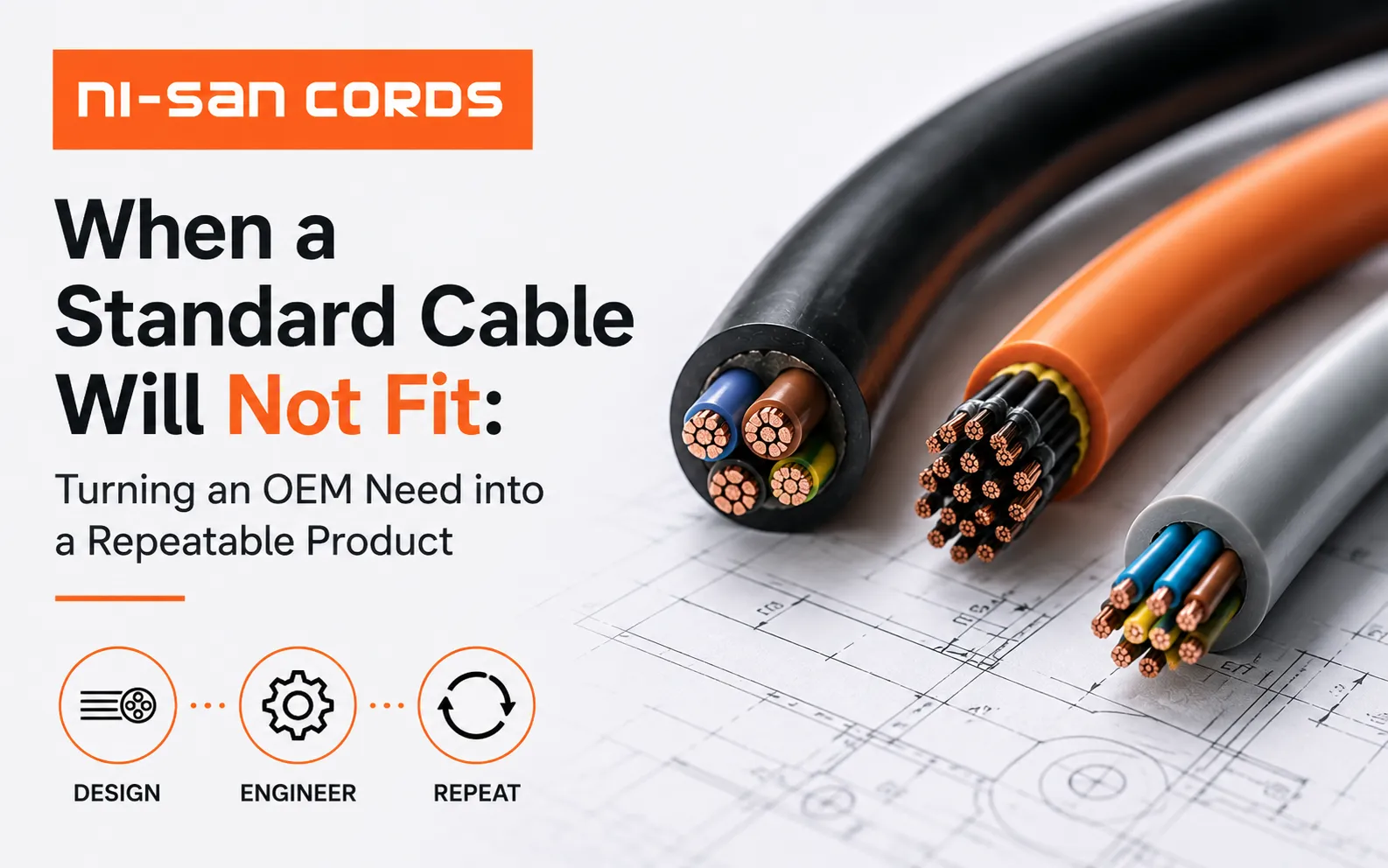
Many cable faults start before work begins. An enquiry may say “same as sample” or list only size and cores. Heat, movement, marks and test limits remain unclear. The cable team at Nisan Cords, India handles bulk and OEM needs, where a clear brief matters. The goal is not to copy a sample. It is to make a cable that can be checked and reordered without doubt.
Turn the Use into Clear Details
Start with what the cable must do. State the product, load, voltage, current, duty cycle and length. Add the route space and terminal type before the quote is made.
Site risks matter just as much. Heat, oil, water, sunlight, dust, wear and movement can change the cable build. A fixed panel wire works differently from one moving with a machine.
A used sample can help explain shape and fit, but it may have stretched, aged or lost its print. Measure it and use it with a written brief. Do not treat an old sample as the only set standard.
Fix the Metal Core Before Choosing Colours
The metal core carries the load. Yet buyers often begin with outer appearance. Confirm copper or aluminium, conductor class, nominal area, strand build and resistance limit.
The BIS manual for IS 8130 groups metal cores by material, class and build. It says each maker must list the types covered by its licence. One certificate cannot replace a check on the product.
Colour, print and packing are important for the work. They come after power needs. A cable that looks correct may still have the wrong resistance, wall thickness or bend response.
Build a Drawing Both Teams Can Control
The approved drawing should state each feature that can affect fit or use. Include the cores, conductor area, insulation grade, sheath, finished size, colour code, print legend, length and allowed limit.
Buyers approaching cable manufacturers in India should give the expected monthly volume too. Order volume affects tools, raw-material buying and the minimum order. It also affects coil or drum choice and lead time.
The Ministry of Statistics reported 6.2 per cent growth in factory output during April 2026. As output grows, a vague cable brief can become a larger repeat-order problem. Clear details help buying, quality and shop teams work from the same facts.
Test the Sample in Real Work
A sample should be tested against the drawing, not judged only by feel and finish. Check conductor resistance, dimensions, insulation, print, colour, flexibility and any tests required by the product standard.
For a new cable, a short pilot batch can reveal issues that one hand-made sample may hide. Assembly staff should check cutting, stripping, routing, termination and fit inside the actual product. Record the approval result and seal the accepted sample.
Protect the Design After Approval
The purchase order should carry the drawing number and revision. It should state the test papers, pack type, batch marks and allowed limits. Any change in metal, PVC, size or process should need written review.
Ni-San states that its in-house work covers copper drawing, bunching, PVC compounding and extrusion. That control can support custom work, but success still depends on a clear brief. Make the use, drawing, tests and change rules agree. The cable becomes easier to buy, make and repeat—without relying on memory or guesswork.