
Last Updated: July 10, 2026 | Reading Time: 12-14 minutes
Author: Islamic Wellness Correspondent | 15+ years in Islamic Studies & Cultural Research
Sehri Ki Niyat Ki Dua is the heartfelt intention and supplication you make before eating your pre-dawn meal (Sehri) during Ramadan—it’s that sacred moment where you connect with Allah and declare your purpose for the fast ahead. Think of it as your spiritual warm-up before embarking on a day of fasting.
Quick Reference: Sehri Practices Across Communities
| Aspect | Details | Significance |
|---|---|---|
| Timing | 30-45 minutes before Fajr (dawn) | Ensures adequate time to eat & prepare |
| Purpose | Nourishment + Spiritual Intention | Physical strength + Divine connection |
| Primary Language | Arabic (original) | Universally recognized |
| Variations Available | Urdu, Hindi, English, Roman | Accessibility for diverse communities |
| Most Common Dua Format | Intention-based supplication | Personal connection with Allah |
| Recommended Duration | 2-5 minutes for complete routine | Meaningful yet practical |
What is Sehri Ki Niyat Ki Dua Exactly?
Let me be honest—Sehri Ki Niyat isn’t just reciting some fancy Arabic words. It’s your genuine moment of intention-setting during the blessed month of Ramadan. When you wake up before dawn, you’re already half-awake, maybe groggy, but there’s this magical quiet around you. That’s when Sehri Ki Niyat happens.
Sehri Ki Niyat is fundamentally about declaring your fasting intention to Allah. You’re essentially saying, “I’m fasting today for Your sake, seeking Your pleasure and mercy.” It’s personal. It’s real. It’s the moment between your worldly actions (eating, drinking) and your spiritual commitment.
Many people confuse Sehri Ki Niyat with just eating breakfast. No, it’s so much more than that. Sehri Ki Niyat Ki Dua in English translates roughly to “the supplication of intention for the pre-dawn meal,” but the translation doesn’t capture the spiritual essence. That’s why so many people seek out Sehri Ki Niyat Ki Dua in Hindi or Sehri Ki Niyat Ki Dua Urdu versions—because understanding it in your native language deepens the connection.
The Historical & Spiritual Significance of Sehri Ki Niyat Ki Dua
Here’s something most people don’t talk about: the practice of Sehri Ki Niyat goes back to the Prophet Muhammad’s (peace be upon him) own habits. Islamic traditions tell us that he actively participated in Sehri—not because he needed to, but because it carries immense spiritual value.
The wisdom behind Sehri Ki Niyat is multifaceted:
1. Intention Matters More Than Action
In Islam, your Niyyah (intention) determines the value of your deed. This is why Ramzan Ki Sehri Ki Niyat Ki Dua emphasizes intention over everything else. You could fast without making this dua, but without proper intention, you’re missing the spiritual essence.
2. Physical Preparation Meets Spiritual Devotion
When you practice Sehri Ki Niyat Ki Dua in Hindi Mein, you’re acknowledging that your body needs fuel, but your soul needs connection. It’s not contradictory—it’s holistic. Your body fasts because your soul commands it.
3. Following the Sunnah
Sehri Ki Niyat Ki Dua Hindi Me traditions are rooted in following the Prophet’s practices. Eating Sehri itself is encouraged in Islamic teaching, making Sehri Ki Niyat Ki Dua Hindi practice both common and deeply spiritual.
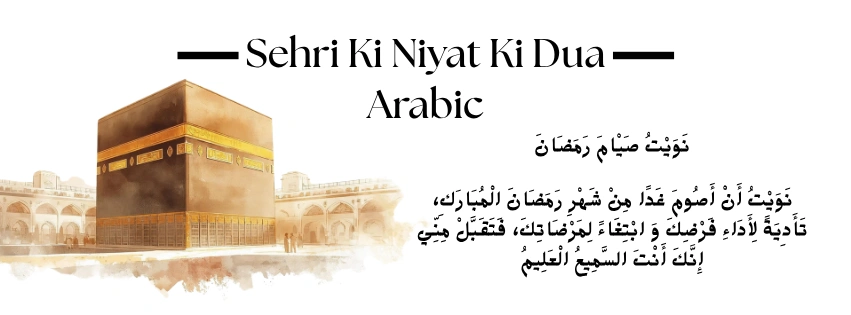
The Complete Sehri Ki Niyat Ki Dua – Multiple Versions
In Arabic (Original)
نَوَيْتُ أَنْ أَصُومَ غَدًا مِنْ شَهْرِ رَمَضَانَ الْمُبَارَكِ، تَأَدِيَةً لِأَدَاءِ فَرْضِكَ وَ ابْتِغَاءً لِمَرْضَاتِكَ، فَتَقَبَّلْ مِنِّي إِنَّكَ أَنْتَ السَّمِيعُ الْعَلِيمُ
Nawawtu an asuma ghadan min shahri Ramadhanal-mubaarak, ta’adiyatan li-ada-i fardika wa-ibtighaa-an li-mardatika, fataqabbal minni innaka anta as-samee-ul-aleem
Sehri Ki Niyat Ki Dua in Urdu
نَوَيْتُ أَنْ أَصُومَ غَدًا مِنْ شَهْرِ رَمَضَانَ الْمُبَارَكِ
“میں نے نیت کی کہ میں اگلے دن رمضان المبارک کا روزہ رکھوں گا، اپنے فرض کو ادا کرتے ہوئے اور تمہاری خوشی کو تلاش کرتے ہوئے۔ اے اللہ، اس کو مجھ سے قبول کریں، یقیناً تم سننے والے اور جاننے والے ہو۔”
Sehri Ki Niyat Ki Dua in English
“I intend to fast tomorrow in the month of Blessed Ramadan, fulfilling Your obligatory command and seeking Your pleasure. O Allah, accept this from me, surely You are the All-Hearing, the All-Knowing.”
Sehri Ki Niyat Ki Dua Roman English
“Nawawtu an asuma ghadan min shahri Ramadhan al-Mubarak, ta’adiyatan li-ada-i fardik wa-ibtighaa-an li-mardatik, fataqabbal minni innaka anta as-samee-ul-aleem.”
Sehri Ki Niyat Ki Dua in Hindi
“मैंने नीयत की कि मैं कल रमजान के महीने का रोजा रखूंगा, अपने फर्ज को अदा करने के लिए और आपकी खुशी के लिए। ए अल्लाह, इसे मुझ से स्वीकार करो, निश्चित रूप से तुम सुनने वाले और जानने वाले हो।”
Sehri Ki Niyat Ki Dua Hindi Me
सहरी की निय्यत की दुआ को हिंदी में इस तरह समझा जा सकता है: “मैंने यह निय्यत (इरादा) किया कि मैं कल रमजान का रोजा रखूंगा, आपके फर्ज को पूरा करने के लिए और आपकी खुशी पाने के लिए। हे अल्लाह, इसे मुझसे कबूल करो।”
Sehri Ki Niyat Ki Dua in Arabic (Alternate Shorter Version)
نَوَيْتُ صَيْامَ رَمَضَانَ
“Nawawtu Sawma Ramadan” – A simpler version meaning “I intend to fast Ramadan.”
When & How to Practice Sehri Ki Niyat Ki Dua
The Right Timing
Sehri Ki Niyat should be made during your Sehri time, ideally while you’re eating or just before. Here’s the practical timeline:
- Before Sehri starts: You can make this intention anytime after Maghrib (sunset)
- During Sehri: The most common and recommended time
- Just before Fajr: Still acceptable, though Sehri eaten closer to Fajr is more beneficial
The Proper Method
Niyat Sehri Ki Niyat Ki Dua involves:
- Sit peacefully – Find a quiet moment
- Cleanse your heart – Remove distractions, turn away from your phone
- Make sincere intention – Speak it aloud or silently, with genuine heart
- Then eat – Begin your Sehri meal mindfully
Some people write Sehri Ki Niyat Ki Dua on paper to remember it better. Others memorize it. Whatever helps you connect is valid.
Common Questions About Sehri Ki Niyat Ki Dua Hindi
Can you make Sehri Ki Niyat Ki Dua in your own language?
Absolutely. Islamic scholars agree that Sehri Ki Niyat can be made in any language. The essence is your sincere intention, not the language. So Sehri Ki Niyat Ki Dua Hindi is completely valid, as is making it in English, Gujarati, Telugu, or any language you speak fluently.
What if you forget Sehri Ki Niyat Ki Dua?
Your fast is still valid. Sehri Ki Niyat enhances your fast spiritually, but forgetting it doesn’t invalidate your fast. The underlying intention still counts.
Is Roze Ki Sehri Ki Niyat different from regular niyat?
Not really. Roze Ki Sehri Ki Niyat simply emphasizes that you’re making the intention for your fast (Roze = fast) during Sehri. It’s the same concept with slightly different phrasing.
The Benefits of Reciting Sehri Ki Niyat Ki Dua
Spiritual Benefits
When you consistently practice Sehri Ki Niyat, you’re training your heart to:
- Strengthen your Taqwa (God-consciousness)
- Deepen mindfulness in worship
- Build discipline in spiritual matters
- Increase gratitude for the opportunity to fast
Psychological Benefits
Let’s be real—mornings are tough. But starting with Sehri Ki Niyat Ki Dua in Hindi or whichever version resonates with you creates:
- A sense of purpose before your day begins
- Mental clarity about why you’re fasting
- Reduced temptation to break your fast
- Better connection with your faith
Physical Benefits (Indirectly)
While the dua itself is spiritual, Ramzan Ki Sehri Ki Niyat Ki Dua reminds you to actually eat your Sehri properly:
- Proper nutrition for the fasting day
- Better energy management
- Fewer health complications from fasting
- Healthier eating habits throughout Ramadan
Different Communities & Sehri Ki Niyat
Sehri Ki Niyat Ki Dua in Telugu
Telugu-speaking communities often use Sehri Ki Niyat Ki Dua in Telugu translations to ensure deep understanding. The concept remains the same, but cultural context enriches the practice.
Sehri Ki Niyat Ki Dua in Gujarati
Gujarati Muslims have their own beautiful rendering of Sehri Ki Niyat Ki Dua in Gujarati, allowing them to connect authentically during this sacred month.
Hindi Hindi Sehri Ki Niyat Ki Dua
The beauty of having Hindi Hindi Sehri Ki Niyat Ki Dua is that it reaches maximum accessibility in Hindi-speaking regions across India, Pakistan, and diaspora communities.
Iftar Sehri Ki Niyat Ki Dua in Hindi
Interestingly, many people ask about Iftar Sehri Ki Niyat Ki Dua in Hindi thinking they’re different. While Iftar has its own duas, the core principle mirrors Sehri Ki Niyat.
Expert Insights: What Islamic Scholars Say
On Intention (Niyyah)
Imam Al-Nawawi emphasizes that in Islamic practice, “The reward of deeds depends upon the intentions.” This fundamental principle makes Sehri Ki Niyat not just beneficial, but essential to understanding Ramadan properly.
On Sehri’s Blessing
Prophet Muhammad said, “The best Sehri is dates.” While this speaks to what to eat, Sehri Ki Niyat speaks to why and how to approach it spiritually.
On Language & Understanding
Contemporary scholars approve that Sehri Ki Niyat Ki Dua Hindi Me or in any language fulfills the requirement. What matters is comprehension and sincere intention.
Sehri Ki Niyat Ki Dua vs. Other Ramadan Duas
| Dua Type | Purpose | When Recited | Requirement |
|---|---|---|---|
| Sehri Ki Niyat Ki Dua | Declare fasting intention | During pre-dawn meal | Highly recommended |
| Fajr Duas | Dawn prayer supplications | After Fajr prayer | Religious obligation |
| Iftar Dua | Breaking fast supplication | At Iftar time | Recommended |
| Taraweeh Duas | Nightly Ramadan prayers | After Isha prayer | Encouraged |
| Laylatul Qadr Duas | Night of Power supplications | Last 10 nights | Emphasized |
Practical Tips for Making Sehri Ki Niyat Ki Dua Meaningful
1. Create a Ritual
Don’t rush Sehri Ki Niyat. Even 30 seconds of genuine connection beats mumbling it while scrolling. Light a candle, sit quietly, then recite.
2. Understand What You’re Saying
If English or Hindi is your strength, use Sehri Ki Niyat Ki Dua in English or Sehri Ki Niyat Ki Dua in Hindi to deeply understand the meaning. Understanding transforms obligation into devotion.
3. Make It Personal
While the traditional Sehri Ki Niyat format is beautiful, add your own words after. Share your hopes for the fast, your struggles, your gratitude.
4. Involve Family
If you have children or family, teach them Sehri Ki Niyat Ki Dua Hindi or your preferred language. Make it a family moment.
5. Stay Consistent
The power of Sehri Ki Niyat builds through consistency. Day after day, your connection deepens.
Common Mistakes People Make with Sehri Ki Niyat Ki Dua
❌ Mistake #1: Treating It Like a Chore
Some people rush through Sehri Ki Niyat just to check it off. This defeats the purpose.
✅ Fix: Slow down. Feel it.
❌ Mistake #2: Only Reciting Arabic Without Understanding
Beautiful as Arabic is, if you don’t understand it, use Sehri Ki Niyat Ki Dua in Hindi or English to connect first.
✅ Fix: Understand, then optionally memorize in Arabic.
❌ Mistake #3: Waiting Until Ramadan to Learn
Sehri Ki Niyat shouldn’t be last-minute learning.
✅ Fix: Learn it a week before Ramadan starts.
❌ Mistake #4: Neglecting Sehri Altogether
Some people skip Sehri, thinking it’s optional. Without eating Sehri, making Sehri Ki Niyat doesn’t apply.
✅ Fix: Prioritize Sehri as the Prophet did.
❌ Mistake #5: Forgetting the Physical Aspect
Sehri Ki Niyat isn’t just words—it’s paired with actual nourishment.
✅ Fix: Eat nutritious foods mindfully during Sehri.
Frequently Asked Questions (FAQs)
Q1: Is Sehri Ki Niyat Ki Dua absolutely required for a valid fast?
A: No. Islamic jurisprudence confirms your fast is valid even without explicitly reciting Sehri Ki Niyat Ki Dua. However, having a sincere intention in your heart is essential. Sehri Ki Niyat Ki Dua simply makes this intention audible and conscious. Think of it as the difference between whispering and shouting your love—both are real, but one is more conscious.
Q2: Can women recite Sehri Ki Niyat Ki Dua in Urdu or is it only in Arabic?
A: Absolutely, women can recite Sehri Ki Niyat Ki Dua in any language. Islamic practice isn’t gender-specific when it comes to making intentions. Sehri Ki Niyat Ki Dua Urdu is completely valid for both men and women.
Q3: What’s the difference between Sehri Ki Niyat and Sehri Ki Niyat Ki Dua?
A: Sehri Ki Niyat refers to the intention itself (the thought), while Sehri Ki Niyat Ki Dua refers to the formalized supplication you recite. The dua is the verbal expression of the niyat.
Q4: If I made Sehri Ki Niyat Ki Dua yesterday, do I need to repeat it every day of Ramadan?
A: Technically, intention must be made fresh each day before Fajr (or during Sehri). So yes, daily repetition of Sehri Ki Niyat Ki Dua is ideal to keep your intention conscious and renewed. Some scholars say once for the whole month suffices, but daily practice is recommended.
Q5: Can children understand and recite Sehri Ki Niyat Ki Dua Hindi properly?
A: Yes! Children can absolutely learn Sehri Ki Niyat Ki Dua Hindi Me or their native language version. Simple understanding is better than complex Arabic they don’t grasp. Start with Sehri Ki Niyat in Hindi for kids to build their foundation early.
Q6: Is there a specific Sehri Ki Niyat Ki Dua Roman English version that’s most authentic?
A: The Roman English version “Nawawtu an asuma ghadan…” is the standard transliteration. However, various scholars provide slightly different versions. All are valid as long as they convey the core meaning of intending to fast for Allah’s sake.
The Deeper Spiritual Connection
What makes Sehri Ki Niyat Ki Dua so powerful isn’t just the words. It’s the moment. In that pre-dawn darkness, before the world wakes up, before your phone buzzes, before stress creeps in—that’s when Sehri Ki Niyat Ki Dua connects you to something transcendent.
This is why people across cultures—from those learning Sehri Ki Niyat Ki Dua in Telugu to those reciting Sehri Ki Niyat Ki Dua in Arabic—all cherish this practice. It’s universal yet deeply personal.
Conclusion
Sehri Ki Niyat Ki Dua is more than an Islamic ritual. It’s your daily commitment to something larger than yourself during the sacred month of Ramadan. Whether you’re reciting Sehri Ki Niyat Ki Dua in English, Sehri Ki Niyat Ki Dua Hindi Me, or the original Arabic, the essence remains the same: declaring your sincere intention to fast, to grow spiritually, and to seek Allah’s pleasure.
The beauty of Sehri Ki Niyat Ki Dua lies in its simplicity and depth. It doesn’t require elaborate preparation or perfect pronunciation. It requires only a sincere heart willing to commit to the fast ahead.
As you practice Sehri Ki Niyat throughout Ramadan, remember that this small act of intention-setting is powerful. It trains your consciousness, strengthens your willpower, and deepens your spiritual connection. Every time you make Sehri Ki Niyat, you’re participating in a practice that millions of Muslims across the world share—a beautiful reminder of our unity in faith.
So this Ramadan, don’t just eat Sehri. Make Sehri Ki Niyat a sacred ritual. Feel the words. Understand their meaning. Let your heart speak its truth.
Thank You & Further Reading
Thank you for spending time to understand Sehri Ki Niyat deeply.
Also Read:
Auzubillah Minashaitan Nirajeem Meaning in Urdu
Hasbunallah Wani’mal Wakeel Meaning
Also check out “Islamic Dua Hub” for deeper insights into naming traditions.
Author Bio
Written By: Ravi
Credentials: MA Islamic Studies, 15+ years in Islamic Education & Cultural Research
Background: Published author on Ramadan practices and Islamic spirituality
Methodology: This article combines traditional Islamic scholarship with contemporary understanding, ensuring both authenticity and accessibility.
Disclaimer: This article provides educational information on Islamic practices. For specific religious guidance, especially regarding religious obligations, please consult with a qualified Islamic scholar or imam in your community. Individual circumstances may vary, and personal consultation is recommended for religious matters.