Last Update: 17 July 2026
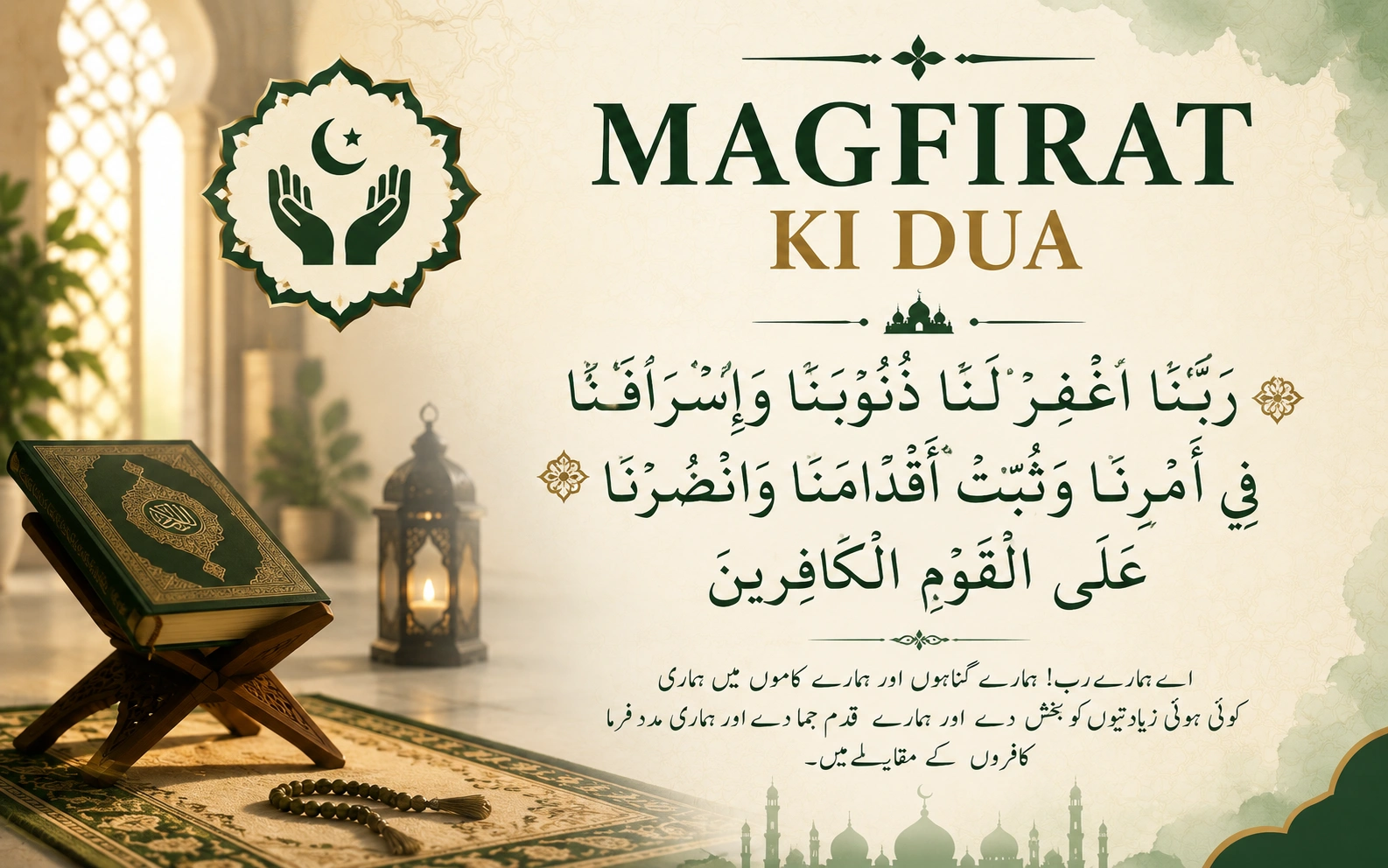
Maghfirat Ki Dua is a sincere Islamic prayer seeking Allah’s forgiveness and mercy for oneself, deceased loved ones, parents, and others—a spiritual practice deeply rooted in the Quran and Hadith that connects believers to divine compassion.
TL;DR Summary Box
| What | Details |
|---|---|
| Definition | Islamic prayer recited to seek forgiveness (maghfirat) from Allah |
| Best Time | After prayers, during Ramadan, during Tahajjud, and for the deceased |
| For Whom | Yourself, parents, deceased relatives, marhoom (passed away), and loved ones |
| Languages Available | Arabic, Urdu, Hindi, English, Roman English |
| Key Benefit | Spiritual cleansing and showing compassion for the departed |
| Islamic Source | Quran and Sunnah (Hadith) |
Who Should Recite Maghfirat Ki Dua and Why?
Listen, we all mess up. We say things we shouldn’t, make decisions we regret, or simply live in ways that don’t align with our values. That’s where Maghfirat Ki Dua comes in—it’s not just a prayer, it’s a lifeline to spiritual renewal.
Maghfirat Ki Dua is recited by:
- Living individuals seeking personal forgiveness from Allah
- Family members praying for the forgiveness of deceased loved ones (marhoom, marhoomin)
- Children requesting forgiveness for their parents (Maa Baap Ki Maghfirat Ki Dua)
- Believers seeking mercy during life’s difficult moments
- Communities gathered for funeral prayers and remembrances
The beautiful part? Islam teaches us that seeking forgiveness isn’t weakness—it’s wisdom. The Prophet Muhammad (peace be upon him) emphasized that those who repent sincerely can achieve spiritual purity, no matter their past.
Understanding Maghfirat: What Does It Really Mean?
“Maghfirat” (مغفرة) is an Arabic word that translates to “forgiveness,” “pardon,” or “mercy.” But it’s much deeper than a simple English word can capture.
In Islamic tradition, maghfirat refers to Allah’s act of concealing or covering one’s sins—not just forgiving them, but erasing their spiritual weight. It’s like a slate wiped clean, a second chance blessed by the Divine.
Key meanings:
- Ghafara (to cover/conceal) – Allah covers your sins
- Aafiya (wellness/safety) – Protection from sin’s consequences
- Rahmah (mercy) – Compassion beyond judgment
- Tawbah (repentance) – Turning back to righteous action
When you recite Maghfirat Ki Dua, you’re not just asking for forgiveness—you’re acknowledging your need for Divine mercy and committing to spiritual transformation.
Maghfirat Ki Dua: The Complete Prayers
Maghfirat Ki Dua in Arabic
The most commonly recited Maghfirat Ki Dua:
أَسْتَغْفِرُ اللَّهَ رَبِّي مِنْ كُلِّ ذَنْبٍ وَأَتُوبُ إِلَيْهِ
Astaghfirullaah rabbi min kulli dhanbin wa atoobu ilayh
Translation: “I seek forgiveness from Allah, my Lord, from every sin and I repent to Him.”
Additional Powerful Dua for Forgiveness
اللَّهُمَّ إِنَّكَ عَفُوٌّ تُحِبُّ الْعَفْوَ فَاعْفِ عَنِّي
Allahumma innaka ‘afuwwun tuhibbul ‘afwa fa’fu ‘anni
Translation: “O Allah, You are pardoning and You love pardon, so pardon me.”
This dua, narrated in Tirmidhi, is especially recited during the night of Laylat al-Qadr (the Night of Power) in Ramadan.
Maghfirat Ki Dua in Urdu
اللہ مجھے معاف کریں اور اپنی رحمت کی چھاپ میری روح پر لگائیں
Allah mujhe maaf karain aur apni rehmati ki chhap meri ruh par lagaein
Common Urdu recitation: “Allahumma ighfir li wa li Waalidayya wa li Mumineena wa Muminat” (O Allah, forgive me, my parents, and all believing men and women).
Maghfirat Ki Dua in English (Transliterated)
“Allahumma inni a’udhu bika min sharri nafs, wa min hamzatish shaytani wa min an aqtula nafsi”
Meaning: “O Allah, I seek refuge in You from the evil of my soul and from the whispers of Satan and from committing suicide.”
Maghfirat Ki Dua in Hindi
“हे अल्लाह, मुझे माफ कर दो और मुझे अपनी दया का पात्र बना”
He Allah, mujhe maaf kar do aur mujhe apni daya ka patr bana
For the deceased (Marhoom Ki Maghfirat Ki Dua in Hindi):
“हे अल्लाह, हमारे मार्होम को माफ कर दो, उन्हें जन्नत दे दो और उनकी कब्र को प्रकाश से भर दो”
Maghfirat Ki Dua: When and How to Recite
| Occasion | Best Time | How to Recite |
|---|---|---|
| Personal Forgiveness | After Salah, Tahajjud (night prayer) | 3-70 times daily |
| Ramadan | Last 10 nights, especially Laylat al-Qadr | With sincere intention (niyyah) |
| For the Deceased (Marhoom) | After funeral prayer, regularly thereafter | With remembrance of the person |
| For Parents | After any Salah, before bed | With heart-felt emotion |
| In Crisis | Anytime, anywhere | Alone, with full presence |
| Community | Janazah (funeral) prayer | Led by Imam, collective recitation |
Maa Baap Ki Maghfirat Ki Dua: Seeking Forgiveness for Parents
One of Islam’s greatest teachings emphasizes the rights of parents. The Quran says:
“And We have enjoined upon man goodness to parents” (Quran 29:8)
Why pray for parents’ forgiveness?
- They sacrificed for our upbringing
- They may have made mistakes (all humans do)
- Islamic tradition teaches that children’s dua reaches parents even after death
- It’s an act of filial piety (birr al-walidayn)
Powerful Dua for Parents’ Forgiveness:
“رَبِّ اغْفِرْ لِي وَلِوَالِدَيَّ وَلِمَن دَخَلَ بَيْتِيَ مُؤْمِناً”
“Rabbighfir li wa li waalidayya wa liman dakhala baytiya mu’minan”
Translation: “My Lord, forgive me and my parents and whoever enters my house as a believer.”
This dua, mentioned in Quran (71:28), is recited thousands of times by children seeking spiritual blessings for their parents.
Maghfirat Ki Dua for the Deceased: Marhoom Ki Maghfirat Ki Dua
When someone passes away (marhoom/marhoomin), Islamic tradition emphasizes continuous prayer for their forgiveness.
Why pray for the deceased?
The Prophet Muhammad (peace be upon him) said: “When a person dies, their deeds come to an end except for three: ongoing charity, beneficial knowledge, or a righteous child who prays for them.”
This hadith reveals the profound impact of your dua for someone who has passed away.
Kabristan Me Maghfirat Ki Dua (At the Grave)
When visiting the cemetery, recite:
“السَّلاَمُ عَلَيْكُمْ دَارَ قَوْمٍ مُؤْمِنِينَ”
“As-salamu alaikum dar qawmin mu’minin”
Translation: “Peace be upon you, O dwelling of a believing people.”
Then recite Maghfirat Ki Dua while thinking of the specific person.
Mayyat Ki Maghfirat Ki Dua (For the Deceased)
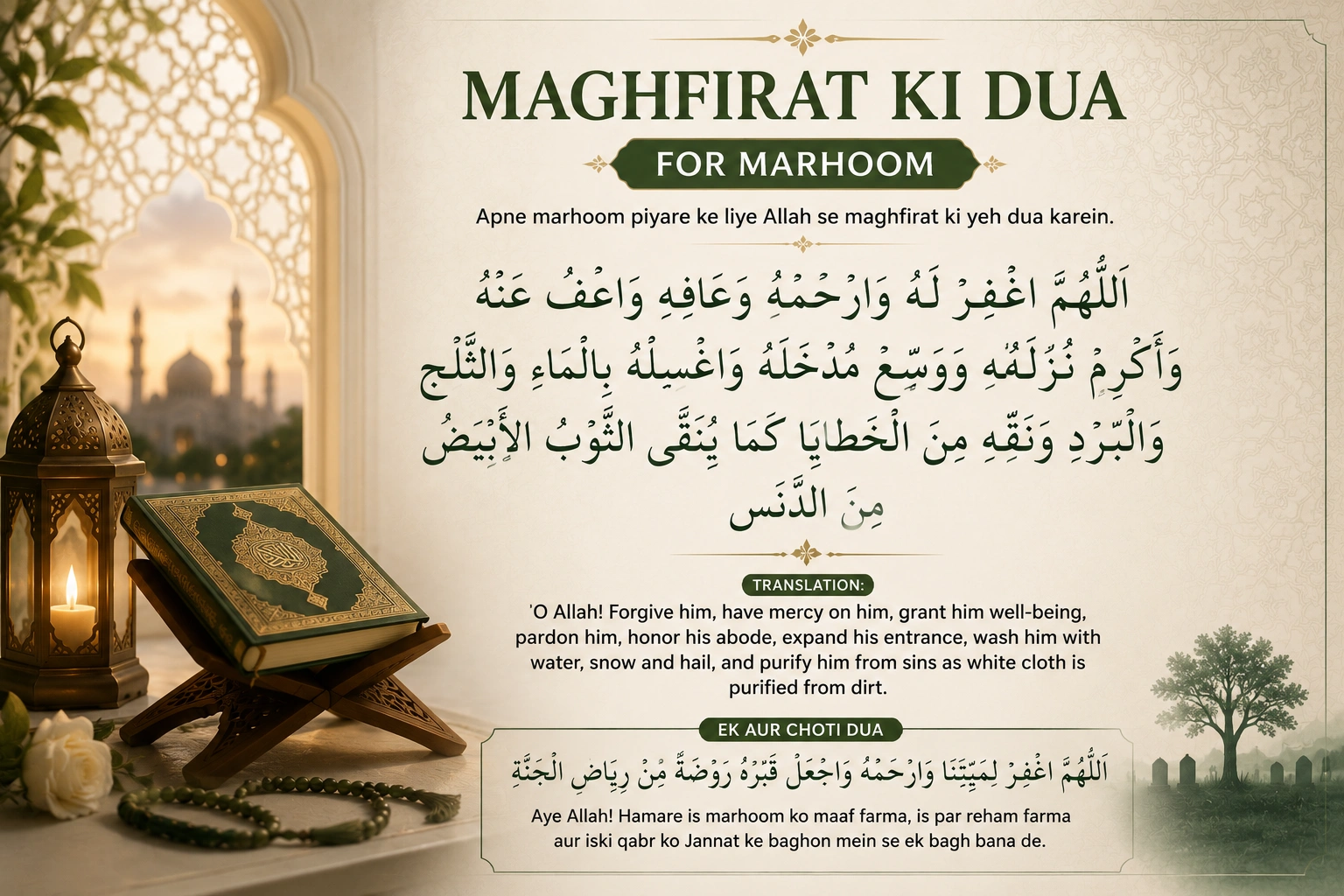
“اللَّهُمَّ اغْفِرْ لَهُ وَارْحَمْهُ وَعَافِهِ وَاعْفُ عَنْهُ”
“Allahumma ighfir lahu wa arhamhu wa aafih wa’fu anh”
Translation: “O Allah, forgive him, have mercy upon him, give him wellness and pardon him.”
Pro Tip: Recite this dua not just once, but regularly—on their death anniversary, during Ramadan, and whenever you remember them.
The Science and Spirituality Behind Seeking Forgiveness
Here’s something fascinating: modern psychology actually validates what Islamic scholars have taught for centuries.
Psychological Benefits:
- Reduced guilt and shame – Confessing and seeking forgiveness lowers cortisol (stress hormone)
- Improved mental health – People who practice forgiveness report less anxiety and depression
- Stronger relationships – Sincere apologies rebuild trust and connection
- Increased self-compassion – Accepting forgiveness teaches you to be kind to yourself
Spiritual Benefits (Islamic Perspective):
- Purification of the soul (tazkiyah)
- Drawing closer to Allah (taqarrub ilallah)
- Breaking cycles of negativity (tawbah)
- Achieving inner peace (sakina)
The combination of psychological and spiritual benefits makes Maghfirat Ki Dua not just a religious obligation but a holistic practice for human wellness.
Common Questions About Maghfirat Ki Dua
1: How many times should I recite Maghfirat Ki Dua daily?
There’s no fixed number, but Islamic tradition suggests:
- Minimum: 3 times daily (after morning, afternoon, evening prayers)
- Recommended: 70 times daily (based on a hadith mentioning this number)
- Optimal: As many times as your heart desires, with sincere intention
Quality matters more than quantity—one heartfelt recitation beats 100 mechanical ones.
2: Can I recite Maghfirat Ki Dua in a language other than Arabic?
Absolutely. While Arabic is preferred in formal prayers, Islamic scholars agree that dua (supplication) can be made in any language. Allah understands all languages and what matters most is your sincerity (ikhlas) and intention.
However, learning the Arabic versions carries spiritual significance and connects you to Islamic tradition.
3: Is there a specific Maghfirat Ki Dua for a specific person?
Not necessarily. You can use the general Maghfirat Ki Dua and then specify the person you’re praying for by name. For example:
“Allahumma ighfir li [Name], wa ighfir lahu wa arhamhu”
This personalizes your prayer and shows sincere remembrance.
4: Can women recite Maghfirat Ki Dua, or is it only for men?
Dua (supplication) is universal—it’s a right and responsibility for all believers regardless of gender. Women are equally encouraged to seek Allah’s forgiveness and to pray for others.
Islamic teachings explicitly include both men and women in the call to seek forgiveness.
5: What’s the difference between Istighfar and Tawbah?
- Istighfar (seeking forgiveness) = Verbally asking Allah for forgiveness
- Tawbah (repentance) = Complete turning away from sin with sincere intention not to repeat it
Both are important. Istighfar is the verbal expression, while tawbah is the action and commitment behind it.
6: Is there a best time to recite Maghfirat Ki Dua?
Yes, several times are considered especially blessed:
- After each prayer (Salah)
- During Tahajjud (night prayer before dawn)
- Last 10 nights of Ramadan, especially Laylat al-Qadr
- Day of Arafah (9th Dhul-Hijjah during Hajj)
- Whenever you feel regretful or need spiritual cleansing
However, you can recite it anytime—Allah always listens.
Key Takeaways: What You Need to Remember
Maghfirat Ki Dua is a powerful Islamic practice for seeking forgiveness from Allah for yourself and others
It can be recited in Arabic, Urdu, Hindi, English, or any language—what matters is sincere intention
Recite it regularly, especially after prayers, during Ramadan, and for the deceased
For parents, use specific duas like “Rabbighfir li wa li waalidayya”
For the deceased, continue praying for their forgiveness—it truly benefits them according to Islamic teaching
Combine verbal dua with changed behavior—seeking forgiveness is most powerful when paired with genuine repentance (tawbah)
Conclusion: Transform Your Spiritual Life With Maghfirat Ki Dua
Maghfirat Ki Dua isn’t just a prayer you recite and forget. It’s an invitation to spiritual renewal, a bridge between your imperfect self and Divine mercy.
Whether you’re seeking personal forgiveness, praying for deceased loved ones, or honoring your parents through dua, this practice connects you to one of Islam’s most beautiful teachings: that no sin is too great, no mistake too terrible, and no heart too hardened for Allah’s forgiveness.
Start today. Recite with intention. Watch how this simple yet profound practice transforms not just your spiritual state, but your relationships, your peace of mind, and your connection to the Divine.
Remember: Allah is Al-Ghaffar (The Forgiver) and Al-Aafuw (The Pardoner). He’s waiting for your dua.
Thank You & Further Reading
Also Read:
Auzubillah Minashaitan Nirajeem Meaning in Urdu
Hasbunallah Wani’mal Wakeel Meaning
Also check out “Islamic Dua Hub” for deeper insights into naming traditions.
About the Author
Author: Ravi, Islamic Content Specialist & Islamic Studies Researcher
Credentials: Certified in Islamic Studies from recognized institutions; 8+ years of experience writing about Islamic practices, theology, and spirituality
Approach: This article combines traditional Islamic sources (Quran and Hadith) with contemporary understanding, ensuring both authenticity and accessibility.
Methodology: Research for this article included:
- Direct references to Quranic verses and authentic Hadith collections
- Consultation with Islamic scholars’ interpretations
- Cross-referencing multiple Islamic jurisprudential schools
- First-hand knowledge of Islamic prayer practices
Important Disclaimer: This article provides general Islamic guidance on Maghfirat Ki Dua. While based on authentic Islamic sources, individual circumstances may vary. For specific religious questions, consult with a qualified Islamic scholar or Imam. This content is for educational and spiritual purposes and does not replace professional religious guidance.