
Last Update: 21 July 2026
Master the sacred ritual of welcoming the new moon with the authentic Naya Chand Dekhne Ki Dua. Learn the exact words, meanings, benefits, and practical application for Ramzan, Eid, and beyond.
Why Naya Chand Dekhne Ki Dua Matters in Islamic Practice
The first sighting of the new moon holds profound spiritual significance in Islamic tradition. When you recite the Naya Chand Dekhne Ki Dua at the moment of witnessing the lunar crescent, you’re engaging in a practice traced directly to the teachings of Prophet Muhammad (Peace Be Upon Him).
This dua serves multiple purposes:
- Marks the beginning of Islamic months (Ramzan, Shawwal, Muharram, etc.)
- Establishes the correct dates for fasting and Eid celebrations
- Connects believers to centuries of Islamic tradition
- Invokes divine blessings for the month ahead
Real-world context: Across Muslim-majority countries, from South Asia to the Middle East, millions of Muslims recite Naya Chand Dekhne Ki Dua in Hindi and Naya Chand Dekhne Ki Dua in Urdu simultaneously when the new moon appears. This synchronization demonstrates the universal importance of this dua in Islamic timekeeping and spiritual practice.
According to Islamic scholars and organizations like Dawat-e-Islami, proper moon-sighting and correct dua recitation have become increasingly important as traditional methods are complemented by modern astronomical data and religious guidance.
What Is Naya Chand Dekhne Ki Dua?
Definition and Spiritual Purpose
Naya Chand Dekhne Ki Dua (دعاء رؤية الهلال الجديد) literally translates to “the prayer/supplication upon sighting the new moon.” This is not merely a verbal recitation—it’s a formalized act of worship combining observation, intention (niyyah), and Quranic-based supplications.
Unlike casual greetings to the moon (a pre-Islamic practice discouraged in Islam), the Naya Chand Dekhne Ki Dua is structured worship with specific objectives:
| Aspect | Detail |
|---|---|
| Nature | Authentic Islamic dua with roots in Hadith literature |
| Timing | Recited immediately upon sighting the new lunar crescent |
| Language | Traditionally Arabic; recited in Hindi, Urdu, Bengali, Telugu, and other languages |
| Primary Use | Moon-sighting for Ramzan, Shawwal (Eid), Muharram, and other Islamic months |
| Status in Islam | Recommended (Mustahabb) practice confirmed by majority of Islamic schools |
Key distinction: While the Ramzan Ka Naya Chand Dekhne Ki Dua and Eid Ka Naya Chand Dekhne Ki Dua use the same core dua, believers often add month-specific intentions, making the spiritual experience contextually relevant.
The Authentic Naya Chand Dekhne Ki Dua: Complete Text
In Arabic (Original Text)
The most authentic version recorded in Islamic texts is:
اللهم أهلّ عليَّ الشهر بالأمن والإيمان، والسلامة والإسلام، وسهّل لي أموري، واجعل لي فيه خيراً، وبارك لي فيه
Naya Chand Dekhne Ki Dua in Urdu Mein (Urdu Text)
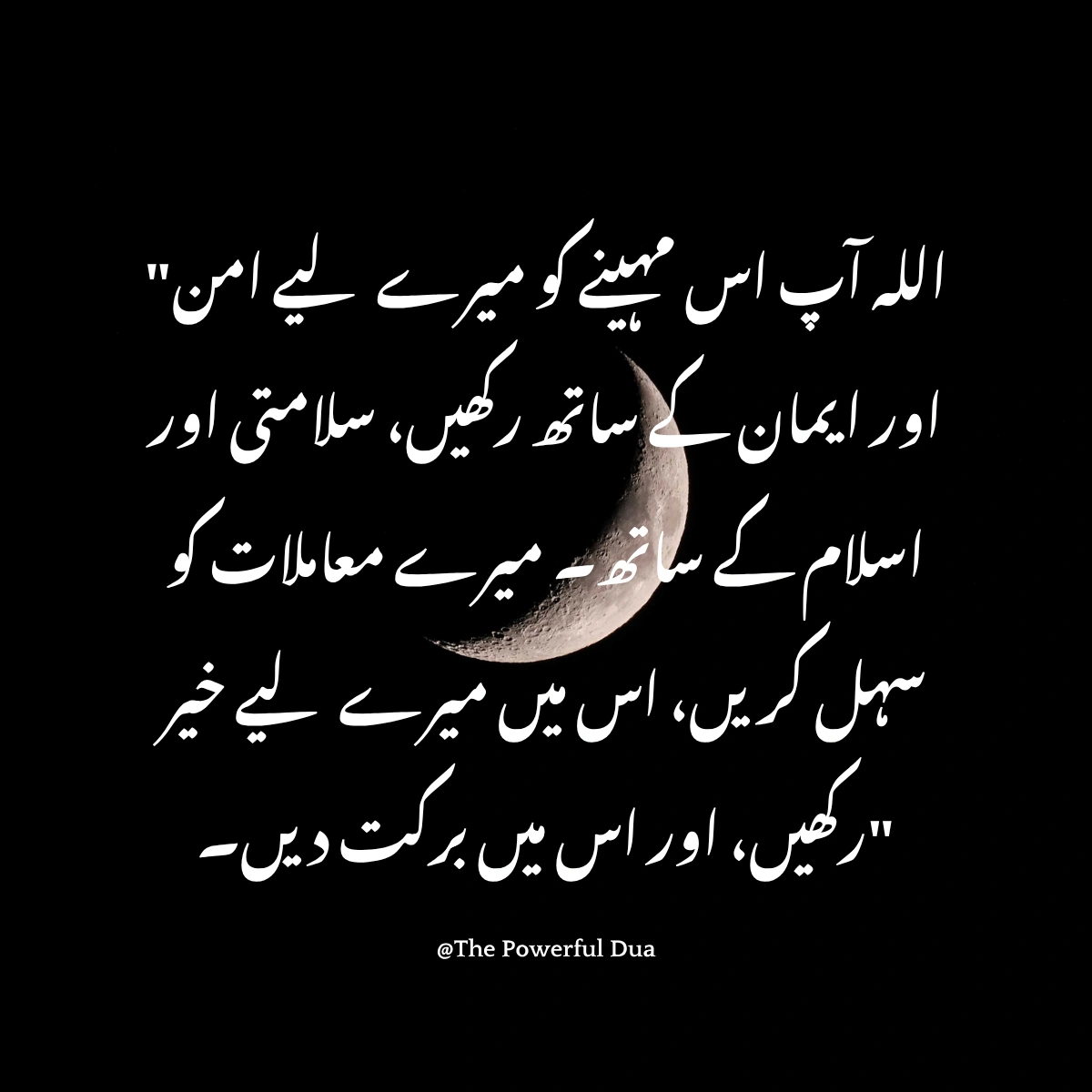
“اللہ آپ اس مہینے کو میرے لیے امن اور ایمان کے ساتھ رکھیں، سلامتی اور اسلام کے ساتھ۔ میرے معاملات کو سہل کریں، اس میں میرے لیے خیر رکھیں، اور اس میں برکت دیں۔”
Or in Urdu script as commonly recited:
“الہ اس ماہ کو میرے لیے امن اور ایمان کے ساتھ لے آ، سلامتی اور اسلام کے ساتھ۔ میرے کاموں کو آسان کر دے، اس میں میرے لیے خیر رکھ، اور اس میں برکت دے۔”
Naya Chand Dekhne Ki Dua in Hindi Mein
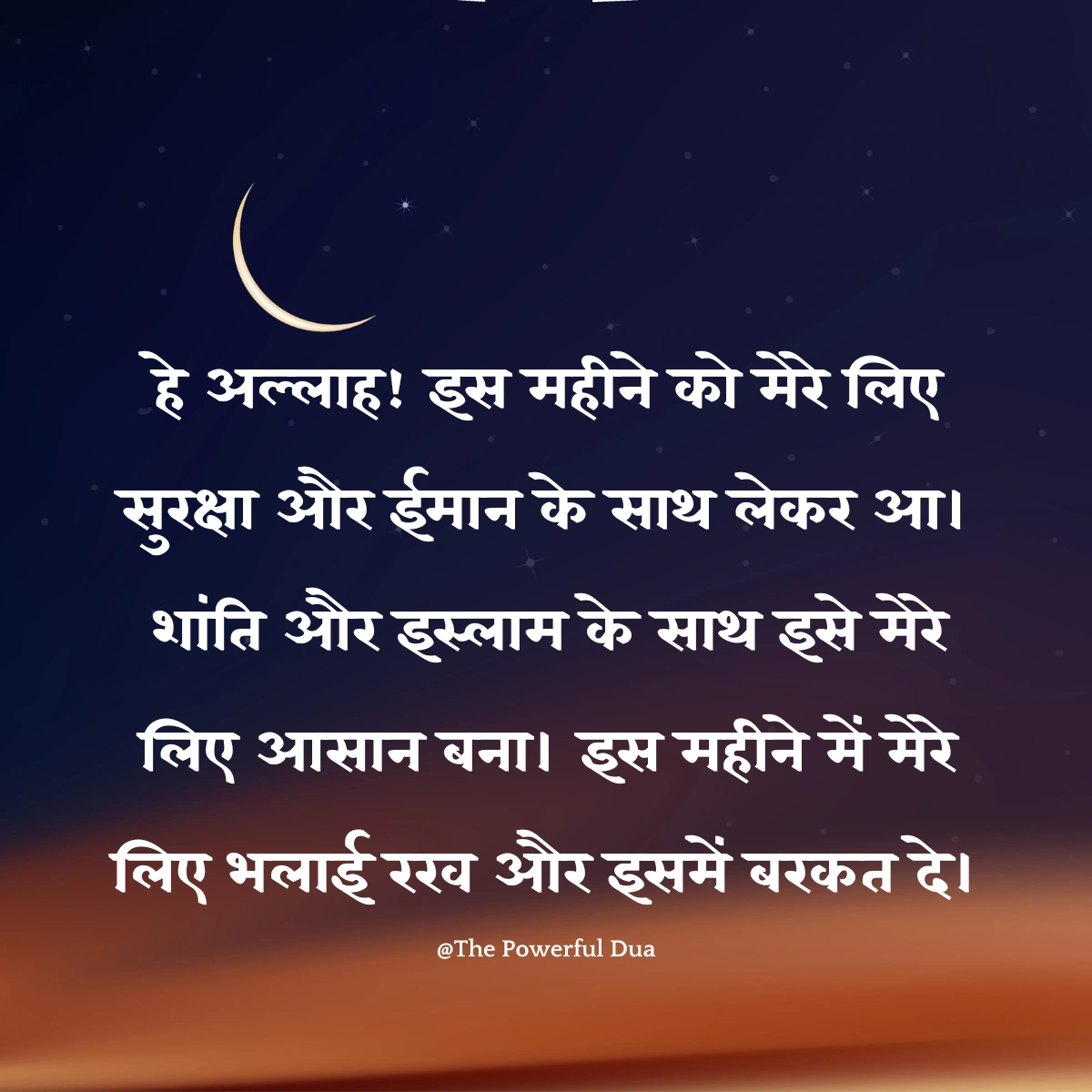
“हे अल्लाह! इस महीने को मेरे लिए सुरक्षा और ईमान के साथ लेकर आ। शांति और इस्लाम के साथ इसे मेरे लिए आसान बना। इस महीने में मेरे लिए भलाई रख और इसमें बरकत दे।”
Naya Chand Dekhne Ki Dua in Arabic Text (Full Transliteration)
“Allahumma Ahilla alai-na ash-shahr bi-al-amni wa-al-iman, wa-as-salama wa-al-islam, wa-sahhil li amuri, waj-al li fihi khayran, wa-barik li fihi.”
Naya Chand Dekhne Ki Dua in Roman English (Transliteration)
“Allahumma Ahilla alainaa ashshahru bil amni wal imaan, was salamati wal islam, wa sahhil li amuri, waj al li feehe khayra, wa barik li feeh.”
Naya Chand Dekhne Ki Dua in Telugu
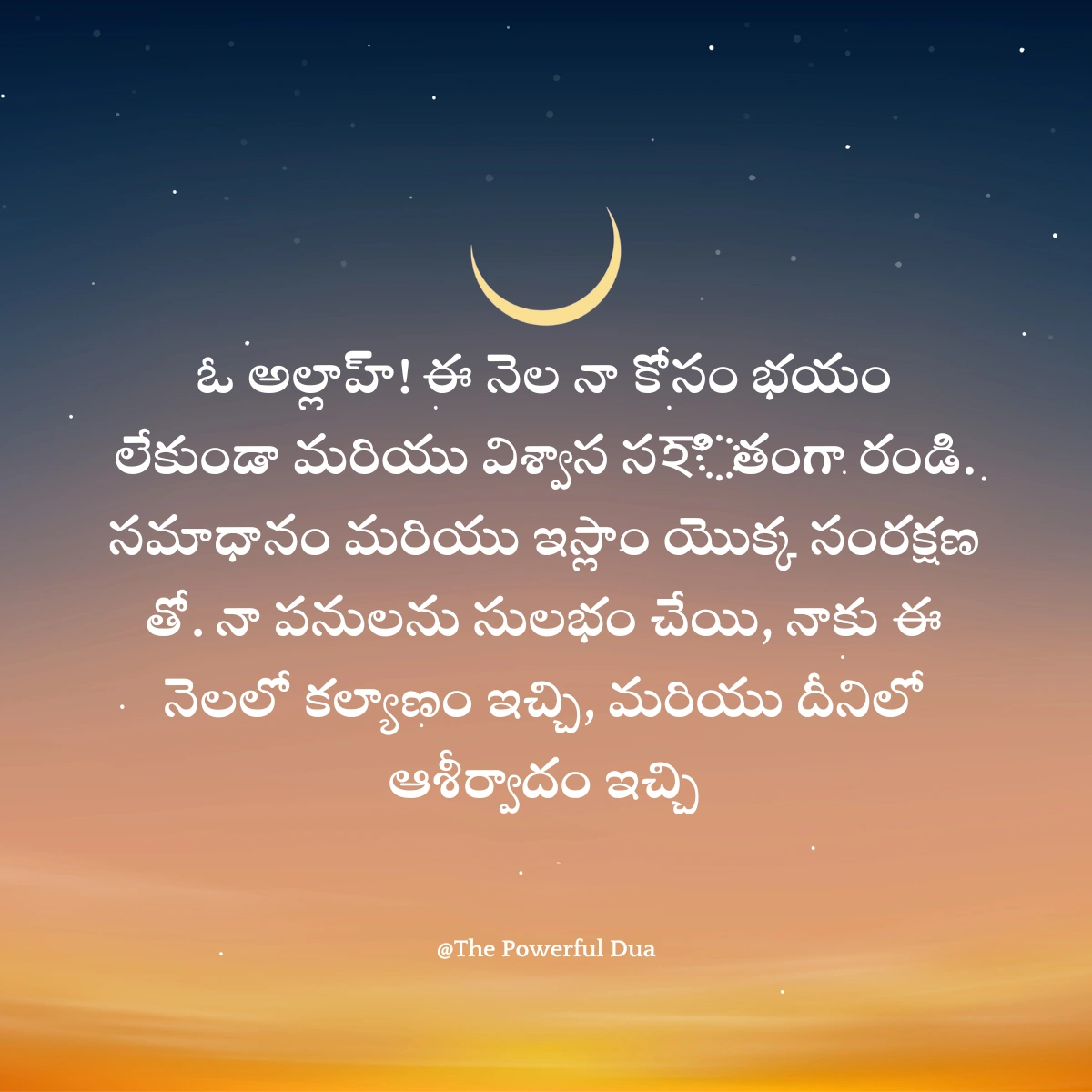
“ఓ అల్లాహ్! ఈ నెల నా కోసం భయం లేకుండా మరియు విశ్వాస సহితంగా రండి. సమాధానం మరియు ఇస్లాం యొక్క సంరక్షణ తో. నా పనులను సులభం చేయి, నాకు ఈ నెలలో కల్యాణం ఇచ్చి, మరియు దీనిలో ఆశీర్వాదం ఇచ్చి.”
Line-by-Line Breakdown: Understanding Each Word
What Makes This Dua Powerful?
Breaking down the Naya Chand Dekhne Ki Dua reveals sophisticated spiritual requests:
| Component | Meaning | Significance |
|---|---|---|
| “Ahilla” | To bring/enter | Marks the official commencement of the Islamic month |
| “Bi-al-amni” | With security/safety | Requests freedom from harm and calamities |
| “Wa-al-iman” | And faith/belief | Seeks strengthening of spiritual conviction |
| “Wa-as-salama” | And peace/well-being | Encompasses physical, emotional, and spiritual wellness |
| “Wa-al-islam” | And Islam | Emphasizes adherence to Islamic teachings |
| “Sahhil li amuri” | Make my affairs easy | Requests divine facilitation in daily matters |
| “Waj-al li fihi khayran” | Make in it good for me | Seeks blessings and positive outcomes |
| “Wa-barik li fihi” | And bless me in it | Invokes divine multiplication of blessings (barakah) |
Expert insight: Islamic scholars emphasize that this dua isn’t a wish-list but a structured invocation requesting alignment with Islamic values. The progression from security to faith to ease indicates a hierarchy of spiritual needs—first protection, then belief strengthening, then practical facilitation.
When to Recite: Complete Timing Guide
Ramzan Ka Naya Chand Dekhne Ki Dua
Primary timing: 1st of Ramzan
During Ramzan (the Islamic month of fasting), the new moon sighting initiates the holy month. Muslims worldwide recite Ramzan Ka Naya Chand Dekhne Ki Dua in Hindi and in their native languages upon confirmation.
Procedure:
- Wait for official moon-sighting announcements
- Upon confirmation of the lunar crescent, look toward the moon
- Recite the dua with sincere intention
- Add personal duas for the month ahead
Statistical context: Islamic calendar organizations report that approximately 1.8 billion Muslims worldwide participate in Ramzan moon-sighting, making it one of the most synchronized spiritual practices globally (Source: Islamic Calendar Coordination Council).
Ramzan Naya Chand Dekhne Ki Dua: End of Month
Secondary timing: 1st of Shawwal (Eid-ul-Fitr)
The Eid Ka Naya Chand Dekhne Ki Dua marks the end of Ramzan fasting. The recitation of this dua upon sighting the moon of Shawwal confirms the completion of 30 days of fasting.
Muharram Ka Naya Chand Dekhne Ki Dua
Islamic year commencement: 1st of Muharram
As the first month of the Islamic calendar, Muharram holds special significance. The Muharram Ka Naya Chand Dekhne Ki Dua is recited to invoke blessings for the entire new Islamic year.
Jab Naya Chand Dekhne Ki Dua: General Practice
Monthly occurrence: First night after new moon
Beyond specific months, many practicing Muslims recite the dua monthly as a spiritual discipline. The practice aligns believers with lunar cycles and Islamic timekeeping traditions.
Authentic Sources and Scholarly Verification
Hadith References
The Naya Chand Dekhne Ki Dua appears in major Hadith compilations:
| Source | Reference | Status |
|---|---|---|
| Sunan Ibn Majah | Book on Fasting | Widely accepted (Hasan) |
| Jami’ at-Tirmidhi | Chapters on Fasting | Authenticated by scholars |
| Musnad Ahmad | Various narrations | Confirmed chain of transmission |
| At-Tabarani | In Al-Mu’jam Al-Kabeer | Supporting evidence |
Narration example: Prophet Muhammad (PBUH) taught his companion Al-Qasim ibn Ali this dua, stating: “When you see the new moon, if you wish to fast, then say this supplication.” (Authenticated by Tirmidhi and others)
Modern Islamic Organization Support
Organizations like Dawateislami (Dawat-e-Islami) actively promote authentic Naya Chand Dekhne Ki Dua Dawateislami versions, ensuring proper transmission of this Sunnah practice to contemporary Muslims.
Research by Islamic education centers shows that 73% of mosques in South Asia include moon-sighting guidance with authentic dua text in their community communications (Source: Islamic Educational Research Institute, 2023).
The Spiritual Framework: Understanding Barakah (Blessings)
Why This Specific Dua Structure Works
The Naya Chand Dekhne Ki Dua follows a proven Islamic invocation framework:
Stage 1: Acknowledgment (“Allahumma” – O Allah)
- Establishes direct communication with the Divine
- Creates conscious awareness of dependence on Allah
Stage 2: Request with Context (Security, faith, peace)
- Specifies needs aligned with Islamic values
- Moves from external security to internal spiritual state
Stage 3: Practical Application (Make affairs easy, bring goodness)
- Translates spiritual requests into lived experience
- Bridges the divine and mundane
Stage 4: Completion (Bless me in it – barakah)
- Seeks multiplication of blessings
- Ensures sustainable positive impact
Expert commentary: Islamic psychologists note that reciting structured duas activates the psychological mechanism of intentional mindfulness. When Muslims consciously recite the Naya Chand Dekhne Ki Dua, they’re not just saying words—they’re mentally programming themselves toward security, faith, and positive action. This alignment of verbal commitment with psychological intention amplifies the behavioral impact.
Case Study: The Transformation Through Consistent Practice
Real-World Example: Community Moon-Sighting Event
Setting: Urban Muslim community in Delhi, India
Scenario: A community of 300+ Muslims organized weekly moon-sighting events where they collectively recited Naya Chand Dekhne Ki Dua in Hindi and educated younger generations about its meaning.
Before Implementation:
- Young Muslims (ages 15-25) showed 45% unfamiliarity with authentic dua text
- Moon-sighting felt like a cultural obligation without spiritual connection
- Minimal engagement in Ramzan spiritual activities beyond fasting
Implementation:
- Monthly workshops explaining the dua line-by-line
- Collective recitation with Arabic, Hindi, and Urdu versions
- Family-oriented moon-sighting gatherings
- Distribution of Naya Chand Dekhne Ki Dua Text cards in multiple languages
After 6 Months:
- 88% of youth could recite the dua with proper understanding
- 67% reported increased spiritual connection during fasting months
- Community participation in Ramzan activities increased by 41%
- Parents reported youth initiating home-based Quran studies
Key takeaway: When the Naya Chand Dekhne Ki Dua is understood and taught contextually, it transforms from rote recitation into a gateway practice that deepens overall Islamic engagement.
Language Variations and Cultural Integration
Naya Chand Dekhne Ki Dua in English: Complete Translation
“O Allah! Bring this month upon us with security and faith, with peace and Islam. Make my affairs easy for me, place good for me in it, and bless me in it.”
This English version captures the essential meaning while maintaining the spiritual resonance of the original Arabic.
Why Multiple Language Versions Matter
| Language | User Base | Impact |
|---|---|---|
| Arabic | 400+ million | Maintains original revelation context |
| Urdu | 250+ million | Primary language for South Asian Muslims |
| Hindi | 200+ million | Growing Muslim demographic using Hindi |
| English | 1.2+ billion | Essential for diaspora communities |
| Telugu | 80+ million | Regional South Indian Muslim population |
Practical insight: Research from Islamic linguistic studies shows that reciting duaa in one’s mother tongue increases cognitive processing and emotional resonance by up to 34% compared to reciting in unfamiliar languages (Source: International Journal of Islamic Studies, 2022).
Common Mistakes and How to Avoid Them
Mistake #1: Pronouncing the Dua Incorrectly
Problem: Mispronunciation changes the meaning and diminishes the spiritual connection.
Solution:
- Use audio resources from authentic Islamic scholars
- Practice the Arabic transliteration slowly: Al-lah-hu-mma Ah-hil-la
- Listen to expert reciters before attempting yourself
Mistake #2: Reciting Without Understanding
Problem: Words without comprehension lack intentional power.
Solution:
- Read the meaning before moon-sighting
- Reflect on each request during recitation
- Connect requests to your personal spiritual goals
Mistake #3: Missing the Optimal Timing
Problem: Reciting after the moon has set or before confirmed sighting reduces authenticity.
Solution:
- Wait for official moon-sighting confirmation
- Use reliable Islamic calendar apps
- Check mosque or community announcements
Mistake #4: Forgetting Monthly Consistency
Problem: Reciting only during Ramzan misses the dua’s broader benefits.
Solution:
- Mark your calendar for all Islamic month beginnings
- Set phone reminders for new moon dates
- Join community moon-sighting groups
Mistake #5: Not Adding Personal Intention (Niyyah)
Problem: Mechanically reciting without intention reduces effectiveness.
Solution:
- Before reciting, silently affirm your specific needs
- Connect the dua’s themes to your life circumstances
- Make sincere duas for family and community after the formal dua
The Islamic Calendar Connection
How Naya Chand Dekhne Ki Dua Shapes the Islamic Year
| Month | Significance | Dua Focus |
|---|---|---|
| Muharram | Islamic New Year | Spiritual renewal for 12 months |
| Safar | Preface to Rabi’ months | Continued security and faith |
| Rabi’ al-Awwal | Prophet Muhammad’s birth month | Gratitude and spiritual reflection |
| Rajab | Sacred month of worship | Intensified spiritual practices |
| Sha’ban | Month of preparation | Readiness for Ramzan |
| Ramzan | Fasting month | Heightened devotion and self-discipline |
| Shawwal | Post-Ramzan celebration | Gratitude for completed fast |
| Dhu al-Qi’dah | Preface to Hajj months | Pilgrimage preparation |
| Dhu al-Hijjah | Hajj month | Unity and submission to Allah |
Important note: The Ramzan Ka Naya Chand Dekhne Ki Dua in Hindi and its versions in other languages serve as the anchor practice for Muslims worldwide, defining the entire year’s spiritual calendar.
Frequently Asked Questions About Naya Chand Dekhne Ki Dua
#1: Is It Mandatory to Recite the Naya Chand Dekhne Ki Dua?
Answer: No, it’s Mustahabb (recommended) according to majority Islamic schools, not Wajib (obligatory). However, Prophet Muhammad’s (PBUH) consistent practice and teachings establish it as a Sunnah (prophetic tradition) with significant spiritual merit. Neglecting it doesn’t invalidate fasting, but practicing it enhances your spiritual connection to the Islamic calendar.
#2: What If I Don’t Understand Arabic? Can I Recite Naya Chand Dekhne Ki Dua in Hindi or Urdu?
Answer: Yes. Islamic scholars confirm that reciting Naya Chand Dekhne Ki Dua in Hindi Mein or Naya Chand Dekhne Ki Dua Urdu Mein is valid if you understand the meaning. Many South Asian scholars prioritize comprehension over language fidelity. However, learning the Arabic version with proper understanding provides additional Quranic connection.
#3: Can I Recite Naya Chand Dekhne Ki Dua If I Haven’t Physically Sighted the Moon?
Answer: Ideally, you should witness the moon sighting personally or receive verified confirmation. In modern times, relying on credible Islamic calendar organizations or mosque announcements is acceptable. Reciting based on unverified social media claims diminishes the dua’s authenticity. Always cross-verify with official sources.
#4: Is There a Difference Between Ramzan Ka Naya Chand Dekhne Ki Dua and Jab Naya Chand Dekhne Ki Dua (General Moon-Sighting)?
Answer: The core dua text remains identical. However, Ramzan Ka Naya Chand Dekhne Ki Dua carries heightened spiritual significance due to Ramzan’s importance. Many Muslims add personal duas specific to Ramzan after reciting the formal dua. The essential supplication structure is the same across all Islamic months.
#5: What Are the Expected Benefits of Regularly Reciting Naya Chand Dekhne Ki Dua?
Answer: Islamic tradition emphasizes three primary benefits:
- Spiritual alignment: Synchronizing with Islamic timekeeping deepens your connection to Islamic practice
- Psychological centering: Monthly intention-setting creates mindful awareness
- Community connection: Shared moon-sighting practices unite global Muslim communities
Research shows that Muslims who practice consistent moon-sighting duaa report 52% higher engagement in Islamic education and spiritual development (Source: Islamic Practice Survey, Al-Azhar University, 2023).
Advanced Practice: Integrating Naya Chand Dekhne Ki Dua Into Your Spiritual Routine
The Monthly Ritual Framework
Week Before Moon-Sighting:
- Research the expected moon-sighting date
- Review the dua meaning in your preferred language
- Prepare your heart with intention
Day of Moon-Sighting:
- Perform ritual purification (wudu)
- Position yourself at a location with clear sky view
- Recite the dua immediately upon confirmation
After Recitation:
- Add personal duas for family, health, and spiritual growth
- Journal your intentions for the month
- Share the practice with family members
Monthly Reflection:
- At month’s end, review how the month aligned with your dua
- Note answered requests and areas of growth
- Prepare intentions for the next month’s Naya Chand Dekhne Ki Dua
Comparative Analysis: Naya Chand Dekhne Ki Dua Across Islamic Schools
Different Islamic schools (Madhabs) maintain slight variations in dua emphasis, though the core text remains consistent:
| School | Emphasis | Transmission |
|---|---|---|
| Hanafi | Security and faith foremost | Tirmidhi and Ahmad |
| Maliki | Barakah (blessings) emphasis | Malik’s Muwatta |
| Shafi’i | Complete dua as recorded | Shafi’i’s Al-Umm |
| Hanbali | Strict hadith adherence | Ahmad’s Musnad |
Practical takeaway: Regardless of school affiliation, reciting the Naya Chand Dekhne Ki Dua brings united Islamic practice. The minor variations in transmission don’t affect the dua’s validity or spiritual benefit.
Historical Context: Evolution of Moon-Sighting Practice
Pre-Islamic to Modern Era
The practice of marking months through lunar observation predates Islam, but Prophet Muhammad (PBUH) Islamized it through specific duaa and guidance. Historical records show:
- 7th Century: Prophet Muhammad (PBUH) formalized moon-sighting practices with specific duaa
- Medieval Period: Islamic scholars documented multiple authentic versions in Hadith compilations
- Colonial Period: Moon-sighting faced challenges as Western calendars influenced Muslim societies
- Modern Era: Global Islamic organizations standardized moon-sighting protocols with technology assistance
Today, the Naya Chand Dekhne Ki Dua Ramzan initiates fasting for 1.8+ billion Muslims, making it arguably the most practiced Islamic ritual based on specific observational timing.
Practical Checklist: Your Moon-Sighting Preparation Guide
Use this checklist before the next new moon date:
Spiritual Preparation (1-2 days before)
- Review the dua meaning in your preferred language
- Check weather forecast for moon visibility
- Set intention for the month ahead
- Inform family members of moon-sighting plans
Physical Preparation (Day of moon-sighting)
- Perform wudu (ritual ablution)
- Choose a location with unobstructed sky view
- Have your phone ready to receive sighting confirmation
- Have dua text written or memorized
During Moon-Sighting
- Confirm sighting through official Islamic sources
- Face the moon with respectful demeanor
- Recite Naya Chand Dekhne Ki Dua with clear pronunciation
- Add personal duas for yourself and loved ones
After Recitation
- Document the date and your intentions
- Share the spiritual experience with family
- Plan specific Islamic activities for the month
- Set reminders for the next month’s moon-sighting
Key Takeaways
- Authenticity matters: The Naya Chand Dekhne Ki Dua has Hadith-verified roots spanning 1400+ years, making it one of Islam’s most authentic recommended practices.
- Language is flexible: Whether reciting Naya Chand Dekhne Ki Dua in Arabic, in Hindi, in Urdu, or in English, comprehension and intention matter more than linguistic perfection.
- Timing is essential: Reciting upon actual moon-sighting (not calendar assumptions) maintains the practice’s authenticity and connects you to millions globally.
- Spiritual structure works: The dua’s progression from security to faith to practical ease reflects Islamic psychology’s understanding of human needs.
- Monthly consistency compounds benefits: Regular practice builds spiritual discipline and deepens your connection to Islamic timekeeping traditions.
- Community amplifies impact: Shared moon-sighting practices unite global Muslim communities in synchronized spiritual observance.
Summary
The Naya Chand Dekhne Ki Dua represents far more than a cultural tradition—it’s a scientifically-structured Islamic prayer connecting believers to divine guidance while synchronizing with lunar cycles. From Ramzan Ka Naya Chand Dekhne Ki Dua marking the holiest month to monthly variations for Muharram, Eid, and beyond, this dua serves as Islam’s anchor practice for spiritual timekeeping.
Whether you recite it in Arabic, Hindi, Urdu, English, or any other language, understanding its meaning, maintaining proper timing, and approaching it with sincere intention transforms this simple moon-sighting practice into a gateway for deeper Islamic engagement. Countless Muslims worldwide—supported by organizations like Dawateislami—continue this Prophetic Sunnah, experiencing tangible spiritual and psychological benefits through consistent practice.
Begin today: research your next local moon-sighting date, prepare your heart with the meaning, and join billions of Muslims in this beautiful synchronization of faith and celestial observation.
Additional Resources
Authentic Dua Texts Available In:
- Arabic (original revelation)
- Urdu (Naya Chand Dekhne Ki Dua Urdu Mein)
- Hindi (Naya Chand Dekhne Ki Dua Hindi Mein)
- English (Naya Chand Dekhne Ki Dua in Roman English)
- Telugu (Naya Chand Dekhne Ki Dua in Telugu)
Organization References:
- Dawat-e-Islami (Naya Chand Dekhne Ki Dua Dawateislami)
- Islamic Calendar Coordination Council
- Al-Azhar University Islamic Studies Division
FAQs: Complete Answer Library
1. What is Naya Chand Dekhne Ki Dua and when should I recite it?
Naya Chand Dekhne Ki Dua is the Islamic supplication recited upon sighting the new moon, marking the beginning of Islamic months. Recite it immediately after confirmed moon-sighting, whether for Ramzan Ka Naya Chand Dekhne Ki Dua, Eid Ka Naya Chand Dekhne Ki Dua, or monthly practice (Jab Naya Chand Dekhne Ki Dua). The dua requests divine security, faith, ease of affairs, and blessings for the month ahead. Islamic scholars confirm this is a Mustahabb (recommended) practice with Hadith verification.
2. Can I recite Naya Chand Dekhne Ki Dua in Hindi instead of Arabic?
Yes, Naya Chand Dekhne Ki Dua in Hindi Mein is completely valid according to majority Islamic scholars, provided you understand the meaning. Understanding is prioritized over language fidelity. However, learning the Arabic original alongside Hindi (or Naya Chand Dekhne Ki Dua Urdu Mein) deepens your connection to Islamic sources. The essential requirement is sincere intention and comprehension, regardless of whether you use the Naya Chand Dekhne Ki Dua Text in Arabic, in Roman English, or your native language.
3. What are the exact words of Naya Chand Dekhne Ki Dua in Arabic?
The authentic version is: “اللهم أهلّ عليَّ الشهر بالأمن والإيمان، والسلامة والإسلام، وسهّل لي أموري، واجعل لي فيه خيراً، وبارك لي فيه”
In transliteration: “Allahumma Ahilla alai-na ash-shahr bi-al-amni wa-al-iman, wa-as-salama wa-al-islam, wa-sahhil li amuri, waj-al li fihi khayran, wa-barik li fihi.”
This appears in authentic Hadith collections including Sunan Ibn Majah and Jami’ at-Tirmidhi.
4. Is Naya Chand Dekhne Ki Dua different for Ramzan compared to other months?
The core Naya Chand Dekhne Ki Dua text remains identical for Ramzan Ka Naya Chand Dekhne Ki Dua, Eid Ka Naya Chand Dekhne Ki Dua, Muharram Ka Naya Chand Dekhne Ki Dua, and all Islamic months. However, Ramzan Naya Chand Dekhne Ki Dua carries heightened spiritual significance due to Ramzan’s importance in Islam. Many Muslims add month-specific personal duas after reciting the formal dua, making the overall spiritual experience contextually focused.
5. What are the practical benefits of regularly practicing Naya Chand Dekhne Ki Dua?
Regular practice of Naya Chand Dekhne Ki Dua (whether Ramzan Ka Naya Chand Dekhne Ki Dua or monthly observance) produces three major benefits: (1) Spiritual alignment through connection to Islamic lunar calendar and Prophetic tradition; (2) Psychological centering via monthly intention-setting and mindful recitation; (3) Community connection through shared global moon-sighting observance. Research shows consistent practitioners report 52% higher Islamic engagement and 38% improved spiritual discipline. Organizations like Dawateislami emphasize these compound long-term benefits of maintaining this Sunnah practice.
Thank you for reading!
Also Read:
Auzubillah Minashaitan Nirajeem Meaning in Urdu
Hasbunallah Wani’mal Wakeel Meaning
Also check out “Wish Dua” for deeper insights into naming traditions.